
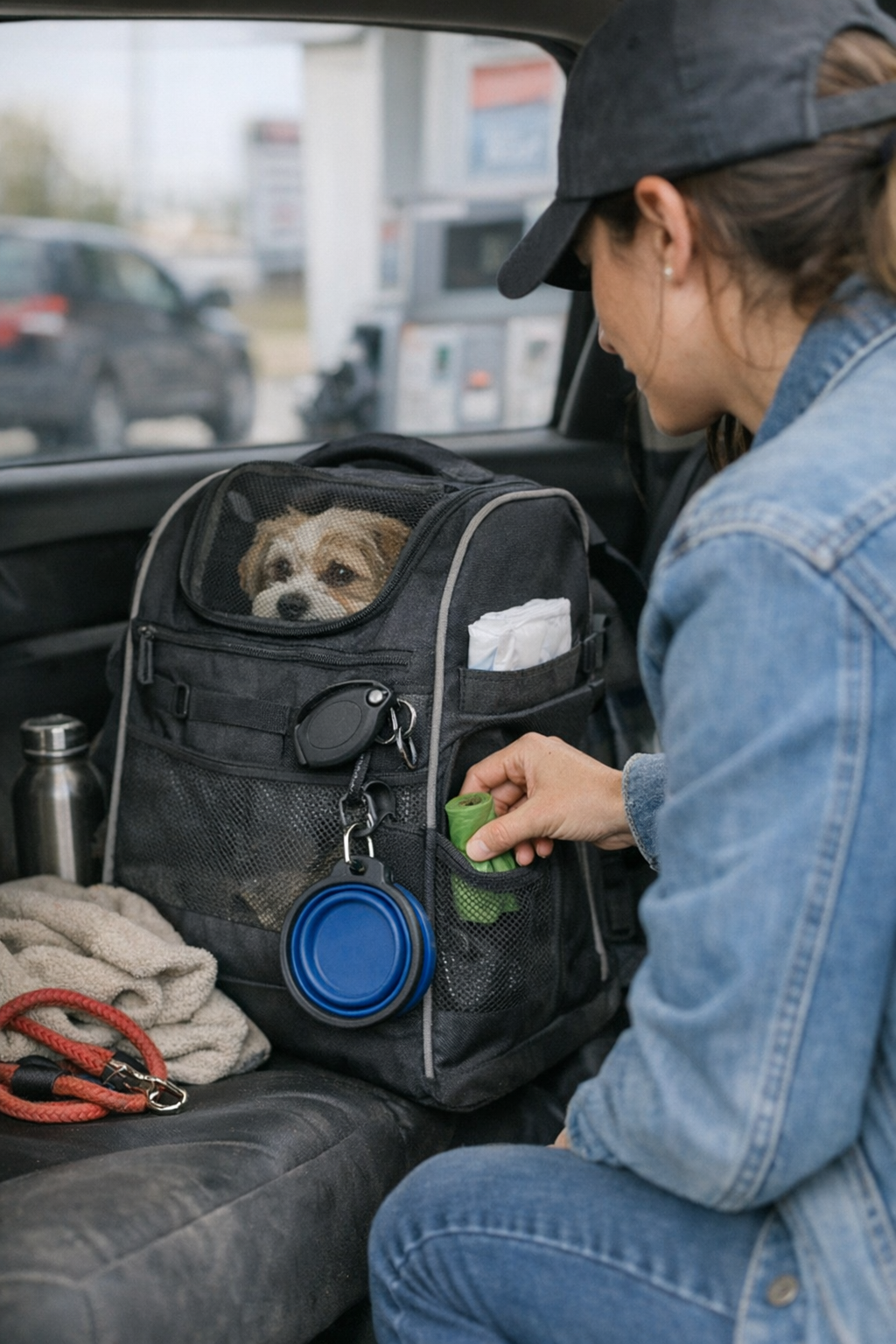
The real test for any pet travel setup doesn’t happen at home. It comes later—when you’re juggling short stops, a squirming pet, and seat-edge access with one hand. The bag that looked “ready” on your countertop starts feeling complicated fast: wipes wedged under towels, leashes tangled around comfort toys, and the thing you need buried out of reach just when your pet gets anxious or makes a mess. This is where most travel carriers and organizers—no matter how tidy they looked at first—begin to drag on every stop-and-go, exposing the pressure points that only show up in the actual flow of trips. Welcome to the PawGoTravel world: real pet travel, real frictions, and setups that have to work through the grind, not just the photo-op.
Why That “Organized” Bag Starts Slowing You Down
On the kitchen table, a travel bag with slots and pockets looks like planning in action. But the first real-world pit stop exposes a flaw: everything you need right now has slipped out of “quick access.” Instead of reaching in and pulling out wipes, you fumble under blankets and toy layers while your pet grows impatient—or worse, gets more restless. The surface neatness falls apart the first time you have to unpack half the bag just to reach the leash, or hunt for hand sanitizer somewhere between chews and treat bags.
This isn’t just about convenience; it’s about routine stress. Every delay—digging through soft goods, untangling a leash from bottle loops—adds seconds, multiplies frustration, and sets both you and your pet on edge. An organized look can mislead you into thinking you’re ready—right up to the moment you’re not.
Blocked Access and Hidden Repeats: Where Travel Setups Break Down
The real breaking points show up during the “in-between”—gas stations, quick walks, or the rushed pit-stop midway through a longer day. The same frictions keep coming back:
- Wipes for muddy paws buried under bulky comfort items or spares.
- Leashes knotted around water bottles, requiring a two-step untangling dance.
- A comfort toy needed for a nervous pet, but lost beneath a pile of non-essentials.
- “Missing” small items that force you to recheck every pocket or dump the bag yet again.
All this leads to a messy reset loop: grab, dig, disturb, repack, then hope nothing spills while you fumble to zip up—only to repeat at the next stop. Instead of speeding up the day, your bag disrupts it, layering small disruptions until they feel heavy.
When Pet and Owner Essentials Collide
Most “all-in-one” travel bags quickly become collision zones: your phone ends up with waste bags, a side pouch holds both treats and keys, and nothing lands back in its ideal spot after a single rushed stop. Every time you reach for something—whether it’s your wallet or the dog’s water dish—there’s a chance you’ll have to untangle, reshuffle, or risk misplacing something small but crucial.
The problem isn’t the number of pockets. It’s the way items interact under pressure. Leashes block wipes, personal items get caught up in pet supplies, and one poorly layered section keeps demanding attention. The real “friction spot” is where you hesitate—every reach that makes you slow down or double-check is a warning that your setup needs more than surface organization.
Small Disruptions Add Up: How Friction Grows Over a Day
Pet travel never feels chaotic in the first 15 minutes. But routine turns rough after three or four stops. By mid-trip, even a well-packed bag asks you to pause, dig, shut, reopen, and reset far more than you’d planned. Each of these pauses—grabbing wipes, untangling gear, re-stowing stray comfort items—chips away at your calm and breaks your return-to-movement flow. Your pet feels it, too: impatience rises, small anxieties grow, and the whole stop stretches out when it should just flow.
Cleanup gear never fails to signal the issue: always theoretically there, but rarely where a one-handed grab works while the other hand manages your pet. Problem-solving in real travel isn’t about “having what you need”; it’s about being able to get it, instantly, even during awkward moments.
Comfort Items: Help and Hindrance Wrapped Together
Blankets, favorite toys, and calming aids can make or break pet mood on the road—but if comfort items live buried deep, every attempt to soothe turns into a reset event. Pull out a blanket, and half the main compartment empties onto your car seat. Restore order, and now your stop has doubled in length. Comfort shouldn’t come by upending organization, but it keeps happening unless these zones are truly separated and accessible.
The best setups keep comfort items right where nervous pets can be soothed, but don’t force you to re-balance the whole bag after every use. When these moments run smoothly—no bag-upending, no surprise tangles—your routine actually speeds up, not just looks neater for the next departure.
What Actually Works: Direct, Split Access Beats Tight Layers
After enough road tests, one thing is obvious: shifting high-use gear—wipes, leashes, waste sacks—into external, upright, or mesh-access areas changes everything. In actual movement:
- Essential items remain instantly visible and grab-ready—no blind reach, no hidden stack.
- Returning used gear after a stop takes seconds; you never have to break your sequence.
- Repeated stops don’t erode structure; belongings stay sorted trip after trip, even when the bag starts to look less showroom-fresh.
- No more “pocket roulette”—if you need it at most stops, it should never be under another layer.
This split-access logic isn’t about outer beauty. It’s about dropping the drama of repeated resets. You stop dreading every grab, every return, and instead move through your travel routine with tight, predictable motion. The result is stress slipping away—not because routines are perfect, but because they’re finally friction-proof where it actually matters.
Simple Shifts for Repeat-Friendly Travel Flow
Start by matching your pockets to your most-used gear—not just filling the main cavity. If you can, dedicate side spaces: wipes and leash never overlap, soft comfort zones above the practical mess, and every “hot item” within one-hand’s reach. Every stop where you hesitate and search should mark a change: can you get what you need without breaking sequence or letting your pet get loose or pull away?
These aren’t big changes—they’re shifts from theory to repeat reality. Now, each stop is about movement: reach, return, move. Friction fades, start-and-stop feels consistent, and your pet’s mood stays steadier through messy, unpredictable travel days. It’s not about more “organization”; it’s about fewer slowdowns and no more resetting the bag every single time.
The Real Difference: Setup That Survives Real Life
Pet travel organization isn’t about showroom symmetry. It’s about a setup that won’t break stride on another day of real stops and unpredictable interruptions. What works isn’t what looks packed—it’s what keeps you moving, restores control after every routine grab, and never leaves you stuck at the bag while your pet pulls away or sits waiting for comfort or cleanup.
Test your travel setup where it counts: in the car, at curbside, on a short walk, or during a rushed break. Find the bottlenecks, the points you always fumble, and swap them for true quick-access or separated storage. The goal isn’t a perfect first impression. It’s a bag or organizer you can trust to keep pace with your real routine—one reach, one leash, one cleanup at a time.
Find practical pet-travel gear designed for real repeated use at PawGoTravel.