
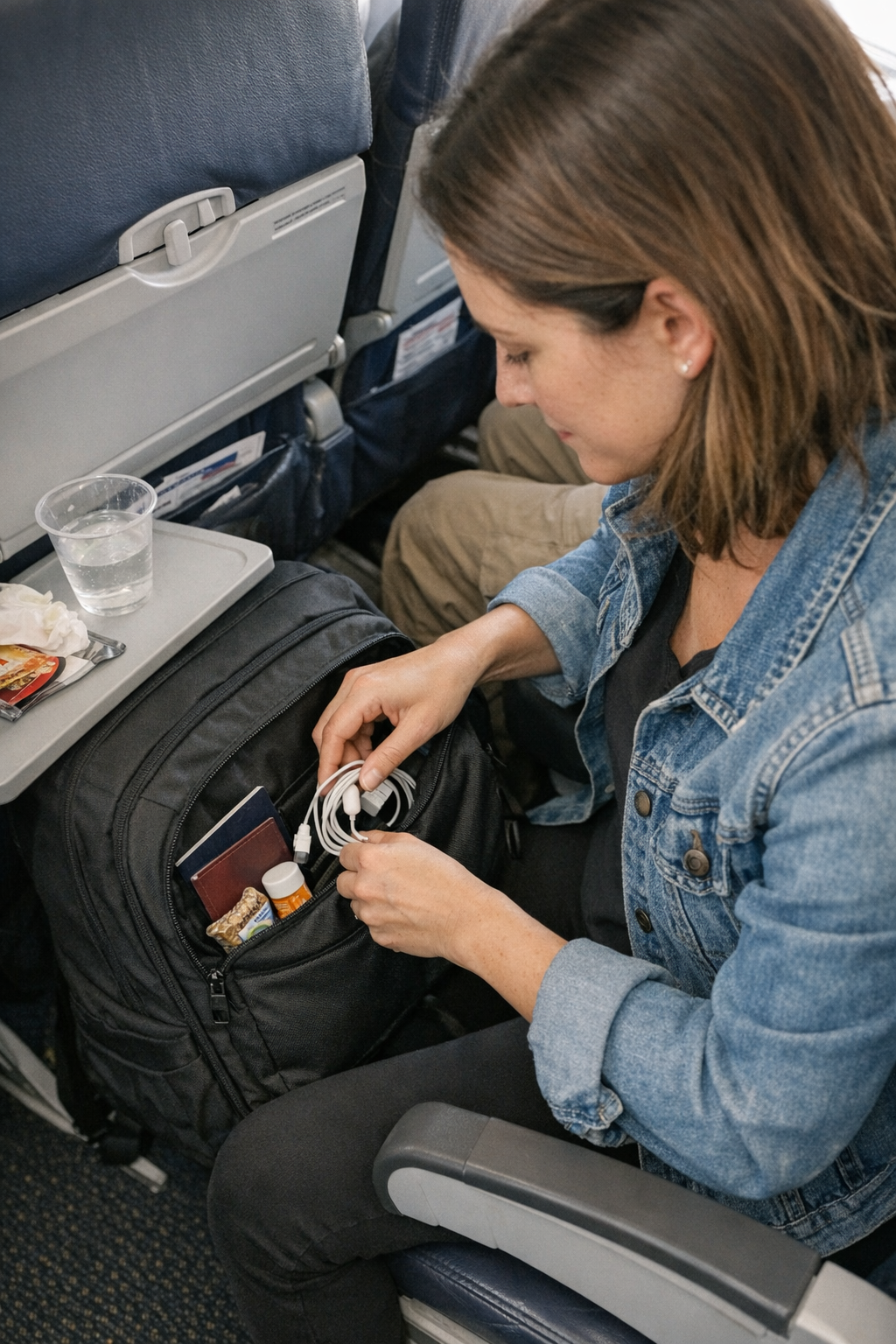
Even a perfectly organized carry-on can turn into a repeated headache once you’re in your seat. That zipper you zipped with satisfaction at home? Suddenly, it’s out of reach under the tray table. A pouch system that looks neat before takeoff can slow you down at the exact moment you need to grab your passport, headphones, or pen. If you’ve ever shifted awkwardly, digging deep for a single charging cable or quietly cursing a boarding pass buried two layers down, you already know: an orderly pack isn’t the same as an accessible pack—and that gap becomes obvious at cruising altitude.
Where Order Collides With Reality: The Hidden Weakness of a “Perfect” Pack
A carry-on that begins with color-coded pouches, clean stacking, and every item in its “right” spot usually wins big in the packing photo. But that surface control disappears as soon as you wedge your bag under the seat, squeeze between armrests, and realize basic access isn’t so basic anymore. Suddenly, zippers aren’t lined up for one-handed reaches—your main compartment hovers just out of reach, and every request for something small means disrupting a once-neat stack.
That feeling of visual order quickly vanishes the first time you unzip for your charger and end up shifting a sweater, two pouches, and a snack bag that slides off your lap. The packing method that made sense when open on your bed starts failing right when you can’t afford extra steps—like when you’re asked for your documents or need to untangle headphones with the seat belt fastened and a tray table blocking your arms.
Repeat Cycles: The Real Travel Friction
The drag isn’t a one-off. Each time you retrieve, return, or reshuffle—even just for normal inflight routines—the friction compounds. Fetching your pen, then your snack, then adjusting a charger means repeating the same slow dance. The logic behind your original arrangement gets eroded not by one bad moment, but by the number of small interruptions that stack up every hour on board. What felt effortless at the gate starts feeling sluggish, and the discomfort is cumulative.
Moments Where Your Seat Setup Is Truly Tested
Missed comfort isn’t dramatic—it’s incremental and stubborn. These are the situations that expose the weak spots in most “organized” setups:
- Seat Entry Stumble: Blocky gear bumps the armrest or stalls in the aisle. Retrieving basics often means pulling your whole bag up from under the seat, usually while someone else waits or the aisle crowds up.
- Tray Table Trap: Once the tray drops, your main compartment might as well be locked shut. Find yourself juggling a laptop, propping items on your lap, or trying (and failing) to grab a cable blind.
- Layer-Stacked Standoff: Every pouch and tidy stack is an extra obstacle. Need something you used 15 minutes ago? Prepare to shuffle through your whole arrangement.
- Document Check Delay: Boarding passes and IDs may look “secured” in deep inside pockets, but accessing them during routine checks creates a scramble when you’re supposed to move fast.
A setup that seemed calculated for order at home starts to feel like a recurring bottleneck the minute you need to access anything on the fly.
Visual Order Isn’t Travel Flow: The Subtle Cost of Over-Structuring
Travel efficiency isn’t about photographs or packing lists—it’s about constant movement. That main compartment, showroom-ready at home, becomes a chokepoint the moment you try to grab an everyday essential. More pouches kill visual chaos but add layers of retrieval and repacking. Every time you need your medication, tech, or snack, the steps multiply, and the small irritations pile up, especially when space shrinks and your reach gets awkward.
An organized cable roll and tight shirt stack look impressive in a hotel room; midflight, you’re rooting around for a stray pill bottle or hunting for the elusive cord you packed “just right”. Each small use scratches at the system’s weak spots—what looked controlled on the outside now generates repacking chores after every interruption.
When Neatness Slows You Down
You can spot a weak spot not at takeoff, but halfway through your routine. The same pouch gets opened for the third time in an hour. By the fourth or fifth retrieval, the price is obvious: more shuffling, longer pauses, and a setup that gives up speed for the illusion of order. The original “system” isn’t broken, but it’s working against you at every turn.
Restructuring for Real Use: What Actually Helps in Transit
The fix isn’t in tighter packing—it’s in placing high-frequency items where they work during repeated use. If chargers, snacks, and travel documents are buried in your primary stack instead of a direct-access outer pocket, you’re signing up for repeated interruptions. What looks “tidy” laid out on a bed just creates more steps under a tray table.
The best carry-on setups for real-world travel prioritize immediate reach: one-motion retrieval for those things you’ll need midflight, through security, and right before landing. Repeating-use items—phone charger, passport, medication, pen—should be in outer pockets or seat-facing organizers, not trapped under a pile of less-used gear. That switch alone transforms retrieval-from-memory into muscle memory: grab it, use it, stow it in a single move—without fishing or balancing.
The Real-World Impact: Less Disruption, More Focus
Your travel rhythm shifts instantly when essentials live in easy-reach compartments. Instead of a two-handed dig for your notebook or a balancing act with your pouch on your knees, you slip a hand into a pocket and keep moving. Checking your ID or getting a snack becomes a blink, not a routine. And when landing approaches? Packing up is fast, with no guessing where you stashed your last-used items or scrambling to reseal pouches as everyone stands up around you.
Travel stress isn’t measured in major mistakes—it’s in the friction of repeating small, preventable hassles. Kill the repeated shuffle, and every stage of your trip feels faster and more under control.
Building a Seat Setup That Survives the Entire Flight
The strongest systems focus on movement, not just looks. Ask: how often will I want this item while seated? If something is a high-frequency essential—like your charger, travel documents, comfort items—give it its own close-access pocket. Not a catch-all abyss, but a clearly assigned slot that’s reachable even when space gets pinched.
- Designate a direct-access place for each high-use item. Outer and seat-facing pockets matter more than another tidy inner layer.
- Minimize stacking and nesting that interfere with simple retrievals. If grabbing your water bottle means disturbing your headphones, rewrite the arrangement.
- Focus on quick return—items that come out repeatedly should fit back into place in one motion, not require a reshuffle each time.
You only recognize true carry-on flaws in motion. If a pocket or pouch keeps slowing you down, that’s the cue for a practical adjustment on your next trip.
The Gap Between Looks and Function: What “Really Works” Means for Repeated Use
The setups that fail are usually the ones that look finished from the outside but create new obstacles mid-journey. What matters isn’t an initial sense of order—but how few interruptions you actually face across your real flying routine. The right carry-on structure is proven not on your first retrieval, but after you’ve been in your seat for hours and all the small motions still feel smooth and recoverable.
The difference you’ll feel comes down to simple corrections: move the item that keeps slipping to a better pocket, bring high-frequency essentials into the light, shave seconds from each step. The less time you spend fixing, fishing, and repacking, the more your carry-on helps—without ever drawing attention to itself.
Get setup for smoother, easier flights with practical seat-side tools and fast-access organizers from CarryOnSupply.