
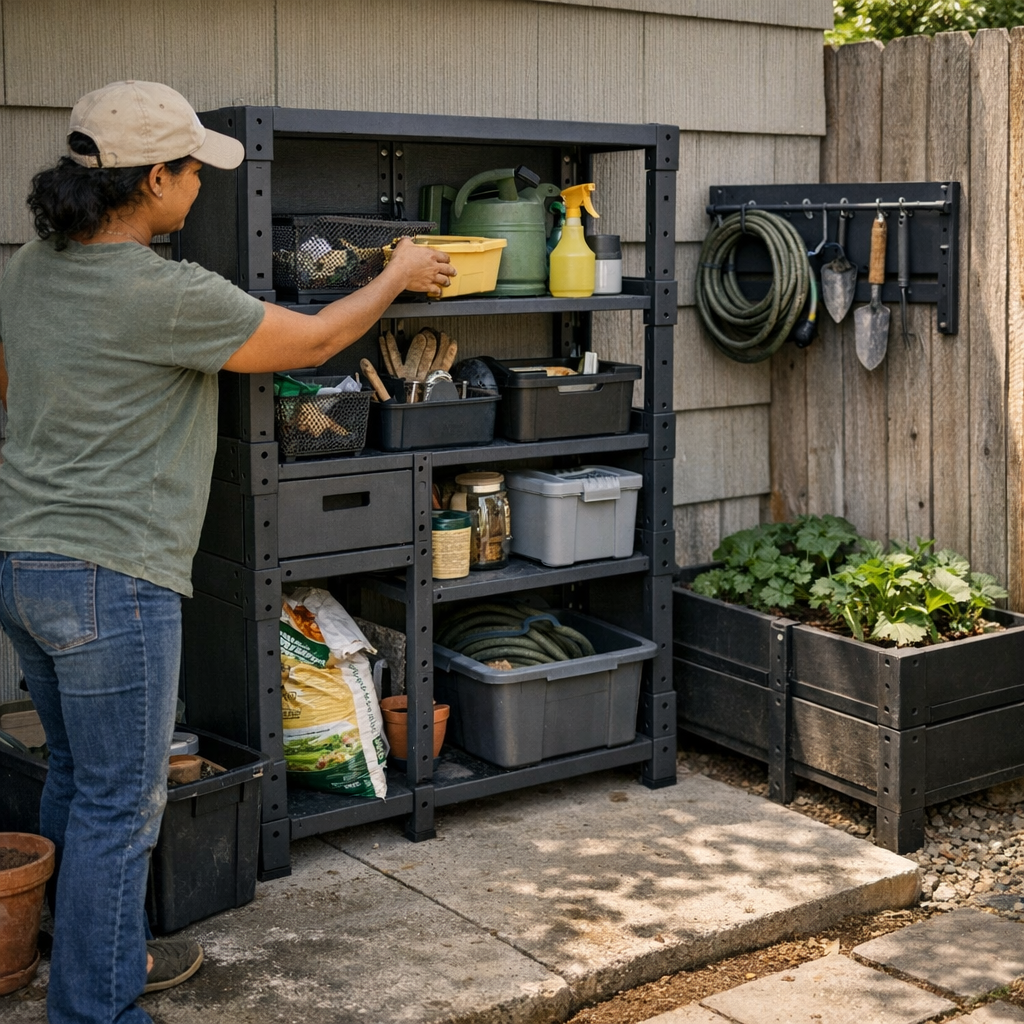
When storage setups drift, daily routines break down fast. Maybe you start with bins and hooks snug against the wall or shelves stacked with intention. Everything looks under control for the first few days. But by the end of the week, reality sets in: the sliding rail has shifted, baskets wander to new corners, modular bins start to multiply, and the tray that once just held your keys is slowly suffocating under layers of chargers, random mail, last week’s receipts, sunglasses, and more. Instead of cutting down on wasted motion, these storage “solutions” become constant sites of friction—a quick step to grab headphones turns into five seconds of rummaging. Suddenly, the space that looked efficient now stalls you at the worst possible moments.
Why Flexible Storage Systems Break Down So Easily
The first crack is barely noticeable—a bin tucked under a shelf, a catch-all basket that was meant for overflow but never leaves. The adjustable cord holder migrates just far enough to throw off muscle memory. Before you notice what’s changed, you start reaching twice for your phone charger or asking who last saw the spare mail key. Flexible systems promise adaptability, but when the actual storage units don’t hold their ground, every category inside them gets blurry. Chargers don’t stay put. Mail splits across surfaces. The “sorted” tray is back to chaos in a week. The more the storage arrangement shifts, the more you’re forced into micro-resets—repeating the same tidying and searches again and again.
It’s not that flexibility is useless—it’s just that, in real life, storage that keeps moving eventually creates its own maze. The ripple is always the same: routines lose speed. An area that seemed to solve your mess becomes one more stop that interrupts your flow, especially in shared or high-traffic spaces.
The Quiet Strength of a Fixed Storage Point
Stable storage outperforms the clever stuff. The unmoving hook by the door or the shelf anchored in place doesn’t draw attention, but it keeps routines from unraveling. When a storage spot stays put and its purpose is obvious, the retrieval-and-return cycle becomes almost automatic—even as the days get busier, or the contents change with the seasons. You waste zero energy wondering where things migrated. The hand-off just works: sunglasses, keys, headphones, even two remotes all return to the same spot.
This isn’t about demanding rigid order. It’s about minimizing doubt. The more you relocate your anchor points, the more invisible clutter and hesitation creep in. In a shared house, mobile storage multiplies confusion. One person’s “solved” zone is another person’s “where is it now?”
Scenes from Daily Use: When Storage Frustrates More Than It Solves
The Entryway Reset That Never Sticks
You come in loaded with bags, mail, and keys—aiming for the same tray as last time. But it’s slid down the console or landed halfway onto the counter. Sunglasses are in the basket, keys are buried, and mail has already scattered into a side pile. By Friday, a ten-second grab turns into rifling through a mound that’s half yesterday’s change, half mystery items.
Overflow Corners and Guesswork Zones
The living room’s modular bins start out organized: books, toys, remotes. Then the overflow hits—sports gear, receipts, a phone that needs charging. One bin swallows the rest and, within days, you’re opening every lid searching for a single cable. Shelf space looks busy but not actually functional.
Blocked Movement and Awkward Footprints
The floor basket that seemed perfect at first expands into the path—now someone always stubs a shoe or steps around it. Rolling carts back up into dead zones, used more as an accidental barricade than accessible storage. A setup that once hugged the wall now sprawls awkwardly, boxing you in just to reach one item.
Why Anchored Spots Make Return Flow Automatic
Stable return flow depends on the spot never shifting, even as the mess builds up around it. Mount a hook precisely where you naturally reach—or secure a tray where your hand lands after walking in. The fix is immediate: your stuff lands there with zero added thought and resets don’t stretch into the next day. Because the location is constant, everyone stops guessing, and essentials always surface first.
Over a normal week, the difference is visible:
- No asking “Did I move it, or did someone else?” every morning
- Overflow is spotted and managed quickly—never swallowing the anchor point completely
- One recovery spot prevents you from hunting through half a dozen bins or baskets for a single missing charger
Keeping Overflow from Contaminating Category Clarity
Overflow happens—but with an anchored storage spot, the spill is contained. Extra mail or backup cables pile up nearby, not mixed in with daily-use items. The anchor never gets buried. The family’s main keys or chargers always resurface in moments, while secondary clutter signals itself at the edge. Resetting stops being a half-hour hunt and turns into a quick hand sweep.
Where to Anchor for Long-Term Usefulness
Focus on storage anchors at daily transition points. That means:
- Directly inside your most-used door—so nothing detours out of sight
- Beside the main outlet where every device gets charged
- On the direct line between bedroom and bathroom for routines that happen half-asleep
- At the spot next to your favorite chair—minimizing the urge to drop items “just for now” onto surfaces or the floor
Forget about symmetry for its own sake. The right location is the one that stays frictionless through repeated use—even as habits and people change.
When Consistency Matters Most
Shared spaces—hallways, kitchen corners, open mudrooms—expose every flaw in mobile setups. Each different rearrangement fractures routines. An anchored point builds muscle memory for everyone. If you let storage points keep migrating, confusion multiplies: a “temporary move” becomes a week-long guessing game. The real reward for keeping storage fixed is simple—smoother resets, fewer lost items, less disruption, especially when pressure’s on.
The Bottom Line: Stability Beats Flexibility When It’s Time for Action
Adding more flexible storage feels like the easy fix when clutter spreads. But the system that lasts is the one with an immovable anchor for must-use items. When overflow happens, it surfaces around the edges—not inside the core routine. Instead of chasing the look of order, anchor your most-used zone and let it do the heavy lifting even as conditions change. The setups that actually keep up—on your busiest, most distracted days—are the ones that can’t drift.
See practical storage systems for real use at Gridry.