
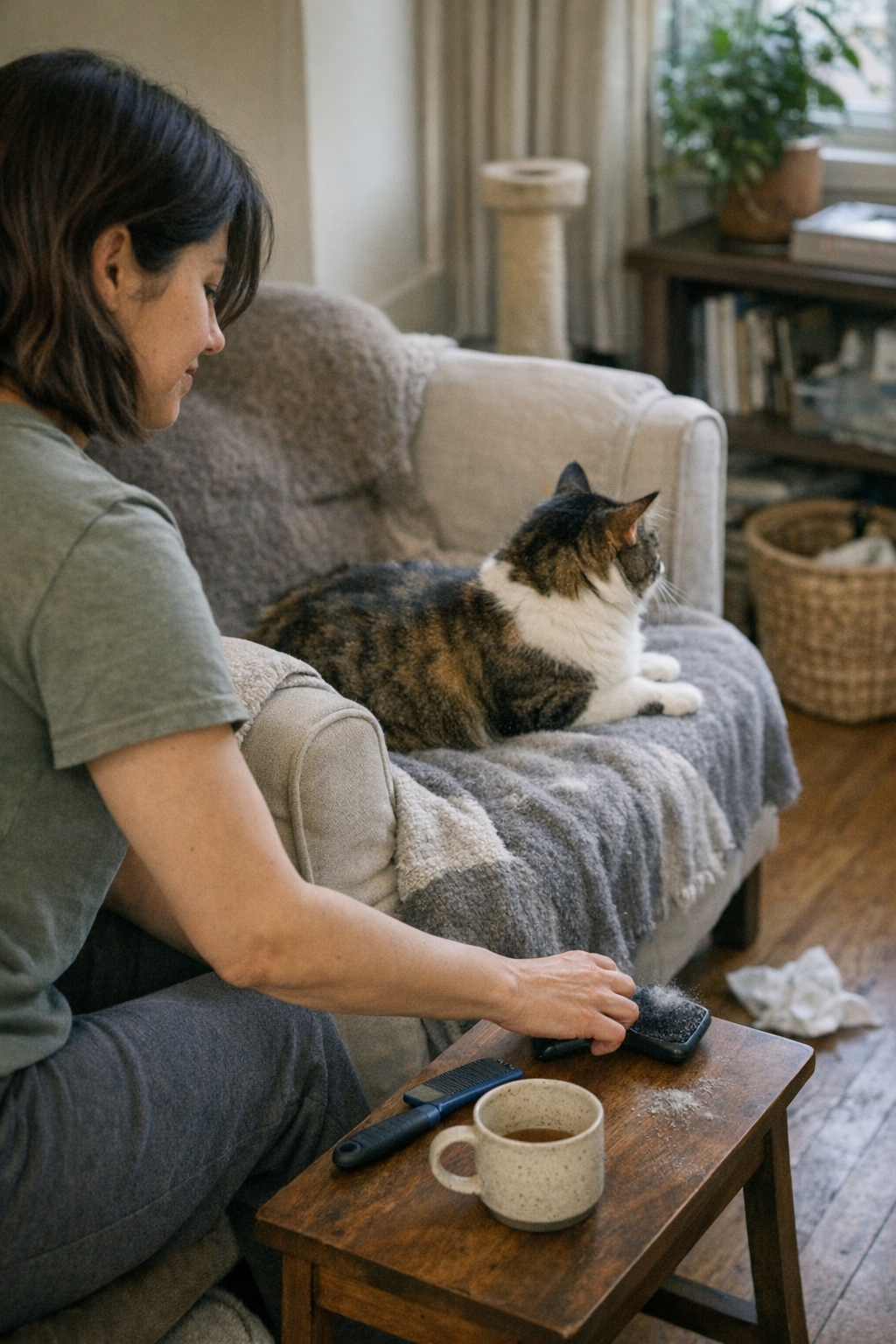
Grooming an indoor cat can seem simple—until you’re halfway through, fur on your hands, your cat tensing up, and the “quick session” is already dragging out the evening. You squeeze in brushing between other chores, pushing for that fully smooth coat, but every extra minute you insist on finishing costs you tomorrow: your cat bolts at the first brush rustle next time, the grooming blanket sits ignored, and the supposedly tidy corner quietly turns into a work zone no one wants to use. The room might look put together for a moment, but the setup is starting to fight back—more scattered fur around the baseboards, tools piling up instead of staying ready, and a routine that now feels like a drawn-out negotiation. The right grooming setup is supposed to cut friction, not bury it under a cleaner surface. StillWhisker’s world is about setups that hold up to repeat resets, not just one perfect-looking session.
Why Shorter Grooming Sessions Change the Pattern
Cutting sessions short the moment your cat shows tension isn’t just about being gentle—it’s how you keep daily resistance from spreading across the week. At first, skipping those last lingering tangles feels like you’re leaving the job unfinished. But over a few days, you notice it actually gets easier: there’s less wrestling to start, less hiding before you begin, and fewer tools left abandoned on the nearest counter. Grooming shifts from “squeeze it in and brace for trouble” to quick, manageable resets the cat barely bothers to protest. Your hands spend less time tracking fur under chairs, more time keeping the shared spaces livable.
This isn’t about ignoring mats or letting things slide. It’s about dodging the trap where brushing always ends with a struggle, the area gets quietly avoided, and every future attempt starts as a standoff. The longer the resistance builds, the more likely it is your supplies end up shoved out of sight, home spaces get interrupted, and you wind up putting off basic upkeep just to avoid another round.
Recognizing the Real Tension Points
Every indoor-cat setup eventually reveals pressure points. Maybe there’s a chair corner reserved for grooming—blanket spread, brush stashed nearby. First week, the reset is easy. Over time, though, you spot wariness: your cat keeps an eye on the brush instead of the window, the blanket rarely stays in place, and fur works its way into every unreachable crack. The “grooming corner” is visually clean, yet supplies stop being easy to reach, and every session feels like a second round of prep and chase rather than maintenance. The weak spot isn’t the amount of fur—it’s the friction that grows if the setup never adapts.
Tools that look stored can become hard to grab. Blankets that seemed convenient start sliding off, forcing an awkward grip mid-session. Cleaning up takes longer—not because there’s more mess, but because you’re repeating a cycle instead of relying on a flow that just works.
“Finish Everything” vs. Flowing with the Cat’s Rhythm
It’s tempting to push for a fully done session—a smooth coat, a swept area, zero loose fur. But insisting on that “one last brush” is what slows everything down, day after day. As soon as your cat arches, flicks a tail, or subtly stiffens, you’re at a crossroads: pause now and keep reset friction low, or stretch for those last few tufts and bake tomorrow’s resistance right in. The cost rarely shows up immediately. Instead, here’s how it plays out in repeated use:
- The brush never leaves the room, because bringing it back out means another chase.
- Your cat circles the grooming space, watches you move, then waits for you to give up before settling in.
- Fur lines appear under furniture even after a “good” session, because cleanup always gets delayed.
- The blanket, instead of being a tool, becomes another thing to fold and move, clogging up the next shared use.
The more you try to polish the area in a single go, the more breakdowns you inherit for the next round. A great-looking reset means nothing if it takes double the effort to use again tomorrow.
The Accumulating “Invisible Mess”
A room can look spotless—blanket folded, fur binned, brush discreetly tucked away—and then slow everything down later. The invisible mess isn’t just physical: it’s the buildup of avoidance, longer pauses before starting, and tools that no longer feel easy to use or return. When resets always take “just a minute longer,” daily flow breaks down. You swipe a cloth on the armchair, but fur lingers beneath. Grooming turns into circuitous errands—find the brush, hunt for the blanket, corral the cat—and your sense of order gets chipped away by small, repeated delays. A setup that isn’t fluid in daily use is one you’ll eventually sidestep.
Spotting the Signals: When to Pause
Indoor cats signal resistance before the full stand-off. You’ll feel a shift—tail flick, head twist, muscle stiff under your hand, paws repositioning, a purr that cuts out. If you stop at that moment, even with clumps left, you’re saving yourself the next chase around furniture. That half-minute “unfinished” session is what keeps both your cat and your supplies ready for the next round.
This isn’t indulgence. It’s what keeps grooming supplies accessible instead of buried, what lets the cat use the chair without hesitation, and what turns grooming from a project back into a manageable reset—one you can handle any night, not just when you’re fully prepared for hassle.
Example: The Blanket Corner Routine in Real Use
Picture a regular evening: blanket on the armchair, brush pulled from the nearby bin, cat just waking from a nap. Brushing starts easy, then halfway through there’s a subtle twitch or sharp inhale. Rather than bargaining for another minute, you let go—literally. The brush gets wiped, blanket shaken, and both stash easily without a second trip across the room. Cat leaves without a sprint; space goes back to normal. A week later, you realize cleanup no longer drags, and the cat doesn’t vanish at the sight of the brush. The routine holds up quietly—you spend less effort fixing messes that “good intentions” created last time.
Reset Flow: Handling What’s Left Behind
Leaving stray fur or skipping the “perfect finish” isn’t laziness—it’s the structure that helps your setup do its job day after day. That imperfection keeps each session lighter, shortens hunting for displaced tools, and means the area never turns into a flagged-off zone everyone would rather avoid. Fur missed today is less work than compounded avoidance all week.
Tools returned without resentment get used more. You stop shoving supplies behind closed doors, and spent blankets don’t pile up, damp and forgotten. The grooming setup actually becomes a part of the room’s routine: visible, usable, solid.
Cleanup and Shared Space: Managing Adjacency
No grooming setup is self-contained—fur drifts, tools move, comfort items migrate from shared chairs into every corner. When resets are short and low-tension, cleanup rarely grows into a full project. You brush and tidy up in one move; the blanket returns with the cat, not trailing hair through the hall. Shared spaces stay in play, not divided into “cat zones” and “resets waiting to happen.” No urgent overhauls. The area is ready to be used again for something else—reading, napping, guests—without a mental note that there’s an invisible job still waiting.
Real Friction, Real Improvement—Not Perfection
No method erases every snarl or spilled fur clump. Bad weeks happen: the brush gets batted away; you spot undone fur in the favorite nap spot. The difference is, you’re not wading through a week’s worth of delayed resets, chasing after perfection that only lasts for hours. Smoother, shorter sessions soak up the hidden strain—what’s left is an area that gets easier to use, not just cleaner to look at. Eventually, visual calm lines up with a setup that actually requires less effort between chores, not more.
Trusting the Setup: Small Adjustments, Lasting Gains
No two homes run the same routine. But the shift that makes a grooming area work is always about repeat use—not one-off cleanliness. Brushing supplies left within reach and not resented, blankets you don’t dread washing, corners you both return to instead of tiptoe around—those are the signs that small adjustments are adding up. Listen early, pause before protest, reset with speed. When grooming fits into your actual week, the rest of the home starts to run smoother too.
See more ways to make indoor-cat routines easier at StillWhisker