
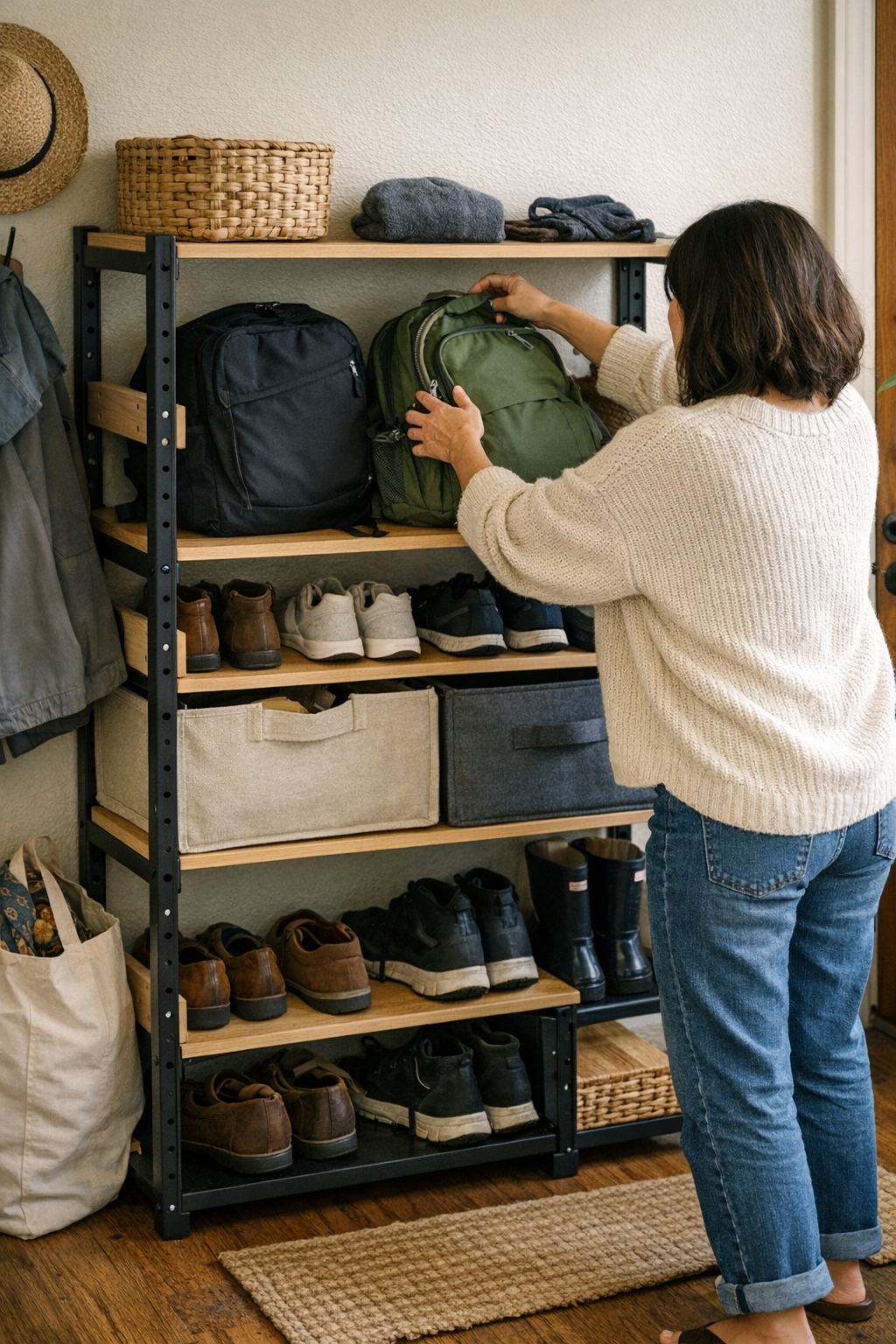
The Hidden Cost of a Weak Entryway Cabinet: Blocked Paths, Daily Drift
You lay down a shoe rack or wedge a slim cabinet beside the bench, hoping the entry stays managed. But most entryway storage only works when it’s new and nearly empty. By the end of the first week, real life wins: shoes splay, backpacks slide, and heavier coats tug shelves out of line—a silent shift that turns routine drop zones into friction points. Entry becomes a stop-and-go lane: cabinet doors hang crooked, the shoe row spills past its edge, and what was meant to keep the flow moving now interrupts it. That brief appearance of order dissolves, especially when every return or rush out the door resets the mess instead of containing it.
Where Flex Gives Way: The Inconvenience Shows Up Fast
Cabinets pass muster on showroom floors or after a weekend install. The real breakdown comes under pressure: a muddy bag lands, boots pile up after rain, or your kid’s lunch is dropped on already-crowded shelves. Suddenly, flexible storage isn’t just bending—it’s misaligning, pushing rows outward, and jamming the path. Most cabinets don’t fail dramatically; they slowly lose the fight in everyday use. Shelves bow, doors drift, shoe lines bulge, forcing constant reshuffling just to get through the threshold. Every drop-off becomes a small struggle, every reset less effective than the last.
Threshold Creep: The Start of the Slow Slide
You notice it mid-task: a bag coaxed onto its shelf slides toward the front; a door that used to swing free now snags on a leaning rain boot. Shoes, once straight-lined, now pile at an angle—so returning one item requires compressing, shifting, reconsidering where anything goes. Instead of a quick grab-and-drop, you’re stuck untangling the drift at the margin, especially right when you’re late.
Snapshots of Real Entryway Tension
The Quick Drop Is Never Quick for Long. Come in with wet shoes and groceries. The bottom shelf flexes under new weight, bags tip sideways, and soon the shelf sags. By Thursday, the line of shoes blocks the swing of the cabinet door—and now every single retrieval means moving something else first.
Bench Relief Turns Into a Catchall. The bench made for sitting becomes the fastest overflow: you go to untie laces and, with nowhere to put your bag, it lands on the bench—joined soon by jackets and mail. The wall cabinet, maxed out, can’t keep pace. Overflow slides to the nearest surface and then to the floor, erasing even the illusion of usable space.
One Return Throws the Whole System Off. Narrow margins by the door mean one wobbly shelf or misaligned cabinet creates a domino effect. Return a backpack or jacket, and nearby shoes nudge out of place—or worse, tumble into the path. No single zone holds its boundary, and what should take seconds to return becomes a multi-step roadblock.
The Real Price: Disrupted Routines, Chronic Reset
This isn’t just a tidiness problem; it’s a slow routine wreck. Sinking shelves and persistent overflow make the simple act of leaving or returning home more awkward—clutter collects at the threshold, the path narrows, and every bottleneck adds seconds and frustration. Resetting the entryway every few days isn’t a solution—it’s a sign the setup is outmatched. Instead of one clean motion, you’re pausing, lifting, shuffling, and still rarely getting things back to “clear.”
Movement Stalls, Access Fades
Transition zones should smooth re-entry. But if storage flexes under normal use, items slide forward, clogging both access and exit. One shelf starts to bow and shoes push out, bags fill open gaps, and the pass-through tightens. Multiple people at the entry amplify the friction—there’s no room to move, so everyone waits, shifts, or detours. Rigidity, not just storage space, is the deciding factor in keeping zones functional day-to-day.
How Rigid Cabinets Reset What’s Possible
Rigid cabinets turn daily chaos into lasting order. Structural firmness does what surface tidiness can’t: it preserves flow under pressure. A cabinet with real internal support withstands loaded boots, collapsed umbrellas, and stacks of bags without warping or shifting. Doors align, close tightly, and never wrestle against sagging contents. Shoes remain in neat rows, bags rest flat, and resets take a brief sweep—not a complete reshuffle.
- Shoes line up without spreading past their boundary
- Bags sit where they’re put—no sliding, no tipping piles
- Evening resets become quick touch-ups, not frustrating projects
- Entry paths stay open for the next rush hour, not blocked by today’s overflow
The upgrade becomes visible immediately: routines simplify, traffic flows again, and the edge clutter that used to rebuild overnight holds its line. What used to shift with every new arrival now absorbs pressure and stays put—even at peak use.
When Design Materials Fail Entryway Conditions
Decorative cabinets often use thin panels and light supports—plenty for static bedrooms, hopeless in a shared threshold. Entryway demands are heavier: repeated slams, shifting loads, wet gear, bags filled beyond expectation. Under this stress, thin shelves sag, doors torque, and grouping categories collapse into a single muddle. Cabinet weight and shelf strength matter more at the entry than almost anywhere else—real supports turn daily shoving and stacking from a source of mess into background noise absorbed by the structure itself.
Early Warning: Is Your Cabinet Already Losing?
Don’t wait for a visible collapse. The clues show up first in practical friction:
- Shelves tilt or bow under backpacks or just a few jackets
- Doors stick and misalign after routine dump-and-go sessions
- Items shift or roll off with each new placement, never staying put
- Resets drag out longer and work less each time—clutter resumes almost overnight
Each sign means the cabinet is actively undermining your movement flow. Flex isn’t minor; it slows, blocks, and interrupts repeated entry and return.
Field Tips for Durability—Not Just Decoration
Whether diagnosing a current pain point or planning your first upgrade:
- Do a Load Test: Pack shelves the way you actually use them. Watch for bowing or corner gaps in the first week, not just on day one.
- Demand Reinforced Design: Seek out storage with crossbars or thicker, stiffer components—especially if you mix shoes, bags, and coats on one piece.
- Define Each Zone’s Load Limit: Avoid stuffing wall units just because space looks available. Overflow bites back by creeping to any flat surface—wasting the setup’s entire effect.
Final Difference: Lasting Order or Relentless Mess?
Keep a flexible cabinet in a transition hub and congestion is guaranteed—it just shifts and grows with every use. Introduce rigid support and the change is immediate: drop zones hold, movement flows, reset work shrinks. Entryway rhythm survives heavy use, varied family routines, and storm-day gear dumps—no energy wasted on daily recovery.
Reliable storage isn’t about appearance. In a between-space, it’s the difference between looking managed and actually staying clear when pressured again and again.