
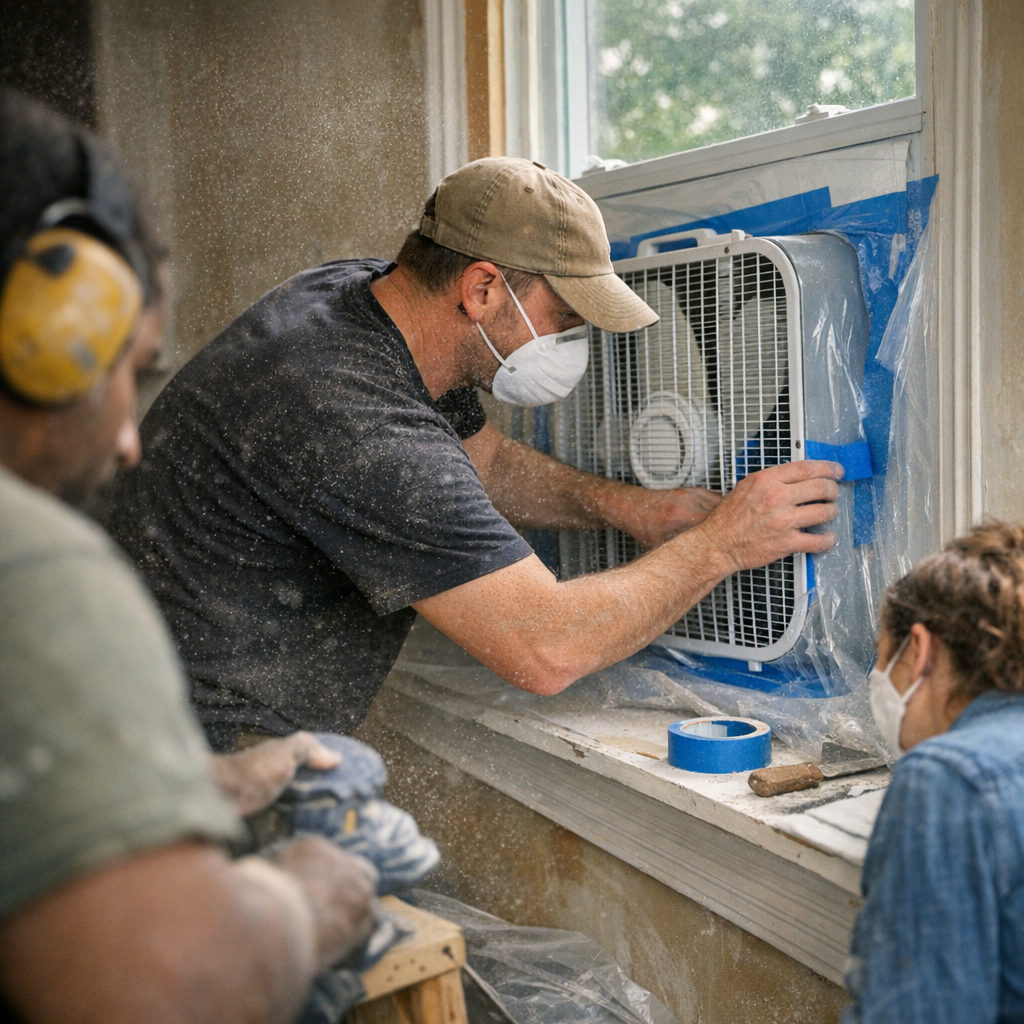
Every remodel starts with hope—fresh trim, crisp walls, that satisfying last coat. But it only takes one sanding session to realize: mess is the part no one warned you about. Fine dust creeps past drop cloths and drifts through air that’s supposed to be clear. What’s worse? The ventilation fans you set up to control it can sabotage you if they aren’t tuned to the chaos of an actual job site.
Where Dust Really Escapes—And Why “Good Enough” Isn’t
Most of us grab a fan with the right CFM and figure, that’s settled. But on real jobs—think cramped garages, patched-up window frames, rooms with three paint-splattered extension cords snaking underfoot—specs stop mattering the moment you hit power.
By evening, you’re chasing halos of dust trailing along windowsills, finding powder tracing every groove and latch you already cleaned. This dust isn’t random; it’s finding the same cracks at the fan edges or through the loose corners of leftover plastic wrap. Suddenly, a “pretty good” setup guarantees you’re wiping the same sill, again and again, just to keep it presentable.
The Missed Details That Cost You
This is where the frustration creeps in. Old sash windows never seat tight. A box fan pressed into the frame leaves a 3 mm gap, and that barely-noticed opening lets a day’s worth of sanding sneak right back inside. The dust lines you see later? They’re the record of every seal you skipped or bit of tape you thought you didn’t need.
Picture a cabinet repaint: by round two with the orbital sander, the hardware should gleam. But instead, powder traces the hinges, and odd angles catch stray dust you thought was cleared. The job drags—you keep cleaning, and that haze in the kitchen light never actually fades away. Precision work can’t compete with migrating dust.
Why Fan Ratings Disappoint in Real Life
Temporary setups always start with optimism. Two fans, plenty of plastic sheeting, maybe even a new air scrubber. But midweek, you find yourself swapping clogged drop cloths and scrubbing floors more than sanding or cutting. That’s because, in the real world, no two fans perform equally once windows, tape, and jobsite clutter get involved.
- Plastic sheeting sags or peels back as work drags on—dust slips through the soft gaps.
- Window frames, especially in older houses, fight every attempt at a seal. Tape alone isn’t enough.
- Big CFM? Worthless if edges aren’t tight. That dusty haze finds every weakness, no matter what the box promises.
It doesn’t happen all at once. Three or four rounds of sanding, cutting, or popping nail holes, and those small islands of dust begin pooling in every corner you missed—pulling you into a cleaning loop instead of finishing the room.
Real Scenes: Hours Lost, Edges Blurred
You finish a round of trim sanding, flick off the fan, and leave for lunch. When you’re back, the air’s cleared a bit, but the sills and trim sport a ghostly layer—visible only when sunlight cuts in. Grit crunches under your boots, and the residue turns every painted edge sticky. The room is supposed to be ready for paint, but more hours will disappear into recleaning. Odd-shaped windows or warped frames only make it worse: sealing becomes improvisation, never precision.
Older spaces make you pay double. Bowed frames, swollen wood, antique hardware that keeps the fan from ever sitting flush—the cleanup simply never ends. By the last coat, fatigue sets in, precision slips, and the final result looks less sharp than you planned.
Quick Fixes That Actually Stick
You don’t need an upgrade—just discipline on the details. Crews that get ahead often double up on their plastic sheeting at the fan, layering tape until every edge hugs the frame. Every seam or gap wider than 5 mm gets a fresh strip of painter’s tape, no excuses.
There’s a night-and-day difference on the cleanup: fewer smudges, fewer haze complaints, and actual breathing room in the air. Cleanup shrinks to what’s reasonable, and finished surfaces finally stay finished. It doesn’t just feel better; the quality of your detail—painted trim or polished flooring—holds up under bright light and close inspection.
Test every setup: run a strip of tape in front of the fan and watch its movement. If the tape hangs limp or flutters away from the window, something’s leaking—stop, seal, and check again. Five extra minutes now means saving yourself hours later.
Field FAQ: What Survives in Tough Jobs?
Will a cheap box fan ever be enough?
It might—if you obsess over sealing and check it every round. Don’t skip filtration if fumes are part of the job. Without attention, box fans leak fine dust or paint vapor right back in; by the third sanding, you’ll see the film where you don’t want it.
How do you spot a lousy seal before it ruins your finish?
After your first round, look for sharp dust lines at the far ends of the room, a slow buildup in corners, or a faint stickiness on what should be a clean surface. Even a passing hand over painted trim picks up grit—clear signal something escaped.
Quickest improvement if you’re stuck?
Don’t overthink it—seal every edge. Double up plastic, fix weak spots with fresh tape, and target any gap, no matter how small. If you keep finding dust, reassess not just the fan, but your entire fit. Sometimes swapping the direction, or re-pressurizing the setup with a different window, changes everything.
The Payoff: Containment That Works—Not Just on Paper
Perfect control? Rare. What really matters is a system that adapts—not one that just looks good for a walkthrough. Jobs go smoother, and detail work holds up, when you embrace tight sealing as routine—not luck.
No tool or accessory beats minutes spent tightening up seals. If you notice haze, tacky residue, or still have to vacuum after every stage, trust what you see, not what the box claims. In real remodels, control is earned setup by setup—and the best crews know their sharpest competitive edge isn’t a fancier tool, but tighter, smarter staging before the first cut or sanding pass.