
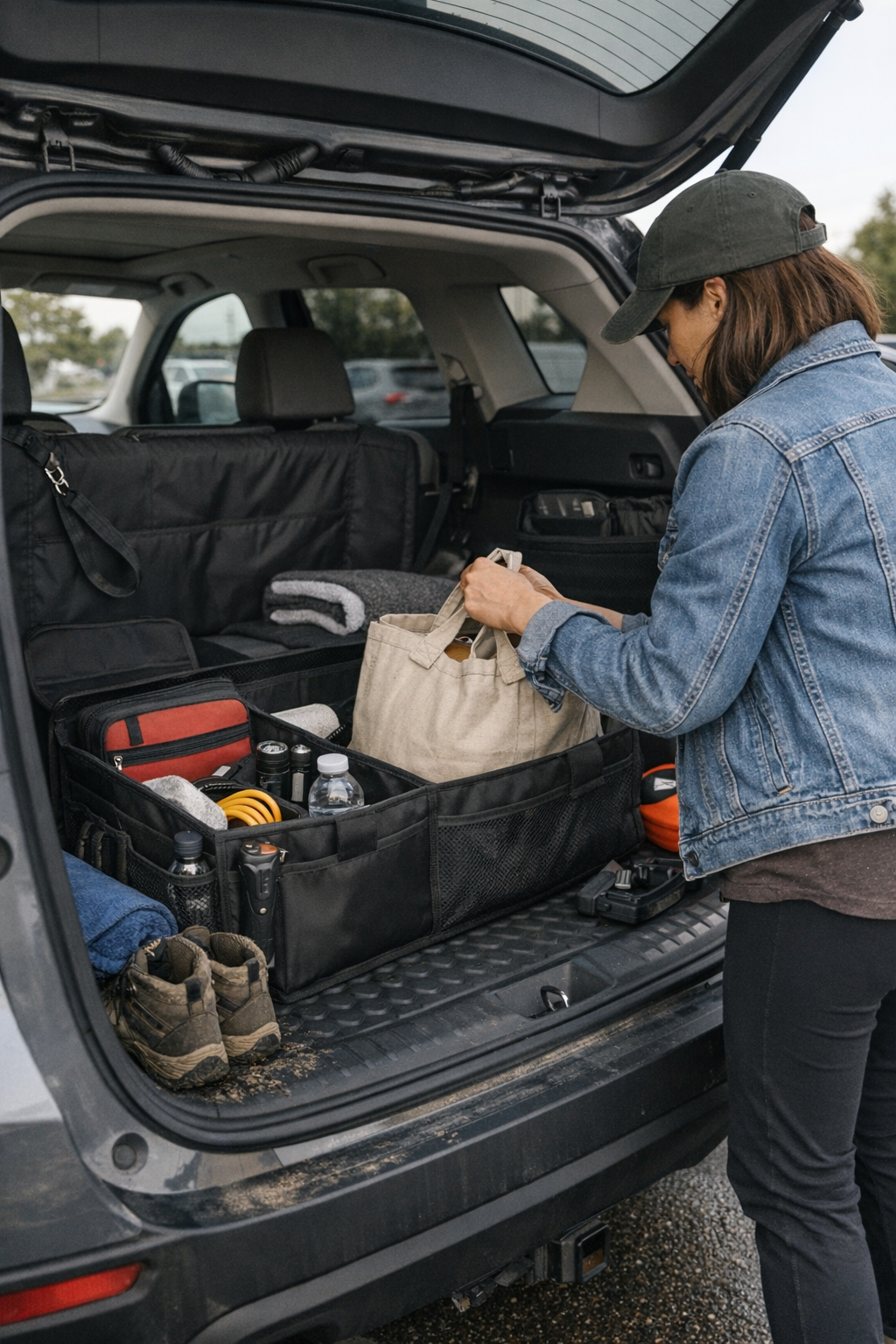
That perfectly tidy dashboard is a temporary victory. Three days later, that phone cable you tucked away is twisted near the pedals and the organizer bin that looked stable now scatters its contents across every sharp turn. The real test isn’t day one—it’s the moment you rush in, arms full, weather whipping at the door, and discover that “order” means little if you still have to untangle, rescue, or re-stow something every single time. Anyone who actually uses their car for more than short trips knows this scenario: each re-entry exposes another small hassle—digging for a charger, moving a stubborn tote off a seat, finding the wipes wedged behind loose papers. What passes for a clean setup on Saturday morning can become a bundle of aches by Thursday, once real-world routines start pressing every design flaw and storage shortcut.
How Small Annoyances Build Up in Everyday Car Use
Most setups break down during actual daily use. That charging cable you loop neatly around the console? Give it three commutes, and it’s buried under the driver’s mat—now a hazard, not a helper. The catch-all bin for essentials tips on the first hard stop, landing your gum and sunglasses under the passenger seat. Even pet seat covers that worked for one rainy hike start inching forward and exposing seat seams after repeated trips, leaving you with mud prints to scrub out—again. It’s not chaos, just a constant low drag: slower entry, longer searches, extra cleaning, and reminders that the system “works” only in theory, not practice.
The True Test: Surviving Overlapping Routines
What’s supposed to help you leaves you working overtime when routines stack. Picture getting back to the car in a downpour, loaded with groceries and a backpack, and the phone mount is sagging, the charging cord is trapped by bags, and your cleaning wipes seem to have migrated beneath last week’s receipts. Every overlapping task unmasks a new vulnerability—bins that slide, covers that wrinkle, emergency kits hidden behind heaps of cargo. You start out with a “setup” and end up improvising at each stop, which means disorder returns even faster, just with a tidier façade.
The Repeated Frictions You Can’t Ignore
- Cables drop or tangle, turning each ignition into a retrieval ritual that resets every morning.
- Loose items escape organizers, crowding under seats and sometimes wedging against pedal space—fixing one safety risk while creating another.
- Door and seat-back pockets fill fast, hiding keys, snacks, or wipes in a jumble that’s impossible to grab mid-drive.
- Meant-to-be-secure seat covers slip an inch and let in sand or wet grit you thought you’d blocked—one quarter-turn at a time.
These are not big messes but slow-growing, daily headaches—the feeling that your car never actually settles, and every “fix” invites the next little breakdown.
When the Right Setup Changes the Driving Routine
You notice it not from grand transformations but from what stops bothering you. If you’re repeatedly hunting for a cable, picking bottles off the floor, or seeing stray dog hair even after using a seat cover, it’s a warning: the organization isn’t sticking. Real improvement comes from containment and secure placement—fixtures that stop items from sliding or drifting, and from segmenting storage so each tool, charger, or cleanup item can be grabbed blindly, without a pause.
Structure That Absorbs Real-World Use
- Mounting cable guides along the seat edge, so the charger cable lands in your hand and never snakes underfoot.
- Replacing a lightweight tote with a weighted, anchored bin, ending the bottle-roll-and-chase for good.
- Using seat protectors with grippy undersides that stay put—no surprise grime where covers inch away from the edges.
- Choosing organizers with true dividers, giving every item a fixed “return spot,” so even a chaotic week leaves the essentials sorted.
Each tweak isn’t for appearances—it removes a repeated hassle. The difference doesn’t show on a calm weekend. It’s measured in the stress you no longer feel when juggling wet gear, shuttling kids, or hustling groceries, and the system simply absorbs the mess without introducing new problems.
Containment, Anchoring, and the End of Repeat Fixes
The real safeguard isn’t a bigger bin or another tidy-up—it’s stopping item drift before it starts. Weighted organizers don’t skate across the trunk. Cable clips anchor the charging line to a reachable point, killing the daily footwell search. An anchored seat cover means less edge-wiping and faster turnarounds with every muddy or sandy return. Visual neatness is only a start; actual containment means you’re not repeating the same fixes after every stop or sharp turn. The setup feels like an ally, not another drain on your time.
Scenes from Real Drivewell
- Under rain, grabbing the phone charger in one reach—no cable hunt, no mess pulled back out into the footwell.
- Unloading groceries, and the trunk bin holds steady—no bottles rolling under seats or afternoons lost to re-sorting cargo.
- After the dog park, a two-second shake of the seat cover is all cleanup—nothing seeps through, nothing clings to the seats.
- Returning after a busy morning, there’s no hesitation: charger, keys, wipes, everything in place, no re-shuffling just to drive away.
Making the Invisible Routine Smoother
A truly functional car setup erases the friction you kept fighting. No more fishing for cables, no more uprooting bags just to plug in, no more hunting for the cleaning spray when you need it fast. The best sign is not a photo-perfect cabin, but the absence of hassle: the interior behaves, clutter stays where you left it, access is instant even at your busiest. It’s not perfection—it’s practical trust, built from routines that finally work, day after day.
Find practical tools for setups that hold up in real routines at DriveWellSupply.