
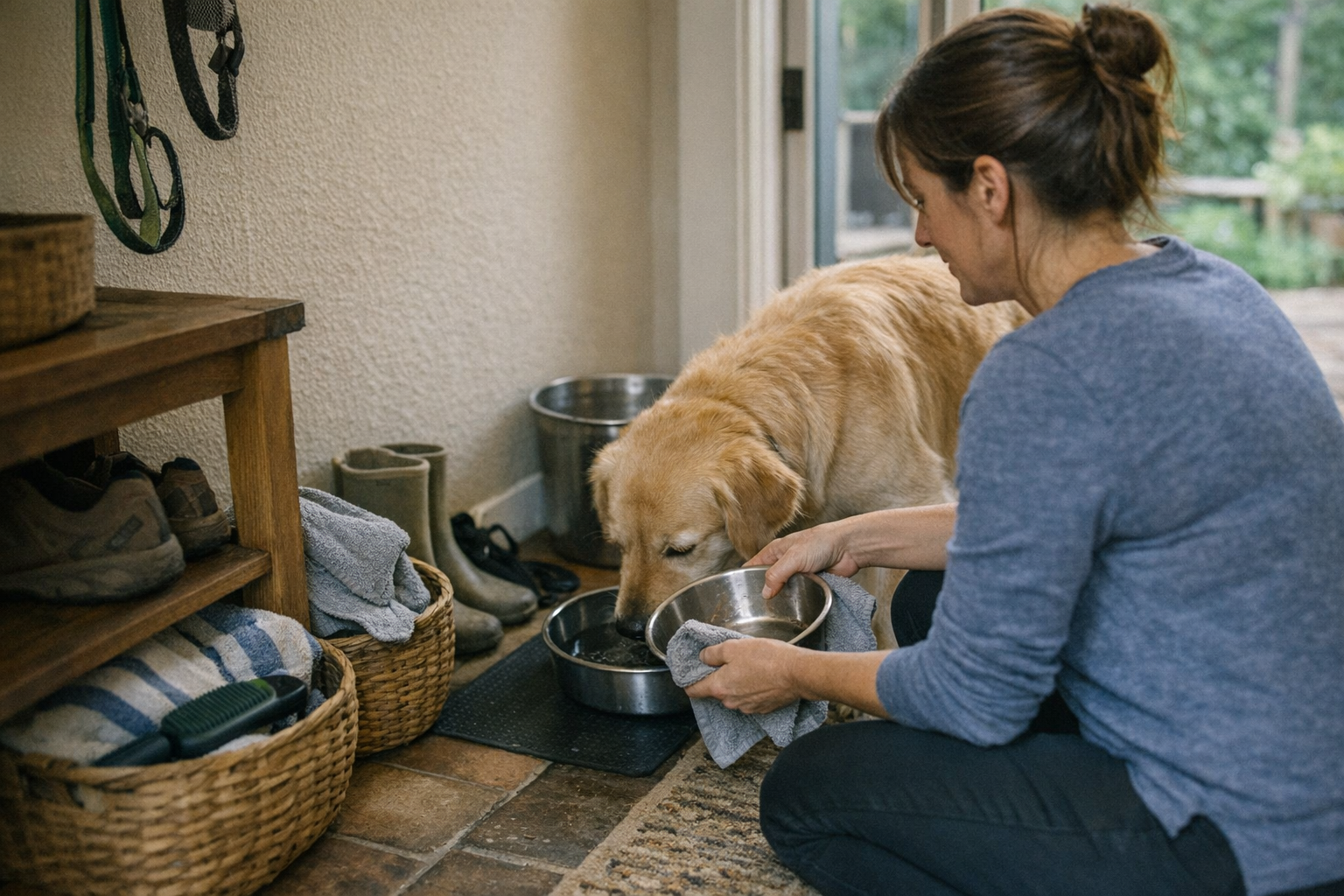
At a glance, your pet’s feeding corner can look organized: bowls stacked, brush at hand, water topped off. But when you head to refill water and a bottle blocks the scrubber, or reach for the grooming brush and find it missing, the “organized” look falls apart. Leftover grime clings to bowl edges, towels wander from their hooks, or basic tools shift just out of reach—small problems, but ones that quietly multiply. Each skipped wipe-down or delayed return turns fast resets into a grind. Over a week, you’re no messier—the system just slows. Routine care starts costing more time, and every reset drags compared to day one. Surface order gives way fast when setups aren’t built for repeated reach, refill, or cleanup. In the CalmPetSupply world, these friction points aren’t rare; they show up wherever quick grab-and-return steps get lost in the shuffle.
Where Micro-Tasks Slip, Small Hassles Multiply
You reach under the sink for the pet bowl scrubber, but a pile of containers blocks the way. That minute of rearranging turns a quick refill into a micro-hassle twice a day. The bowl returns, and now—because it skipped an immediate wipe—the rim needs an aggressive scrub to clear off the crust. When those little steps slide, resets stretch into chores. The single-day slowdown is forgettable; by the end of the week, water refills and feeding resets all feel heavier.
Feeding has its own traps. Last night’s unwiped bowl becomes this morning’s hardened mess. Skip the quick wipe, and you’ve got crumbs tracked off the mat and into the living room. Delay one cleanup, and the next round turns from seconds to ten. With every missed micro-reset, effort snowballs—subtle in the moment, but cumulative and real.
Why “Later” Quietly Becomes “Never”
The real drag isn’t always piles of mess; it’s the silent build-up of misplaced tools and delayed steps. A scoop abandoned on the rack instead of its hook, a brush left near the door, a damp towel tossed wherever—each puts one more search between you and a clean reset. The next feeding or walk is interrupted not by clutter, but by the task of retracing your last “later.” Each delay means doubling back, and the cost is barely felt until the routine starts to ripple with friction.
Setups that look okay can mask trouble—until that one missing scoop or wandering brush throws off a busy evening or a rushed morning. At the wrong moment, even a tidy layout can leave you stranded without what you need.
Real Home Scenes: When Pet Items Interrupt Daily Flow
Even the most intentional setup runs into resistance:
— Filling the food bowl at breakfast, you find last night’s crust stuck to the edge—scrub now, or let the coat toughen.
— After a walk, your towel for muddy paws is outside, so you either detour barefoot to the porch or let dirt track in.
— During a quick sweep, the grooming brush lands on the bookshelf; later, you’re hunting through magazines instead of brushing as planned.
It’s never dramatic, but these snags interrupt the routine. Bowls, towels, and tools creep into shared spaces, cover counters, block entryways, or stack up in odd places. A setup that looked straightforward starts demanding constant reshuffling. “Tidy” morphs into “awkward.” The more items drift from their spots, the less the whole system holds together.
The Impact of One Weak Point
One repeated snag can sink the best system. Maybe the towel never makes it back, or the brush keeps going missing—a single gap adds a friction loop, no matter how neat the rest appears. Even with most pieces dialed in, a persistent minor fail keeps the routine from ever feeling smooth.
If your setup feels fine at first but wears on you over time, this is usually why. Friction multiplies, and what should take moments—feeding, water, grooming, evening checks—starts to siphon more attention and time, round after round.
Tidy Versus Truly Functional
Clearing counters hides mess, but not all clutter is visible. If every refill means moving four things first, or the brush ends up in three possible places, resets cost more every day. Surface neatness isn’t a substitute for simple access. Unless every basic step—refill, wipe, return—fits real use patterns, you’re storing up future work. Hidden disorder just delays the next interruption and drains the efficiency out of daily care.
Small Practices That Make The Difference
The fix is unglamorous: immediate micro-resets that don’t wait until “later.” Quick rinse after each meal, water topped off before it drops, towels returned before stepping away. Consistently wiping the bowl rim when breakfast ends means you’ll never need a chisel by dinner. Tools—towel, brush, scoop, bottle—must return to their spot right after use, not “eventually,” or the loop breaks again.
The difference isn’t just in cleaner surfaces but in a routine that doesn’t break pace: feed, wipe, refill, walk, groom—no detours or hunts. The right setup lets every tool and supply meet you exactly where the routine repeats, not where it looks best for photos. Your pet’s daily care becomes lighter only when you stop cleaning up the last round mid-way through the next. Any setup can look fine for a day. The real test is if it still feels effortless by Friday.
For setups that feel ready even after a week’s routine resets, explore practical solutions at CalmPetSupply.