
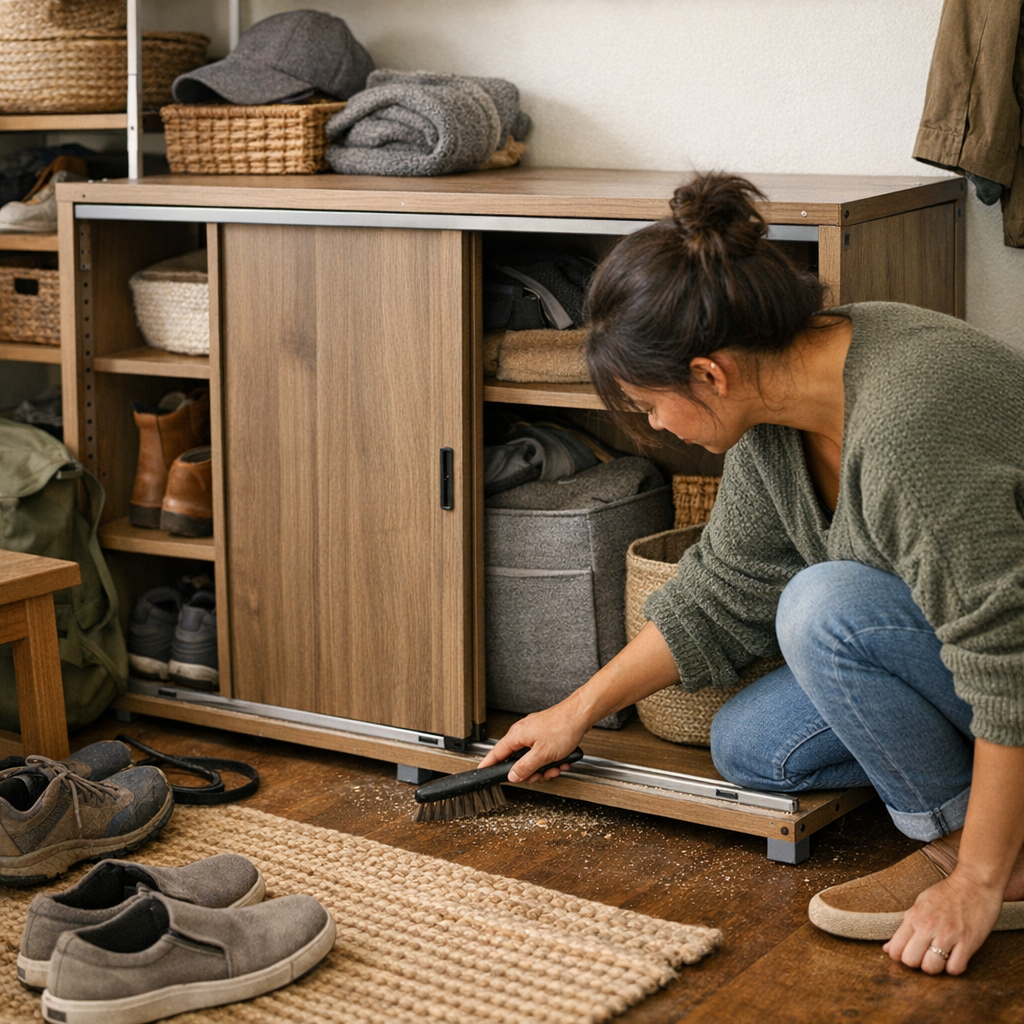
The problem with sliding-door storage doesn’t start on installation day—it starts weeks later when repeated use turns smooth entryways into chokepoints. In theory, sliding cabinets look like the solution: doors don’t eat up precious walkway space, everything is hidden, and the entry zone feels calm. But walk through that area for a month. By then, the daily parade—muddy shoes, pet hair, city grit, and backpack swings—has found every gap and groove. Sliding tracks fill up with debris you don’t notice until the door jams hard, halting the morning rush just when you’re least able to stop. The entryway isn’t a showroom; it’s a collision point where storage and real life collide, and sliding doors are first in line to collect evidence of every commute, storm, and careless bag drop.
When Streamlined Looks Become a Slowdown
Sliding-door cabinets are a go-to for narrow halls and improvised drop zones because they hug the wall, promise walkable space, and keep things out of sight. The trap: what looks organized is often quietly building up new friction. Every trip inside tracks in a new layer—sand, salt, pet fur—vanishing under the cabinet until you feel resistance instead of seeing a mess. Open shelving shouts when it’s time to sweep, but sliding tracks go silent until they’re jammed. Meanwhile, shoes left too close inch outward, bench seating blurs into overflow storage, and the space meant for flow starts backing up, one gritty glide at a time.
Real-life routines break the illusion quickly. Damp sneakers nudge dirt into tracks as you stash them. A gym bag clipped carelessly against the base drives another dust line into hiding. Sit for a second on the bench and the row of shoes spreads wider, filling the only gap for cleaning or walking past. Lose track for a few days, and you’re wrestling a stuck panel just to start your shift, unload groceries, or keep evening mud off the floor. Reset is needed long before most people realize the track’s become a trap.
The Realities of Reset Pressure
The pain point doesn’t announce itself gently—it pops up during high-pressure minutes. Arms full, rushing out, and the door catches. Two people try to pass, and the whole pathway shrinks to one impatient shuffle as the cabinet resists. Suddenly, there’s nowhere to kick off shoes or drop a bag but right in the walkway. Even a bench that was supposed to collect clutter becomes a stranded island of random stuff—because a snarled track quietly froze the return flow.
What happens next isn’t just frustration—it’s a loop. The more tightly “organized” the entry appears, the less headspace there is for hidden mess. A sticking door means more overflow: shoes along the edge, bags stacked, items rerouted to wherever there’s open floor. What was once a quick reset after coming home now means a chore list, as the first sign of trouble signals the bottleneck already formed.
Why Sliding Tracks Fail Under Real Entryway Pressure
Sliding tracks are invisible collection zones for what every threshold brings in. Swinging doors shrug off a bit of dirt, but sliders depend entirely on a clean run—every missed crumb, stray earring, or sprinkle of dirt compounds. And because the threshold is where inside and outside trade places, no cleaning routine ever fully keeps up. Even careful homes with mats and regular sweeping lose ground: pet hair and micro-grit will always outpace the schedule.
Pressure points get sharper in busy or multipurpose spaces. Shoes sneak sideways to fill any open space, bags sprawl wider, and with each round, the track absorbs more without giving you a visual cue. Most people only act once it’s obvious—when a dropped backpack blocks the cabinet, or you have to double-stack shoes just to reach for the door. Temporary placements turn semi-permanent as the sliding storage quietly demands more maintenance than anyone bargained for. The fastest way to reset the space becomes to leave things scattered because it feels easier than wrestling the jammed track yet again.
What Actually Works: The Small, Daily Reset
The solution isn’t about perfection or complicated routines. A skinny nylon brush stashed next to the cabinet does more in a minute than any deep-clean schedule can promise: one deliberate nightly sweep across the track clears invisible buildup before it becomes a problem. This habit—quick, nearly automatic, often done while the rest of the house is quiet—undoes accumulation before it bites, keeping the mechanism reliable even during weekly chaos. No gear timeline, no specialty gadget, just a regular swipe right at the pressure point: the exact place friction wins if you leave it to build.
Instead of waiting for grit to grind, build the routine where it interrupts least—after the last arrival, before the next rush. Homes with active pets or outdoor-heavy routines, especially, see the payoff. A brush within arm’s reach means fewer bottlenecks, less stalling in the path, and storage that stays trustworthy for the next return. It’s low effort but high return—the only kind of maintenance that survives a transition zone’s real turnover rate.
Leave Breathing Room: The Four-Inch Rule
Trying to pack every edge tight sabotages easy resets. Leaving even one shoe’s width (about 4–5 inches) clear in front of the sliding cabinet turns basic maintenance into a fast daily gesture, not a project. That extra bit of buffer makes it possible to sweep or reach the track without moving a dozen things out of the way. Once shoes creep in or overflow piles fill the gap, buildup multiplies—resetting spills over into the hallway, and congestion becomes all but guaranteed. The visible gap isn’t wasted space; it’s a pressure valve against permanent backup.
Sliding Doors vs. Open Shelving: Tradeoffs That Don’t Show Until Later
Open shelves air their problems right away—mess is visible and anyone can clear it fast. Sliding-door storage hides disruption until it blocks you, then demands extra steps to recover the lost function. If your routine means quick, shared resets—or you know clutter will always sneak back—open shelving’s visibility wins, even if it means sacrificing the showroom look. In tight or high-traffic entryways, streamlined sliding storage works only if “invisible cleaning” fits your reality. The difference isn’t about style; it’s about whether you want a zone that tells you when it needs help or one that hides trouble until it’s too late to prevent messy overflow.
Some entryways thrive with sliding doors because the extra minute spent maintaining actually happens. Others find the hassle outweighs the “clean” appearance and end up with their controlled look undone by daily pressure. The choice depends on your entry’s real job—churn, recovery, and how you want to contend with the constant arrival of new mess, not just the photo at move-in day.
Watch for Breakdowns Before They Become Routine
The real test isn’t how storage looks the first week; it’s how well the mechanism stays effortless under normal churn. Are resets taking longer, or does the panel still glide on the first try? Have shoes and bags started drifting back onto the floor because the threshold is too hard to keep clear, or is stashing still frictionless? Do minor setbacks—like a day of rain gear or a visit from a friend’s dog—leave clutter lingering, or do you have a way to clear it before it becomes a fixture?
Entryways rarely fail overnight—the drift is subtle: a handle that sticks, a row of shoes that reshuffles after every trip, or bags lingering one day longer. Strong sliding storage doesn’t just look right behind closed panels; it works right when the pressure is highest, keeping access open and reset simple in spite of constant pushback from real-world debris.
No entryway stays spotless, and no cabinet stays frictionless forever. But with the right habits and a little space left to maneuver, your storage can carry its weight instead of adding to it—especially when you need its promise the most.