
Closed-door storage cabinets promise instant relief from visible clutter—but that sense of order is often an illusion that unravels under repeated, real-world use. Shut the doors on a kitchen mess or a hallway scramble, and surfaces snap back to calm. But the hidden friction doesn’t vanish; it shifts behind the panels, where every rushed search or missed category quietly strains your routine. In everyday zones like busy entryways, overstuffed kitchens, or shared family corners, the difference between looking organized and actually functioning well shows up fast: misfiled shoes block umbrellas, bread bins crowd out lunchboxes, and what appears “tidy” keeps disrupting the flow you need most.
When Calm Surfaces Hide Everyday Friction
The urge to “just close the door on it” runs strongest in the areas hit hardest by daily drop-offs—entryways thick with shifting piles, kitchens where small appliances and bags have no single home. From the outside, closed cabinets flatten the chaos, especially in tight apartments where any exposed item feels like clutter multiplying. But inside, closed storage turns new issues loose: blind zones, slow retrieval, and the quiet buildup of items nudging out of place. The cost isn’t just cosmetic—it’s measured in lost steps and interrupted escapes, like having to dig for a jacket buried behind grocery overflow, or scavenging beneath shoe piles for a charger you swore you returned yesterday.
Picture the classic family entry zone: jackets and shoes tucked behind slim doors, backpacks upright—briefly. Real use blows past the initial system. Shoes drift sideways, mail clogs the path, one mitten slides behind gym bags and instantly blocks everything else. “Organized” at a glance means little when you’re already late and the cabinet demands a full search just to get out the door. Each closed-door rescue is paid back with extra reshuffling later, often making the next reset more exhausting than the mess you tried to avoid.
Why Hidden Storage Can Slow You Down
Closed cabinets exist to clear the view, but they do it by hiding movement and overflow signals you’d spot right away on open shelves or hooks. With doors in the way, category drift creeps forward—jackets on shoe space, gloves blending with shopping bags—until even the basics get lost in the shuffle. Overflow builds because you don’t see it until something jams. Retrieval turns slow and indirect: you open one cabinet for bags, then have to cross back to search another for a missing hat, all because the divided zones inside blur and blend until there’s no real shortcut left.
You trade visible mess for hidden disorder: peaceful fronts, but insides wired for accidental sprawl. Shared or high-traffic spaces multiply these invisible costs. One person’s quick drop-off blocks another’s path; a guest jams in a new bag and the entire shelf buckles. With everything out of sight, minor buildup goes unchecked, and full resets become longer, rarer, and more dreaded. You don’t just lose items—you lose rhythm, with each blocked grab or awkward shuffle accumulating into daily friction.
The Surprising Cost of “It Looks Tidy”
Line a wall with closed cabinets and watch the illusion of control set in—until a normal routine “sticks” at the worst moment. The first hint is often a hiccup: reaching twice for the same lunch container, detouring around an overfilled section, or pulling open three doors just to get at what floated to the back. These movement bottlenecks slow everything down, especially where speed and repetition matter—entryways, kitchens, and mixed-use halls that need to clear daily volume, not just hide it.
Overflow and Category Drift: The Invisible Enemies
Open a closed cabinet a week after a big tidy, and the cracks show. One shelf is suddenly jammed, another hosts a jumble of oddball objects, and categories merge with no clear boundary. In pantries, pasta blends with gadgets; in hallway cabinets, scarves push shoes into blind corners. Moment of recognition: open the door expecting easy access, and hit a compressed tower of unrelated things—a mixed layer you need to pull apart, with each reach risking collapse or total reshuffling.
The longer category drift and overflow go unchecked, the heavier the penalty: what should be a five-second grab turns into a full redo that kills momentum and morale. Instead of a quick shelf adjustment, you’re hauling everything out—vacuum, hiking boots, abandoned mail—just to restore basic function. For many households, that threshold is never met; items linger in the wrong spot for months, until even looking for them feels like a chore.
Shared Spaces: When One Person’s Drop-Off Blocks Everyone Else
Multi-user zones—front halls, shared closets, family bath cabinets—are especially susceptible to hidden drift. A gym bag lands, then groceries, then school supplies; the door closes but inside, categories compress. With walls hiding it, blending grows uninterrupted: cords tangle with gloves, boots swallow shelf space meant for towels, and one person’s “just for now” becomes a weeks-long block for everyone else. Unlike open organizers, where category creep is visible and little issues get fixed in passing, closed-storage slip-ups linger until someone finally empties and resets the whole system. Not surprisingly, that task slides down the priority list for as long as possible.
What Actually Makes Cabinets Work: Internal Dividers and Bins
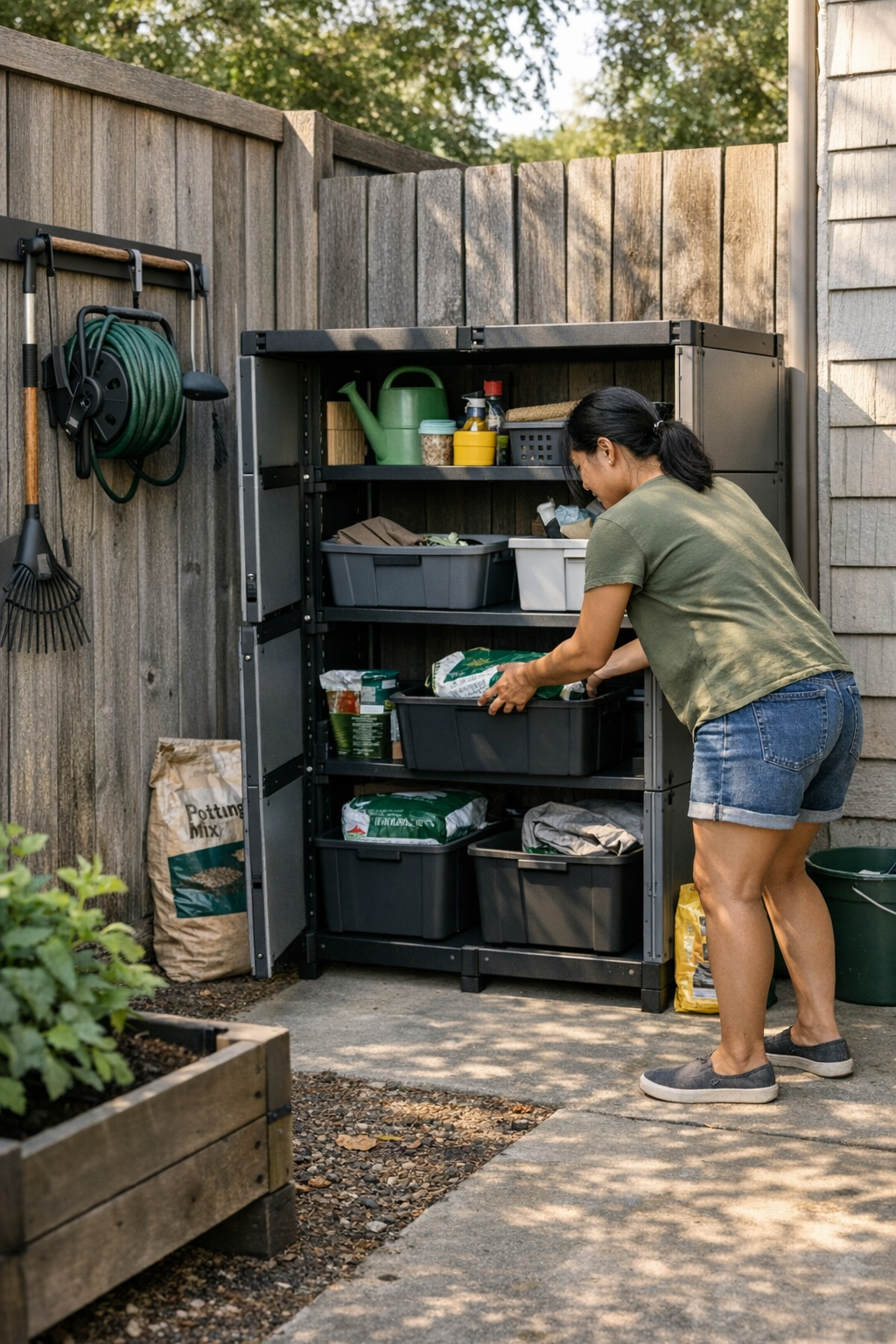
Visual order on the outside doesn’t fix chaos on the inside—only structure does. The most powerful change? Breaking up closed cabinet space with removable bins and real boundaries. Dividers make insides use-specific: a shoe bin for five pairs flags crowding instantly, while a labeled tote for cleaning gear prevents lost mail or stacked coats from vanishing into the mix. Instead of having to dig across everything, search and resets stay sharply focused. When buildup happens, you fix the one zone that’s slipping, not the entire cabinet wall.
Add defined zones, and closed storage moves from blind spot to early warning system: categories stay in their lanes, overflow gets caught while it’s still small, and resets shrink from half-day projects to matter-of-fact tweaks. Instead of dreading the next overhaul, you spot issues as they emerge—handling exceptions in real time, not letting them spiral until they undermine the whole setup.
Tip: Choose Container Sizes That Fit Your Routine, Not Just the Shelf
Bin size dictates system stability. Too big, and the boundaries disappear—everything gets lumped together, making resets grueling. Too small, and every load triggers overflow, annoying everyone involved. Match your bin or divider to the amount and access rhythm of each real-life category: lunchboxes one layer deep so nothing gets buried, cleaning bottles in a single, easy-out tote. Slide-out trays for tools instead of stacking multiple boxes where the bottom is never reached. The right container makes retrieval automatic and return flows reliable—avoiding the slow creep that sabotages the whole wall.
Making Closed Storage an Ally, Not a Source of Hidden Stress
Closed cabinets earn their spot in spaces overloaded by volume or visual noise—provided the inside matches your use. Their core weakness plays out over time: slow retrieval, blocked access, creeping resets, and hidden mess that turns up only when your routine already feels strained. Real relief doesn’t come from closing more doors, but from separating zones inside and catching drift before it cascades.
If you’re trapped in repeat reshuffles or delayed resets, the solution isn’t just “more cabinets”—it’s a smarter, more visible structure inside the space you already have. When each category has a defined home and movement stays unblocked, closed storage supports the speed and flow real rooms demand—not just the look. That’s the shift from looking tidy to functioning fluently, especially in the rooms that test your storage the most.
Visit Gridry for modular storage solutions that adapt to real-life use.