
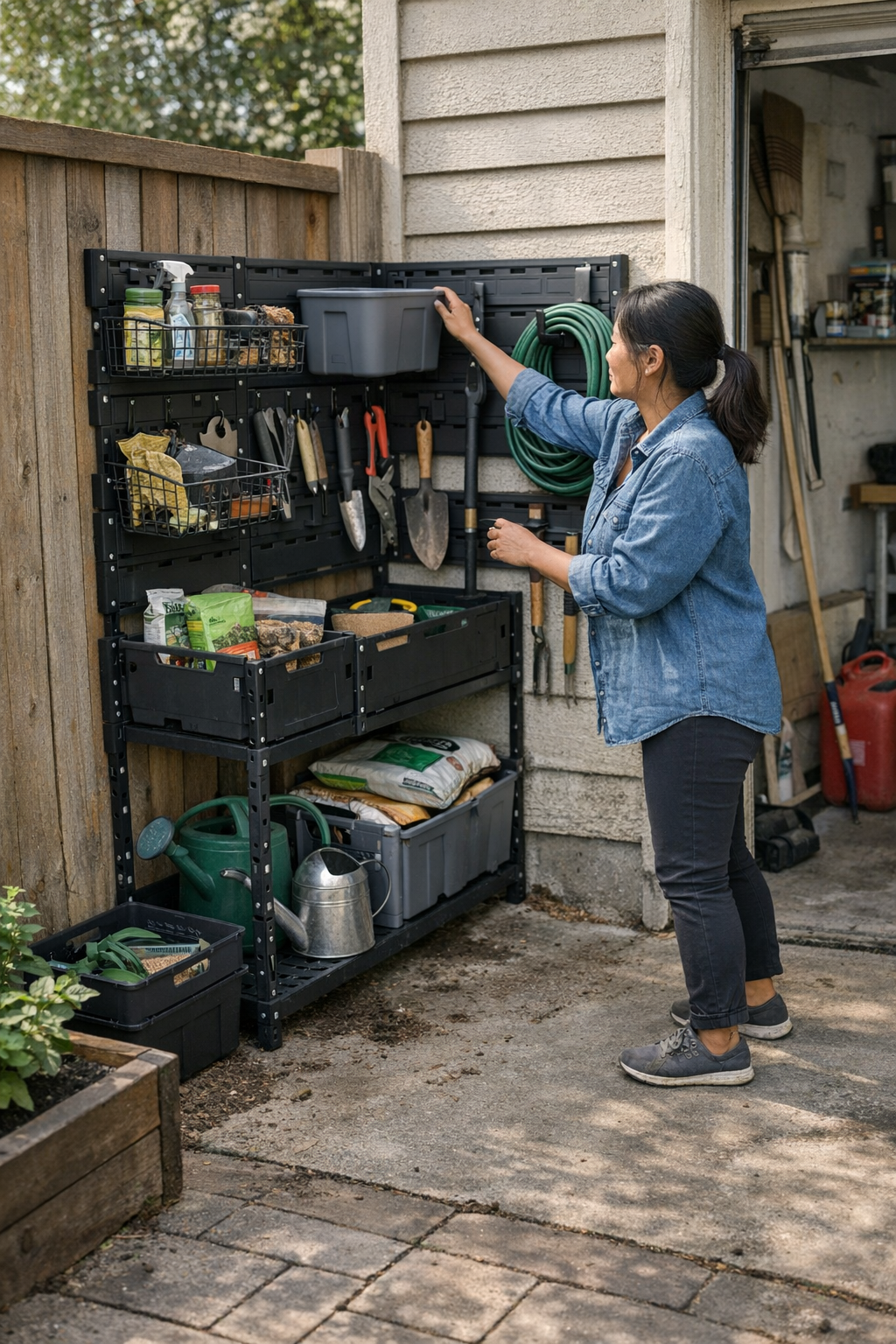
Every small-yard owner has felt it: the relief that comes the day a new wall system goes up—hooks filled, bins stacked, a tidy edge carved out of the chaos by the garage or fence. For one weekend, everything stands where it’s supposed to, and you can finally wheel the mower through without tripping. But two weeks in, order starts slipping. The same hooks that looked smart now snag your jacket as you slide past, the bikes you hung to save space end up squeezing the gate, and a muddy soccer ball finds its new home exactly where you step. What first felt like a win now presses in, trip after trip—a wall storage setup that fits the space, but still interrupts the routine.
When “Organized” Doesn’t Mean Usable
Saturday arrives. Kids drag out toys, tools get borrowed, something always comes back muddy or awkward. By evening, the clean lineup has warped: a trowel jams up the rake, hoses twist down from the wall, and garden gloves end up somewhere no hook planned for. Often you’re nudging a hanging lawn chair or shifting a storage rack just to reach what you really need. The return flow—actually putting things back—is now full of small negotiations, and you start leaving items “for later” because getting it right means undoing half the setup.
This is where setups start to work against you: the wall system technically fits, but now you’re holding your breath just to navigate the side yard. Paths tighten, gear bunches up, and one quick grab for shears means accidentally toppling the shovel—another shuffle, another delay. What worked on day one is now a reason you hesitate to go out for something simple.
Fixed Systems vs. Modular: Where the Strain Appears
Fixed storage systems flatter at the start—hooks spaced just so, shelves aligned, imagining every spot set for every item. But everyday use exposes weak points: tall handles obscure smaller hooks; a bulky mower, once hung neat, suddenly blocks everything behind it. Rigid shelving collects whatever happens to land—boots migrate from hooks to floor to corner pile. Eventually, the tidy wall turns back into ground-level clutter, only differently arranged.
Modular setups—rails, panels, snap-in baskets—play by different rules. After a muddy weekend or a new sports haul, you can unclip a crowded shelf higher, bump a hook over for longer tools, and open a wider path without emptying everything or fumbling for tools. A quick adjustment after a busy day can keep overflow out of the walking zone and keep the reset feeling manageable, not like a project you dread all week.
Reset Speed: What Breaks Down First
Test it: after yard work or a birthday, can you restore order in five minutes, or are you moving three things just to put one back? With a modular rail you slide things to fit, the floor stays clearer, and the next trip to the composter or the bikes doesn’t demand a workaround. With a fixed rack, every “quick fix” is a compromise—returns build up in the easiest spot, edges collect piles that were meant for hooks, and before long, the system blocks more than it helps. That’s when the weekend reset starts to feel like work you’d rather avoid.
Real-Life Friction: Where Small Yards Trap You
- Returning a long-handled lopper after trimming— but the shovel is already in the way, so the lopper ends up propped in a corner, starting another mini-pile in your narrow strip.
- Reaching for the broom— but it’s buried behind two hooks that have migrated lower, forcing an awkward unhooking chain just to sweep up after the dog.
- Trying to drag the garden cart through— but last week’s attempt to tidy bikes and bins onto the wall has pinched the route, leading to a string of off-ground plans that ignore how gear drifts when you’re in a hurry.
- Overflow at the garage edge— the further from your entry point, the more “for now” items jam onto the wall rack, snowballing into visible clutter and a tighter squeeze every trip.
If you keep noticing one corner swallowing more spillover, or the “organized” wall needs more sidestepping now than before, the mismatch is real. Resetting becomes its own mini-burden, routine movements get blocked, and shortcuts turn into permanent mess.
Reconfiguration Is the Real Test
Outdoor storage has to adjust with real life: seasons flip, tools rotate in and out, kids outgrow scooters, garden projects take over, and the “hot spot” for activity shifts with the month. Even in a simple yard, new habits create their own clutter. A setup that lets you slide shelves lower when shorter tools become daily grabs, or move a basket when the pile grows, keeps you moving. Rigid walls just turn the small stuff into new work.
Try this test: Time your reset after a normal Saturday. Does returning everything take more rerouting or fiddling than it used to? If the routine grows slower, or “temporary” piles keep growing, it’s the system—not you—that needs to flex.
Small Yard Flow: The Visible Difference
The best storage wall isn’t judged by the first-day photo, but by how little you have to think about it after a muddy kid, a late haul of patio cushions, or an unexpected spring project. When movement feels natural—when you wheel something through without untangling or sidestepping—you gain usable space instead of fighting for inches. That’s the difference: fewer slowdowns, fewer end-of-week resets, and less energy wasted on figuring out where overflow should go.
Choose outdoor storage that adapts as you do. When your narrow strips or garage edges remain open and passable, the yard actually works for you—week after week. If the setup always makes you pause or redo, it’s only pretending to be organized. In outdoor spaces where every corner and pathway counts, the right storage system is the one that holds up to real life, not just the day you install it.
To see how practical organization can make your outdoor space easier to use—and less of a chore to reset—visit TidyYard.