
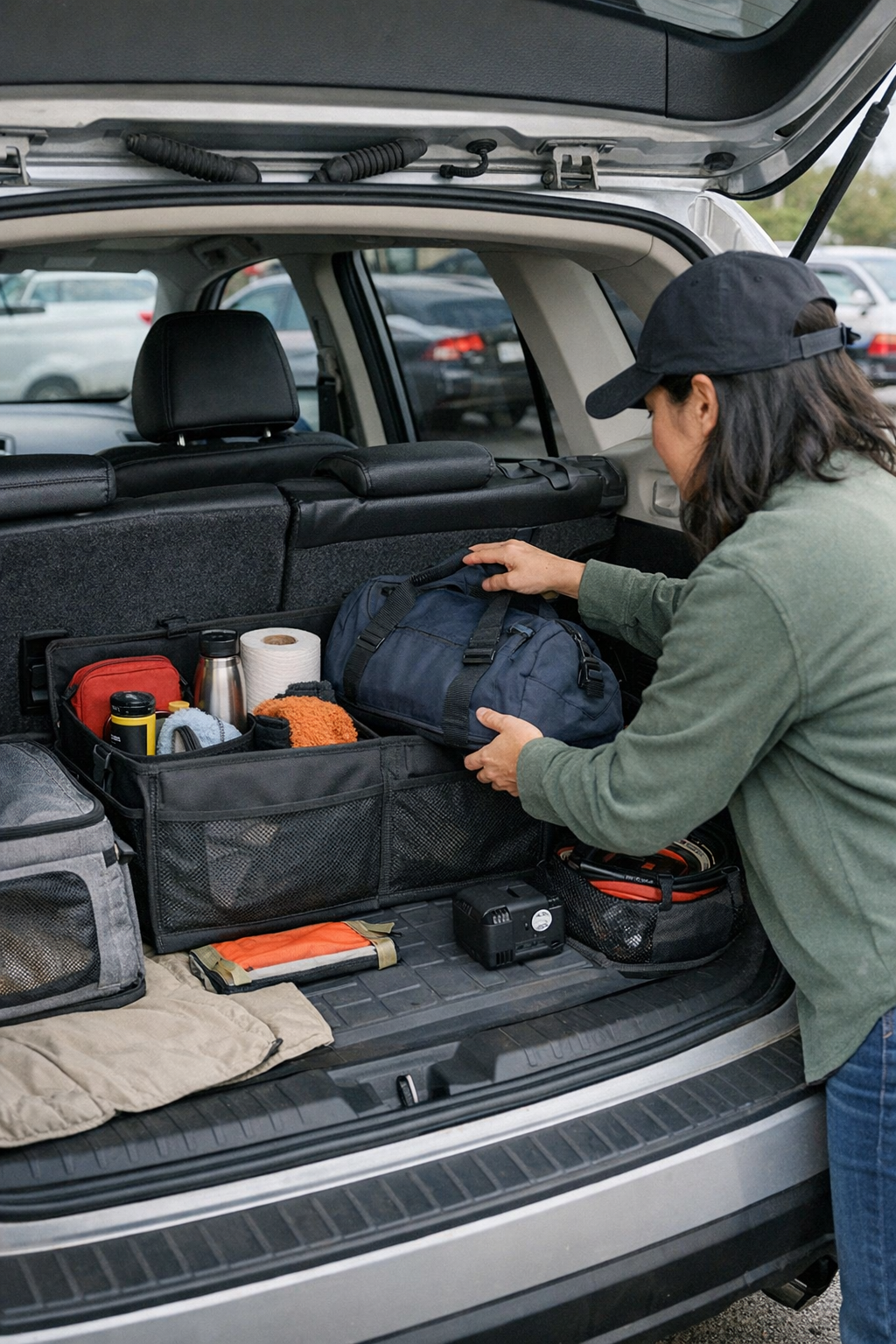
The real car clutter problem isn’t just what you see—it’s how often you have to reach, shift, or dig for the same thing again and again. You rush back to your car after errands. The interior looks tidy enough, but your phone charger’s tangled with coins and gum wrappers—so you’re already slowed down before you get in gear. It’s not that you’re careless. It’s that most car setups ignore how fast routines break the initial order: grab, park, toss, repeat. DriveWellSupply centers—phone mounts, organizers, chargers—exist because even a “neat” car keeps tripping you up when daily use exposes where the setup falls short.
Why ‘Looks Neat’ Isn’t the Same as ‘Works Smoothly’
Every new organizer or car caddy feels promising for about two days. You drop your phone, sanitizer, and wallet into a center console that starts out organized. But by mid-week—one grocery run, one passenger, three charger swaps—it’s back to the same scenario: looking for one item, hands bumping into others, cables catching on pen ends, and receipts buried in forgotten compartments. What takes seconds on Monday drags by Friday; the “tidy” setup isn’t speeding things up, just shifting the mess until you need something in a rush.
Here’s what the friction looks like in practice:
- Phone charger tangled with old receipts—again.
- Hand sanitizer buried beneath coins—again.
- Sunglasses case blocking your reach for a single pen—again.
None of these moments seem like a big deal alone. But stack them over five quick stops, and every routine exit and entry becomes a series of small, annoying interruptions.
The Cumulative Cost of Mixed Car Pockets
It’s easy to excuse the first tangle—“I’ll fix it later.” But when errands pile up, child seats migrate, or you share the car with another driver, chaos ramps up fast. Picture a busy parking lot: hands full of takeout, battery at 2%, you reach for your charger—only to go digging through sunglasses, dry wipes, and two snack bar wrappers stuck in the same slot. You’re muttering, unplugging the adapter with one hand while your food tips over with the other. The longer routines pile up, the harder it is to spot what you need the first time; each grab becomes guesswork, sometimes with a dropped cable or another item sliding under the seat.
The minor, persistent interference—charger in the wrong pocket, sanitizer buried under mail, coins rolling to unreachable corners—adds seconds you don’t have and stress you never budget for. Multiply this by shared rides: new hands stash things randomly, and everyone loses track of where their essentials ended up. Every stop runs slower, and the sense of “organized” turns into a memory game you’re losing.
Assigning Each Pocket a Job: Less Drift, More Flow
One practical change actually sticks: assign a single job to every storage zone—no mixing allowed. Charging? Only cords and adapters belong in that slot. Daily grab items? Dedicated area. Documents or insurance? One tight spot, not two. By keeping cables out of coin pockets and snacks away from paperwork, every reach is a matter of habit, not hunting. If a DriveWellSupply organizer or seat gap filler fits your car, use the shape to reinforce only one kind of item per place. The difference isn’t cosmetic—it’s that you quit resetting the same mess after every drive.
How it looks in real traffic:
- Passenger door pocket: Cables and nothing else; charger stays untangled and reachable even on a full grocery unload.
- Center console: Wallet, sanitizer, and sunglasses in dividers—never mixing with mail or snack bars.
- Under-seat section: Only paperwork; no charger adapters or lost pens floating around.
This structure turns retrieval into muscle memory. The more you stick to single-job zones, the less you pause, sort, or grumble on routine in-and-outs. The payoff is less time wasted before every start—your setup works without you having to “reset” it every couple of days.
Busy Routines, Dense Driving: Where This Matters Most
Single-purpose pockets really matter when the routine is at its most crowded. During errand loops or school drop-off, you don’t have time to sort before each stop. Here’s where mixed storage fails first:
- Errand stacking: Three fast stops, each demanding a different card or receipt. Mixed pockets bury what you need behind trash from yesterday—slowing exit and re-entry on repeat.
- Shared vehicles: Carpool drivers or family members drop items wherever there’s space. By midday, chargers shift, sanitizer goes missing, and keys drift to impossible spots. There’s no shared logic, so retrieval is slower for everyone.
- Packed cargo days: Trunk overloaded, back seats blocked. Everyday essentials can’t be shuffled to fallback spots; if pockets are already mixed, the stuff you need for the next stop gets lost or requires a two-hand, two-minute search.
Clearly defined zones—strengthened by trays, gap organizers, or door-mount pockets—keep these friction points from spiraling. Movement becomes automatic because every grab has only one possible place to go.
Tricky Tradeoffs: When a ‘Solution’ Makes Something Else Harder
Plenty of car accessories backfire—an organizer that forces pens, coins, and cables into one cramped bin fixes the “messy look,” but now you wedge your hand in every morning, brushing sanitizer just to fish out your key. A seat cover promises spill protection but bunches at the edge, making every console reach require another push aside. You fixed one problem, replaced it with two new slowdowns.
This is where the single-job thinking matters most: it’s not about “looking organized,” but about setups that don’t block, drag, squeeze, or bunch after five days of real use. Any zone or add-on forcing category overlap will look fine new and then make your routine clumsy fast. A setup only reveals its strength or weakness during the motions: reach, grab, stash, return—over and over.
Keep It Unmixed: Practical Methods and Real-World Tweaks
Some built-in spaces have to flex, but a few tweaks bring more order:
- Divided organizers: Use DriveWellSupply-style trays or gap fillers that clearly block mix-ups—cables can’t entangle keys, sanitizer tops stay upright and instantly findable.
- Texture cues: Felt, silicone, or rubber mats make separation tactile—without looking, your hand feels “where cables end, docs begin.”
- Front/back logic: Daily grabs reserved for front-most zones. If you rarely need it, bury it; for repeated use, keep it predictably closest.
- Trip-end resets: Five seconds to check (not sort) before locking up: if categories stay separate, drift is stopped before it starts.
The goal isn’t pretty bins for their own sake—it’s putting what slows you down right back in reach, with zero daily effort. Unmixed zones mean your car lets you move, not stop to fix the same pile twice before lunch.
When Order Looks Fine—But Still Trips You Up
A “clean” car is easy—until you actually use it. You open the door and everything looks sharp, but one grab for your phone means moving a case, untangling a charging cable, and scraping against a sanitizer bottle you left in front. Time lost, mood dented, all before you’ve left the curb. Appearances mislead; live usability is the true test. The real signal? If you keep unmixing the same two items every trip, your system isn’t working—no matter how “together” it looks.
Single-job storage doesn’t mean spotless. It means you aren’t fighting your own habits. Want less anxiety on busy mornings? Keep pockets defined, categories simple, and never let a two-second grab become a two-minute scramble—no matter who drove last.
The Real Payoff: A Car That Works the Way You Actually Use It
You don’t need a full interior overhaul—just boundaries that survive a week’s worth of drive, park, and return. The upside is concrete: fewer forgotten chargers, less repeated cleanup, and faster recovery when you lose track. A real-world setup—reinforced by proper organizers, textured mats, or even a habit of five-second checks—lets you get in, get what you need, and get out, with less reset and less drift. For cables, cleaning tools, pet barriers, or trunk organizers, rely on products that force categories to stay unmixed, making routines almost frictionless.
Spot the difference next time you park: does a single grab slow you down, or is your car actually making daily motion