
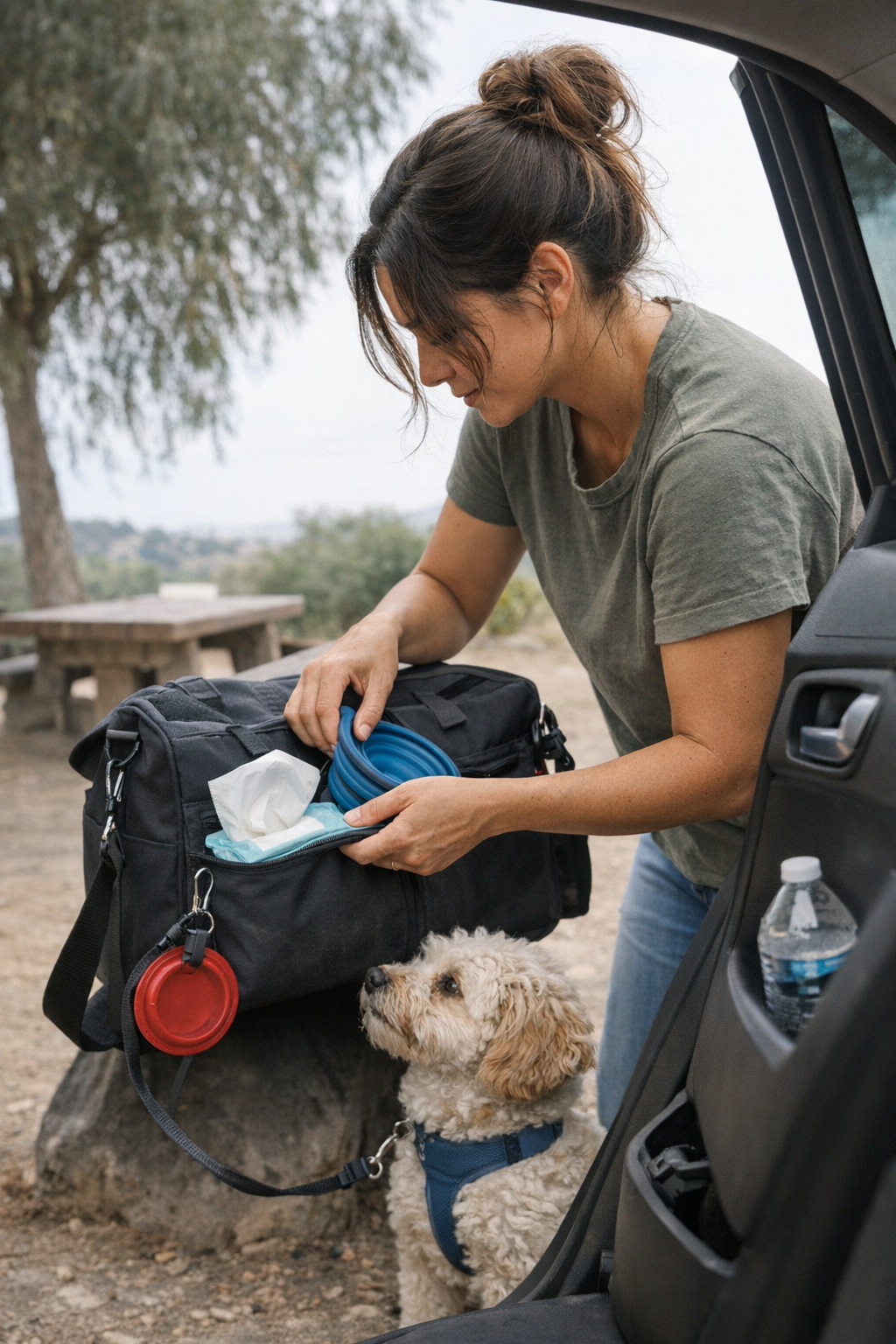
The difference between a “ready” pet travel bag and one that actually helps—shows up fast at the third stop. You pause, your pet tugs, and suddenly the setup that looked organized is slowing you down: wipes drifting under a collar, the leash tangled with a food pouch, cleanup supplies always one item too deep. Every stop exposes another tiny inconvenience. What’s packed “for emergencies” is awkward to grab when you’re one hand short and your dog’s already half out the door. This is where slip-ups multiply—not because you forgot something, but because the structure hides it just when it matters. In the world of repeated pet travel, PawGoTravel builds for these real moments: setups that keep pace when “organized” isn’t good enough.
The First-Glance Trap: Looking Ready vs. Moving Smoothly
At departure, an average tote crammed with pet gear can feel reassuring. Every item—bowls, wipes, chews, leash—folded into a section or zipped pocket. But by the third roadside pause, reality sets in. Your hand fumbles between compartments; the leash escapes into a nest of snacks; the section you just shut is open again for one missing item. Outwardly, the carrier still looks neat. Internally, every reach takes longer, each action interrupts the last, and both you and your pet sense the slow build of hassle. The real strain isn’t at the start—it’s after routines repeat, surfaces get messy, and every “quick stop” reveals another delay.
Repetition Is the Real Challenge
Pet travel exposes weaknesses not in emergencies, but in the steady rhythm of stops and starts. On stop one, hunting for wipes under a bowl is only a shrug. By stop four, you’re reshuffling a dozen things before anything is reachable. The leash stuck beneath the jacket you packed “just in case”; comfort biscuits packed perfectly, but too deep to grab for a nervous pause. It’s not disaster, it’s repeated irritation—slow, cumulative, and draining. Each restart demands rearrangement. Organization begins to erode. “Prepared” quietly turns into “why won’t this work?” even for careful packers.
Packed Isn’t the Same as Practical
Most setups fail not because something’s missing, but because overlap and blocked access creep in. On paper, combining wipes, water, lead, and toys in a single big compartment seems sensible. But with one hand occupied by a leash and a pet twisting to explore, you’re forced to tip out three things to get one, again and again. The visible difference is the slow but steady “where did I put it?” moment after every stop. Items migrate. Quick access gets muddled. The more often you pause, the more the whole kit feels scrambled—a pattern every pet owner knows from the endless cycle of motion, cleanup, and calming.
Cleanup and Comfort: Small Wins Change the Day
Travel friction spikes during the small but urgent cases: cleanup after a muddy paw or a sudden whine for comfort. When wipes are lost behind a zipped barrier or the blanket is buried for “organization,” these moments become needlessly tense. The solution isn’t more packing—it’s easier access, without cross-talk or spillover.
Cleanup That Doesn’t Slow You Down
Think back to your last few trips: how often did you dig for wipes just when you needed them clean and fast? With a dedicated, no-interference side pocket, grab-and-use motion becomes automatic—no dumping, no leash trailing, no mess expanding just because access is blocked. It’s a testable difference you notice by the second or third round.
Comfort Items Within Reach
Calming treats and familiar toys only help if you can hand them over fast. If “organized” means they’re trapped beyond a heap of towels or water bottles, nerves ramp up for both you and your pet. Quick-access, front-loaded pouches or side-release holders keep those go-to comforts on hand—cutting nervousness, speeding sooth times, and stopping tensions from spreading through the whole trip.
Cleanup, Restart, and the Overlap Struggle
The real test for a carrier or organizer isn’t total capacity—it’s whether you can reset smoothly under mild pressure. After an hour on the road, your pup is twitchy, you’re juggling half-clean hands, and you want water out—now. The collapsible bowl jammed under a heap of leashes, wrappings, and wipes? That slow search turns routine stops into frustration factories. A structure with stable outer pockets or fast-separating sections means speed instead of scrapping with the bag every time, helping you close the door and get moving with sanity (mostly) intact.
The Real Difference: Automatic Returns and Movement Flow
Setup structure doesn’t just keep things tidy at the start—it organizes your habits on the fly. The right travel bag puts wipes, leash, treats, and water within hands-reach, shaping motion so you don’t think about where to find anything. You grab, swap, return, and move—sometimes even with muscle memory, not conscious hunting. Imperfections stay: a collar will tangle, a favorite toy will wedge wrong one trip. But interruptions shrink, and routine stops take less mental bandwidth. The more invisible the effort, the more the setup works.
Everyday Scenes That Reveal Weak Points
- The wrong pocket, again: Reaching for treats, but the zipper reveals a snarl of lead and wipes nowhere nearby.
- Buried cleanup: On a walk, needing wipes instantly—but your “good organization” buried them beneath two other compartments.
- Restart hesitation: That moment before you close the car door, knowing the bag is more jumbled on every stop—and re-setup is only getting worse.
- Comfort at a cost: The one item that keeps your pet calm is always stuck under something else, blocking smooth access and slow-tracking your whole restart flow.
No single scene ruins a journey. But they add up. Overlapping items, awkward placement, and blocked fast access quietly shift your setup from “solution” to friction. Get through five or ten stops, and even a tidy-looking bag starts to feel like dead weight.
Building for Real Flow, Not Just a Tidy Look
Forget surface neatness. The only test that matters: Does your setup make the fifth or tenth stop easier—or does it stack hassle with every repeat? Pockets aligned by motion, quick-reach clips, and clearly divided sections shrink interruption’s reach. The best gear setups disappear into habit, letting you move, reset, and care for your pet without a mini-reset at every break. Start with structure built for real use, not just a packed image. Function shows up at the fifth pause, not on the first glance.
Let the repeated trip routine drive better design. The right flow beats “packed” every time. As you tweak how you load and reach, those moments of friction start to fade—not because the problems disappear, but because your kit finally keeps up with you, not against you.