
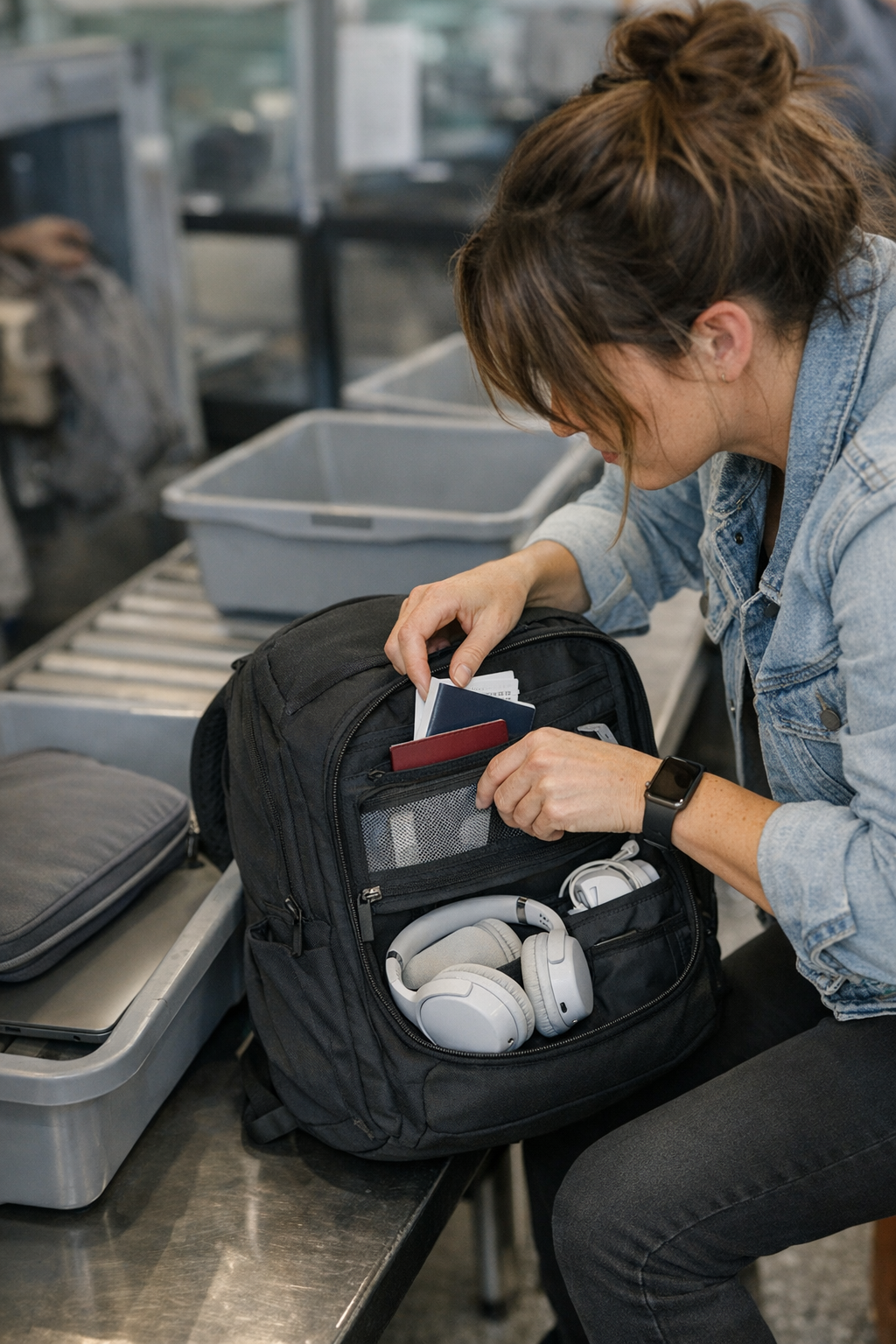
The real test of a carry-on setup isn’t what you see on a bedroom floor—it’s how fast you can reach, retrieve, and repack when the line shoves you forward at airport security or boarding. Every traveler recognizes the quiet drag: fishing for a charger you swore was on top, unzipping a pouch you thought was for “quick access” but now blocks your hand, holding up a line while a document or headphone case vanishes deeper than it should. Nicely divided pouches and clever layouts can look under control at rest, but on the move, invisible slowdowns pile up. Every second spent rifling through the wrong pocket, shifting a kit to unlock a sleeve, or tracing a cable under a toiletries bag, is friction you feel in real time—and it never happens just once.
Organized on Paper, Slow in Practice
The tidy packing logic—separate pouches, snapped-in sleeves, color-coded organizers—means little when your routine breaks it in minutes. You plan for order, but airports force constant reach and return: headphones for zone calls, passport for desk checks, sanitizer on demand, charger before wheels up. Each time, a smooth layout at home becomes a shuffle of pouch-over-pouch, or an awkward pause as you pull one item only to block another. The structure that looked “put together” now acts as a slow gatekeeper. The flaw isn’t in forgetting to pack—it’s in backing a setup that turns these tiny retrievals into repeated speedbumps.
Travel exposes this: your main sleeve is tidy but blocks the charger two layers down, or your outer pocket is stuffed with “just in case” items, putting boarding passes and IDs beneath an accidental barricade. Reach, pause, reshuffle, move along. The cost isn’t major in one moment; it’s the repetition—every interruption a small penalty that chips away at flow.
Access Delays: The Quiet Obstacle Course
The problem shows up fastest at security and document checks. You unzip to grab a laptop but find cords tangled under a toiletries kit, or a tech pouch that shifted in transit now masks your passport. The line behind you watches as you empty out layers you packed specifically to avoid this. What started as logic—“group similar things, zip tightly, be neat”—fails, not by descending into chaos, but by hiding the right item beneath the wrong layer. The order is still there—it just doesn’t work at speed.
What’s more common than dropping everything is repeating a small dance: unzip, reach, pause, remember, retrace, then return items to their layer, only for them to migrate again after five minutes. Over the course of a single trip, that choreography steals minutes you don’t even notice adding up. By your second or third airport line, friction has built into a visible fatigue: slower rhythm, more disruption, a bag that demands your attention instead of simplifying your path.
Packing Logic vs. Real Travel Flow
Many travelers pack to look neat, not to move fast. Splitting essentials into isolated kits or pouches often means your boarding pass, passport, phone, and charger end up in three or four zipped zones. In theory, every group is separate and orderly. In use, every extra move turns the bag into an obstacle course. Visually clean setups can still force you through detours—slide one pouch aside, then another, then search. The time to scan a code, grab a pass, or stow a device isn’t measured in “was it packed well?” Nearly every delay is self-created by structure that rewards stillness, not motion.
Count your most common travel sequences: code scan at a gate, boarding pass at security, headphones in-seat, charger before landing. If any of these require a second zipper or shifting a stack to reach, you’re set up for repeated interruption. Even perfectly packed carry-ons create friction if their logic doesn’t match your rhythm of reach, retrieve, and move.
When “Good Enough” Structure Stops Working
Your system may look fine at home. The failures only show under pressure—seat knees blocking access, one hand busy, the other untangling a cord or searching for a pass that was “right here” but slipped under travel snacks. The moment that repeats is quiet but clear: open, hesitate, try again, by now holding up another traveler or blocking access to the overhead bin. At first, it seems minor—then it becomes the normal flaw you tolerate, because the setup is “good enough.” Real carry-on stress isn’t meltdown; it’s the steady drag you feel by the fourth or fifth time the wrong pouch opens before the right one.
Every repeated delay is a signal that the structure works against you, not with you—because what’s logical in a still room fails in line, aisle, and seat sequence. When the outer pocket is full of infrequently used things, documents migrate to harder-to-reach places. When the passport pouch fits the slip, it can also swallow a boarding pass by mistake. It isn’t one slip, but the combined price of design that never gets retrained after real use shows its limits.
Small Tweaks, Sharper Results
The fix starts with reading your own routine: identify the two or three items you always need first—passport, boarding pass, charger, headphones—and move them into a ruled outer pocket reserved only for these. Don’t rely on new gear; test with what you have by stripping just the repeat-use essentials from the main bag structure. Assign these a home that opens directly, near the zipper, every single time. Force one fast-reach zone for in-line and in-seat moments, not for static storage. Then test: at security, note how many moves it takes to unload; on board, see if reaching for headphones now requires no pouch-pulling or inner-bag shuffle. After use, monitor if everything restores in one motion instead of a return-to-base sorting. Small design tweaks that reduce these micro-motions compound immediately—less interruption, more travel flow, no need for a total re-pack.
The Compounding Effect: Less Delay, More Trust
When essentials stay one move away, the daily string of airport friction fades. No more apologetic aisle dances, blocked bins, or lost rhythm while digging for a cable or cards. A single, clearly split outer pocket turns a carry-on from an order project into a movement tool. It won’t feel revolutionary in one go, but the difference is clear when the same motion that once slowed you down now happens without a thought—your hand knows where to reach, your focus stays on your next step, and your setup lets you move. The best structure doesn’t just look tidy; it stays less interruptive through every repeat access. That’s how you measure real improvement—less friction, no matter how often you open, reach, or return.
See travel-ready organizers, outer-pocket tools, and better carry-on structure at CarryOnSupply.