
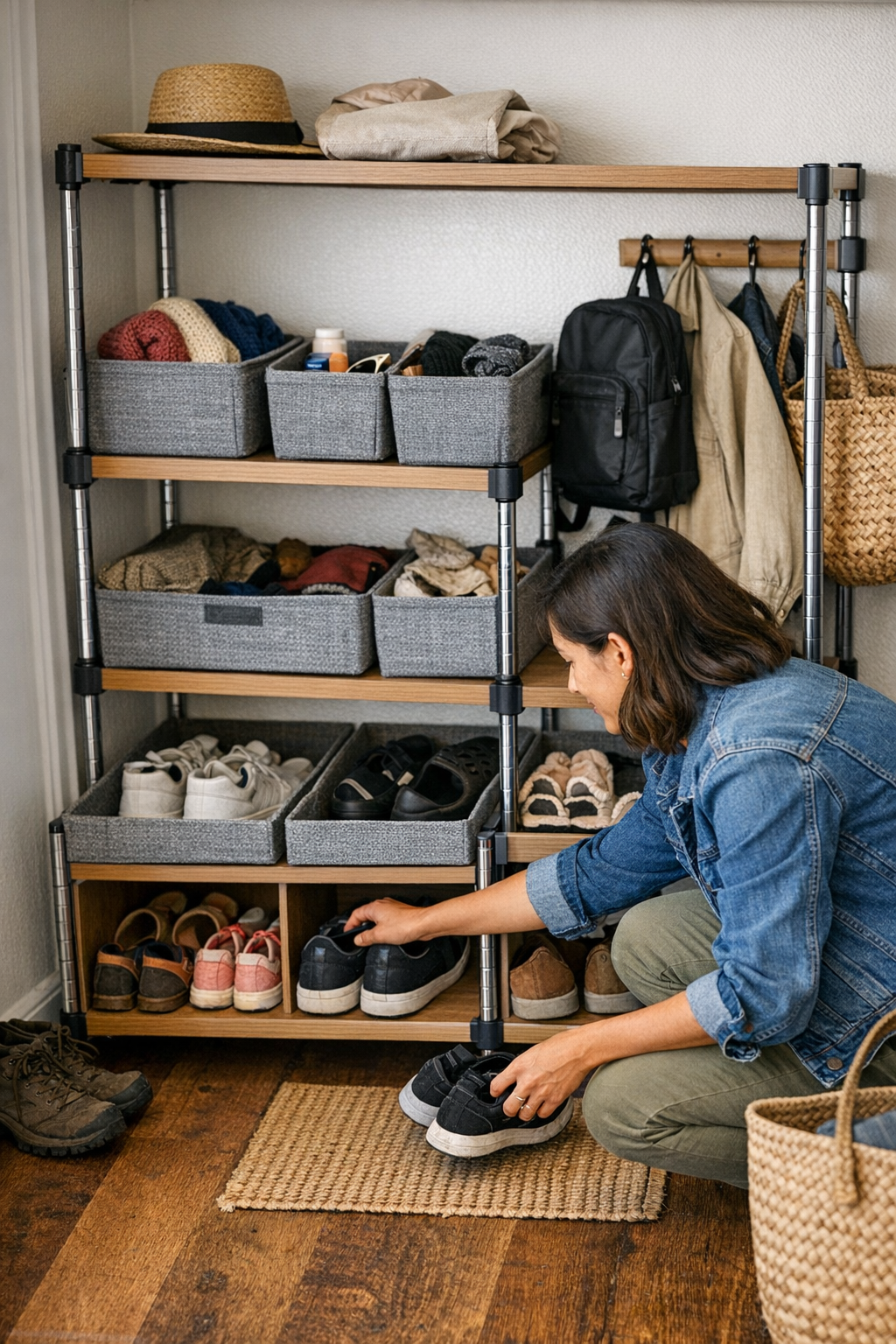
The first sign is almost always innocent—a spare bin squeezed into the closet just to “tide things over.” The hallway shelf, meant for the essentials, turns into a holding zone for loose gloves, mail, and whatever you haven’t had time to put away. These last-minute fixes promise instant relief, and in the rush of a busy week, who hasn’t felt smart for grabbing an extra basket to keep the mess at bay? But days blur by, and those makeshift spots quietly become part of your daily routine, for better—or for worse.
When Quick Fixes Become Daily Obstacles
It doesn’t take long for a “temporary” bin to plant roots. The overflow basket meant for shoes soon blocks the best path to your closet’s essentials. What started as a crisp drop zone at the entry now buries your keys under catalogs, masks, and the odd sock. Grabbing one item usually means reaching behind two, or shifting a pile just to unearth something small. The faster you try to move, the more each tiny obstacle adds up—until every reset feels like a round of hide-and-seek with your own stuff.
Surface Order, Hidden Hassles
Matching bins and a tidy shelf might deliver that instant “after” photo. But by week’s end, function cracks through the surface. In high-traffic zones—entryways, hallways, bedroom closets—the system faces the real test. Need your go-to scarf? Not without pulling off the hats and sliding two bags aside. Lower shelves stack up with whatever landed there last, and you start forgetting what’s in the bottom bin. What looked streamlined now only works if you never touch it. And that’s rarely the reality.
Clutter Creep in the Entryway
Scan the front closet after five days of family comings and goings: The “shoe bin” now hosts knotted sneakers, winter boots, and gym sandals all tangled together. The shelf above fills with yesterday’s mail, reusable bags, and things destined for “somewhere else.” Running late, you’re digging for a lost glove stuck beneath a backpack and last season’s hat. Each search leaves the pile messier, and corners fill up with things you’ll “sort later.” Instead of supporting the day’s rush, storage becomes a gauntlet—making small tasks (like getting out the door) harder than they need to be.
The Hidden Price of Catch-Alls
Those bonus baskets and easy-fill shelves promise freedom from clutter, but lacking boundaries, they quietly make things worse. Today’s overflow becomes tomorrow’s habit. Sandals you haven’t worn in months camp out with shoes you wear daily. The gym bag lands on top, burying what you actually need. The next round of stray mittens just piles onto the jumble below. What started as “extra space” turns into a lost-and-found. You spend more time hunting, less time moving on with your day.
Spotting the Slowdown
If you hear yourself muttering “where did I put that?” every other day, you’re not alone. Bins overflow, shelves layer up, and you find yourself sliding stacks around just to get at something in the back. Spending three extra minutes looking for a single item adds up—especially when week after week, you’re fighting the same battles. Tidying doesn’t stick. Items blend into each other, and that once-clear system now operates on hope and habit instead of real order.
How Real Change Starts: Reworking the Basics
Forget the fantasy of a full overhaul. Instead, split that unruly bin: use open dividers so each category (or family member) claims a clearly marked space. The effect is real and immediate—when the “kid shoes” section fills up, it’s obvious. A once-chaotic shelf becomes three sized bins: hats, gloves, scarves. Now you see what’s running low and what’s multiplying. Grabbing what you need takes one motion, not a full dig. Restacks become rare, and the system works even after a wild week.
What matters isn’t perfection—it’s visibility and limits. Containers with real roles keep overflow in check. Instead of wrestling with an endless pile, you see right away when something’s out of control, and the reset takes seconds, not half an hour. The separation reduces mix-ups, keeps items within reach, and gives every object a visible home.
Small Habits, Smoother Days
The payoff lives in your daily routines. Evening resets go fast—just a quick tidy, not a full excavation. There’s less friction on busy mornings; you’re not shuffling stacks to get your keys or fishing hats out of bag piles. The whole household finds things more easily, and shared spaces stay sane. Boundaries don’t just create order—they help routines survive the storms of real life.
Of course, busy weeks will still test any system. But now, recovery is a matter of moments: put things back where they fit, and order returns before chaos spreads. No more perpetual game of catch-up.
Time to Rethink Your Storage?
If you’re often pushing aside piles, hunting through layers, or using awkward corners as an unofficial drop zone, it’s time to pause. Catch-alls and “overflow” bins are only helpful when they have clear, visible limits. Without them, a backup quickly becomes a bottleneck—slowing you down, swallowing your essentials, and silently contributing to the daily scramble.
Pay attention next time you tidy: Are you always shuffling the same overstuffed bin? Are shelves filling up too quickly? Are resets taking too long? If yes, try tighter boundaries and more purposeful bins. Make each spot serve a clear, visible role—and see how that changes your day-to-day flow.
Real storage wins aren’t about a picture-perfect closet, but about a setup that moves at your speed, adapts to a real household, and recovers quickly when things get messy. Choose systems that make it easier to see what’s what, grab what you need, and reset the space in minutes—because storage success isn’t just about a neat snapshot, but a space that quietly holds up, week after week.
Visit ClosetWorks for storage solutions designed to handle real life