
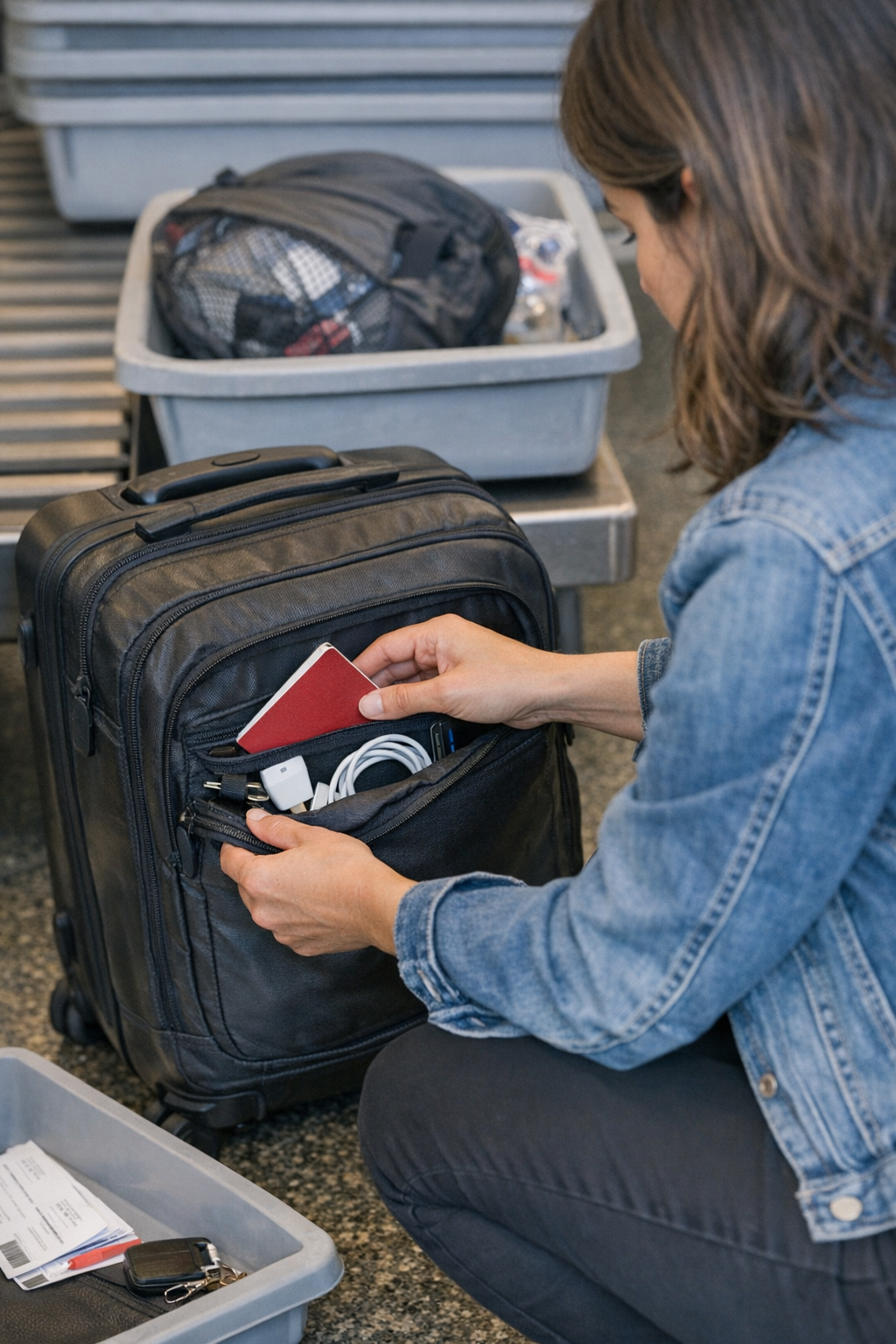
Travelers who pride themselves on a perfectly organized carry-on often hit the same wall: mid-trip, their “system” slows them down. On the home floor, every pouch and pocket looks under control. But try pulling a boarding pass from under stacked travel pouches with a boarding line pressing behind you, or dig out a charging cable during the pressure of airport security—what worked on the table turns into a speed bump in real use. The moment you have to move fast—boarding, security, sudden document checks—is when your carefully built structure goes from neat to nerve-racking. What seemed streamlined at home becomes a source of friction in motion. CarryOnSupply exists because almost every “orderly” carry-on creates these live travel bottlenecks.
When Organization Creates Unexpected Slowdowns
You leave home feeling set: nothing rattling loose, pockets clear, zippered mesh and organizers lined up. But real travel isn’t static. Pause at security, stand in a tight aisle, or juggle two bags and a passport at a boarding gate, and your cleanly packed layers don’t move with you. Suddenly, grabbing a single cable means feeling for the right pouch between toiletries and chargers, or unzipping two mesh sleeves just for a boarding pass. Every “efficient” system demands extra moves exactly when you don’t have seconds to spare—and time lost here is visible and aggravating, not theoretical.
Visual order can blind you to operational drag. The first access might be fine: quick passport handoff, headphone retrieval. But after the second rushed repack—tray to bin, bin to seat—you’re already losing time to repeated zip-unzip cycles and stacked pouch juggling. What started out as a streamlined flow turns glitchy the minute the setup is used under real trip pressure.
The Real Stress Points: Where Your Carry-on Structure Breaks Down
The Blocked Aisle
Your turn to board arrives. The line behind you grows as you reach for headphones and travel documents before stowing your carry-on. If your setup forces you into extra zippers, hidden pouches, or pouch shuffling, every second feels magnified—especially with impatient eyes watching. Order delays you. You pause, balancing objects on the seat arm, apologizing to queued passengers, all because that “organized” structure hides quick access under extra steps.
Security Line Tangle
Security works in strict order: liquids, laptop, documents, belt, tray. If any part of your essentials is tucked behind other pouches—boarding pass beneath your toiletry kit, charger under a stack of organizers—you pay with delay. Fumbling for a cable means opening the main compartment, re-stacking organizers in line, then scrambling to repack while trays pile up. A system that looked perfect on your bedroom floor now forces live improvisation and lost rhythm right when glances and trays are piling up.
Layover and Long Days
Mid-trip, with energy draining, your initial structure collapses further. Frequent pulling and repacking disturbs the neat layers; one pouch slides over another, an outer zipper jams, an urgent item is now two layers down. The third or fourth cycle—gate repack, curbside check, seat drop—proves the setup is slowing you, not supporting. What first looked organized now works against you, burdening every stop-and-move.
Spotting the Subtle Repetition of Friction
These aren’t minor delays. In transit, every additional pocket unzip, awkward pouch move, or scratch-around for sanitizer cuts directly into your pace. Maybe you kneel in the aisle for a charging cord. Maybe you pull out two unrelated pouches just to reach one document—feeling watched at a checkpoint as you untangle your own structure. Each micro-delay breaks flow and amplifies stress.
The real friction: Over-layering, over-stacking, burying essentials beneath lesser-used items—all slow you down not once, but every single cycle. At home it’s invisible; after two or three retrievals, the drag shows itself in lost travel time and repeated setup fails.
How to Rethink Carry-On Structure for Repeated Use
After a few trips, the answer isn’t another pouch or a stricter organizational system—it’s simplifying the moves required for high-frequency items. The most effective shift? Reserve a shallow, external pocket for only your most-used essentials: passport, boarding pass, charging cables. No layers, no pouch stacking, no barrier objects. Just visible, direct, one-action access.
This isn’t mindless minimalism. It’s a direct response to repeated-use friction. When these essentials sit solo in one dedicated spot, every checkpoint, gate, or quick tray-grab becomes smoother. You don’t break stride or upset the rest of your packing structure—just open, retrieve, and keep moving. It’s not theoretical efficiency; it’s practical access you feel on every stop, transfer, and seat change.
Recognizing Which Setups Sabotage Flow
Nested organizers, lined-up mesh, and perfectly squared-off tech pouches can look flawless but act like roadblocks in motion. If pulling a charger means detaching your toiletry kit, or if a document is “secured” inside, yet buried, you pay with lost moments and compromised flow. The problem isn’t messy packing—it’s packing that blocks speed and repackability through repeated steps and unnecessary barriers.
Building a Setup That Actually Makes Travel Smoother
The best carry-on isn’t the one that looks perfect when zipped shut; it’s the one you can operate with one hand after three rounds of access and repack. The strongest setups:
- Keep top-priority items instantly accessible—never behind other organizers.
- Eliminate moves where you’re forced to pull one thing to reach another.
- Translate to quick, semi-blind repacking—no lining up pouches just for a photo finish.
- Repeatedly survive travel chaos: dropped pouches, gate changes, nested repacks—without gradual breakdown or slowdowns by trip’s end.
You don’t need to overhaul everything. Moving key items—like cables and documents—out of a nested pouch “system” and into a single, touch-ready section pays off most after repeated cycles. Every subsequent trip or transfer, you’re spared the slowdowns. The bag doesn’t just look lighter; it actually moves lighter through your whole travel day.
Why “Order” Means More Than Just Looks
Real organization isn’t about visual calm—it’s about closing the gap between how your bag appears and how it works once you start moving. If your structure forces you to pause, dig, and reorder every time, the surface neatness is just a cover for buried inefficiency. Choose setups tested by actual airport movement, not just by static preflight checks. Real travel exposes every layer that’s more performance theater than usable design.
Find more carry-on travel solutions at CarryOnSupply.