
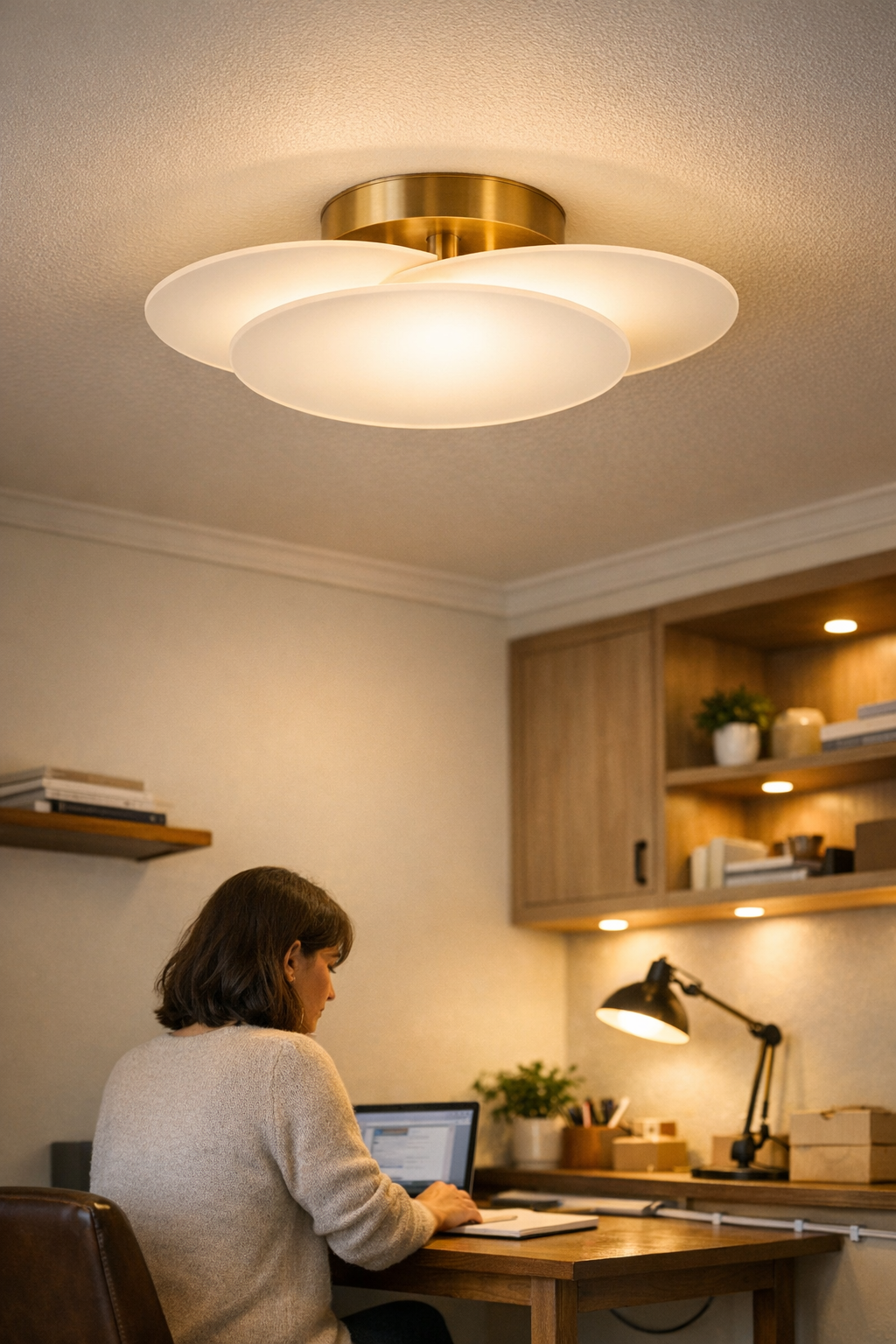
The surest sign your ceiling lighting isn’t working? You start each day expecting a smooth routine, but the interruptions never stop. Glare bounces off your screen right when you need to focus. You reach for a shelf and realize you’re working in your own shadow. Your chair snags yet another loose cable—evidence that every lamp you’ve added is a patch for a larger problem: your lighting and support don’t fit the way you actually use the space. The photos looked clean and the fixture seemed minimal, but daily use exposes friction you can’t ignore—just trace the trail of moved lamps, taped plugs, and tangled lines. Most setups don’t look like trouble until you’re forced to adjust and readjust, losing focus to workarounds instead of getting anything done.
How Quickly Bad Lighting Reveals Itself
The difference between “looks finished” and “actually works” always surfaces by the third or fourth day. The first hour, that slim ceiling panel or flush fixture projects calm—no wires, no visible clutter. But as soon as normal routines set in—booting up your laptop, squaring up to a monitor, picking up stacks from a corner—you start chasing shadows and dodging flare-offs. What seemed like a clear, well-lit space now has cold spots and glare lines visible the moment you shift position. Add one lamp and you drag a new cord across your footpath. Scoot your chair back and you’re wrestling with a cable that wasn’t part of the plan. Each small hassle gets multiplied by repetition, amplifying how little the minimal look helps when practical lighting is missing.
Why Minimal Fixtures Often Miss the Mark
Visually minimal overhead lighting usually sacrifices use for looks. Most flush ceiling fixtures spill brightness all around but still can’t keep desk edges, room corners, or wall runs genuinely usable. The bloom of even light in a photo turns into patchy dimness every time you actually check the task surface, or a bolt of glare slicing into your field of vision when you sit at a screen.
Shared and multi-use rooms make this clash worse: ceiling lights set the base level, but because they miss shelves and corners, any other lamp you add either fights the overhead glare or doubles the exposed cable chaos. The illusion of minimalism ends as soon as one “support” piece is needed—and the room’s balance is lost.
When Looks Deceive: Clean Install, Messy Use
You can reroute, bracket, and cover every ceiling wire, leaving a perfect surface overhead—until actual work destroys the effect. Shadows land where you want consistency. You plug in an extra lamp, and suddenly that “clean” path becomes a tangle of cords or a new tripping hazard right in your best walking line. Rely too much on the finished install and the lived experience becomes a mess of re-anchored supports and surfaces that never feel consistently usable.
Scenes From a Frustrating Routine
A compact workspace, a sharp low-profile fixture, and a single desk lamp—the setup looks solved at sunrise. But by lunch, reflections flicker on the screen and corners swallow detail. There’s no steady edge for work; adding a lamp means tape or another bracket, with cables coiling across the desk or floor. Simultaneously, the shelf edge you reach for is half-lit, and under-shelf lighting leaves an awkward transition so your hand still searches uncertainly for the right cover.
Now everything requires a workaround. You’re taping cords to keep them out of wheel tracks, twisting flex arms hoping they’ll reach a blind spot, adjusting brightness by instinct rather than design. “Minimal” quickly turns to patchwork as new needs emerge—and the more you improvise, the less you trust the setup to actually help.
When “Upgrades” Don’t Fix the Real Issue
The cost isn’t just minor daily bother; with every fix, the routine gets heavier. Every new lamp or plug strip brings its own cable management headaches. You tack a tray under the desk only to realize another exposed channel gets in your way. Fill one dark zone and another appears across the room. Even with extra hardware, surface edges remain inconsistent, visibility shifts from hour to hour, and the impulse to “fix” things creeps back every few days.
None of these patches solve the core mismatch. If the overhead doesn’t support the surface—if support hardware just papers over weak points—every quick fix just creates a new friction to remember and work around.
What Actually Helped: A Real-World Lighting Change
After weeks of circling the same problems, I replaced my ceiling light with a dimmable, directional fixture—aimed so general tasks happened in an even pool, leaving targeted spots for wall and desk lights to fill. I anchored every essential cable with real brackets, running them tight along walls or under desk lips, not dragging loose over workspaces. Routine immediately changed: walls and shelves stayed visible, cords stopped snagging, and extra lamps were mostly for preference, not as a desperate patch for poor layout. The clarity wasn’t about perfection—it was about no longer losing focus to the same old avoidable interruptions.
Tips for Sharper, Easier Daily Lighting
Let Ambient Light Support—Not Dominate—Your Room
Start with a dimmable or directional ceiling fixture, and set a lower base level. Your task and accent lighting should layer in, not have to fight or overtake a harsh overhead. This approach avoids harsh jumps and means additions actually solve problems instead of creating new ones.
Beware the False Minimal: Clean Looks Can Hide Daily Friction
A minimal fixture often means hidden discomfort: the key surfaces stay dim, fingers land in soft shadow, or glare hits your usual sightline. Evaluate fixtures during real work or shared use—track where you’re forced to move, tweak, or bring in backup hardware every day.
Cable Management Isn’t Just “Nice to Have”
Anchored cable runs are structure, not just style. When cords are parallel to surfaces—sheltered by proper brackets, never just looped in reach—you reduce snags, missed connections, and daily disruptions. Over weeks, this stops the low-grade friction that piles up and subtly dents your focus.
The Payoff: Effortless Routine, Quiet Reliability
Lighting and support that fit the real shape of your use—shielding glare, illuminating true work boundaries, anchoring cables out of the way—aren’t just tidier. They make routines flow, removing the interruptions that never appear in glossy photos but undercut every task. The test isn’t how perfect a surface looks, but how invisible the lighting feels once every movement is supported and every edge is actually clear.
When daily work goes uninterrupted and your space stops reminding you of what’s wrong, you’ve finally landed on a setup that works—subtle, reliable, and adjusted to the room as you really use it.
Visit LightSupport for lighting and support essentials that work in real-life use.