
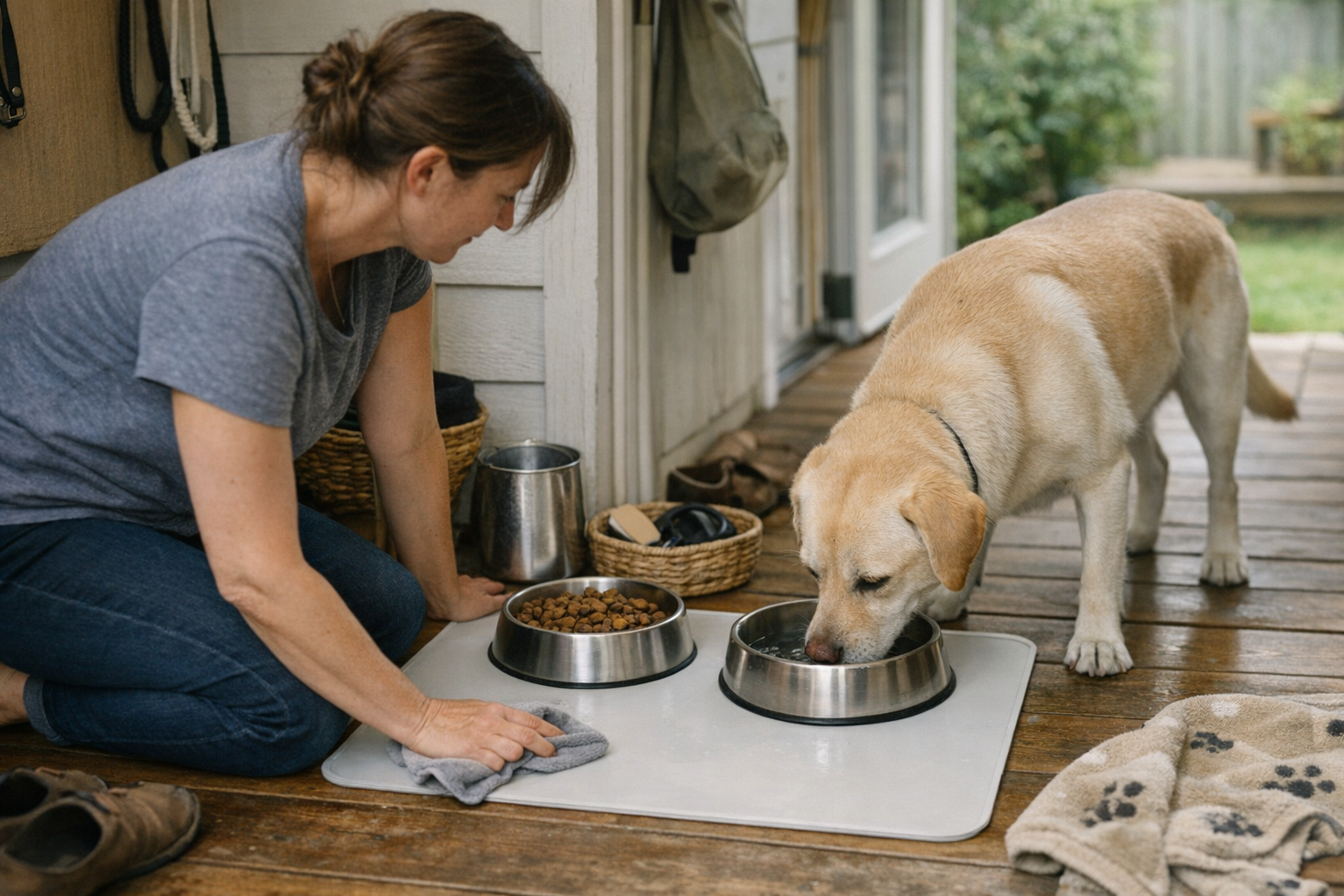
Quick, efficient resets in your pet’s feeding area rarely survive a full week of real use. Bowls look tidy on day one—water, food, a mat in place—but by day three, the surface becomes gritty, corners hide dry food, and drips slide right under the mat. “Almost clean” keeps coming back. You expect a one-motion wipe, yet instead you’re nudging aside a loose bowl, tracking down a missing scoop, or wrestling a half-damp rag just to clear buildup that wasn’t supposed to happen. This isn’t a rare disaster; it’s how ordinary setups quietly slow you down—especially when the feeding area doubles as a hallway shortcut or shares space with shoe racks and late-night routines. CalmPetSupply’s world isn’t about looking organized for a photo, but about setups that don’t unravel with real, repeated use.
Where Cleanup Routines Actually Stall
Feeding corners don’t fall apart from messes you can see; it’s the steady drag of minor, stacked inconveniences. Dried food clings along the inner rim, water settles under a slightly warped edge, or crumbs wedge in the textured ridges of an average plastic mat. Even locating a clean rag or finding the right bowl in a reshuffled pile can throw off your routine. One small snag—like moving everything just to refill water before heading out—turns “quick cleanup” into repeat work. That single missing spoon, bowl, or spray bottle ensures resets lose their speed.
You probably walk to refill water early in the morning and spot yesterday’s food crusted under the bowl lip. Fixing it means either breaking your stride to dig out a cleaning tool stashed far from reach, or leaving it “for later,” which compounds the slowdown. Every interruption pulls you off course, and every return to the area means starting from behind—not saving time, just deferring the reset.
The Cumulative Cost of “Quick” Wipes
Even strict routines can’t outpace buildup. There’s always residue in mat seams, sticky spots under food bowls, or fur drift that clings just out of swipe range. You wipe; the crumb line shifts but stays. After a few rotations—re-wiping, re-straightening, fishing particles out of grooves—what should last two minutes swallows your next ten. That’s breakfast running late, a skipped grooming pass, or an after-walk rush that leaves the setup worse off than before. Organization that calls for frequent resets or supply runs loses ground each time around.
Homes with two pets, active children, or tighter spaces notice this layering effect faster. Each mealtime adds micro-messes, small enough to ignore until they gum up future routines and make shared spaces harder to navigate.
Scenes from Real Pet Care Routines
Picture a normal evening: you intend to wipe the feeding area, but your hands are already full with a leash or fur brush. The mat looks fine from across the room; only up close do you see the matted bits on the underside or dried splashes beneath the bowl. During a rushed night check-in, topping off water means dodging toys or nudging a bottle of cleaning spray out of the way just to slide the bowl free. These aren’t dramatic barriers but repeated stutters—small enough to accept, frequent enough to add up.
The setup can start off strong: new mat, organized bowls, scoop within reach. But by midweek, filling water or dumping food leftovers means shifting every item out, wiping up under-edges, and restacking what should have stayed put. Each “quick reset” becomes a drawn-out sorting process—a drain hidden behind tidy surfaces.
The Hidden Weak Points
Many setups look orderly but still work against you. Mats with patterns to “hold” bowls in place trap crumbs and encourage wet spots to pool, turning wipe-downs into finger-scraping sessions. Even a non-slip tray, if it hides food debris at its seams, forces you to grab a brush mid-routine. You can wipe the top, but stubborn edges and under-mat lips make you return for missed patches. Every not-quite-clean corner delays resetting food, slows brushing, and ensures that returning a stray toy or prepping for the next walk means dealing with leftovers from the last round.
Where Simple Materials Change the Pattern
Setups that actually remove repeat friction have one thing in common—a surface with nowhere for mess to hide. Mats or trays with a smooth, flat base and a shallow edge mean a quick swipe clears every problem, skipping the scrubbing, second pass, or hunt for special tools. Cleaning supplies stay within arm’s reach and go unused more often, because they’re needed less. After a few days, you notice less hesitation—more willingness to refill, top off, or wipe down, knowing the whole area resets in one honest motion. The feeding area stays ready for whatever routine lands next, not just looking fine after a big clean.
The main test isn’t how a setup looks when “deep cleaned.” It’s how little it asks during an ordinary week—resetting fast enough that the friction never builds, keeping attention on your actual care routine instead of a hidden maintenance list.
Key Takeaways for Practical Pet Care Areas
Surfaces that truly resist buildup—smooth, no-deep-grooves, no porous seams—let you finish resets fast and move on. Avoid mats or bowls with extra texture, raised patterns, or seams that demand picking or repeated wiping. The right choice is the one where nothing stays stuck in progress or corners you into a longer cleanup each time.
Organization should mean more than a neat appearance. Feeding and watering routines stall when the setup creates friction with every pass: a bowl that sticks, a mat that hides damp crumbs, supplies that drift just out of reach. When you only need one wipe to finish—and nothing demands double-checking or repeat effort—pet care can actually stick to your preferred rhythm.
The best setups do less; they don’t slow you down pretending to be tidy. They stay reliable side-by-side with your routine, not as another catch-up chore.
For more practical insights and solutions designed for real-life pet routines, visit CalmPetSupply.