
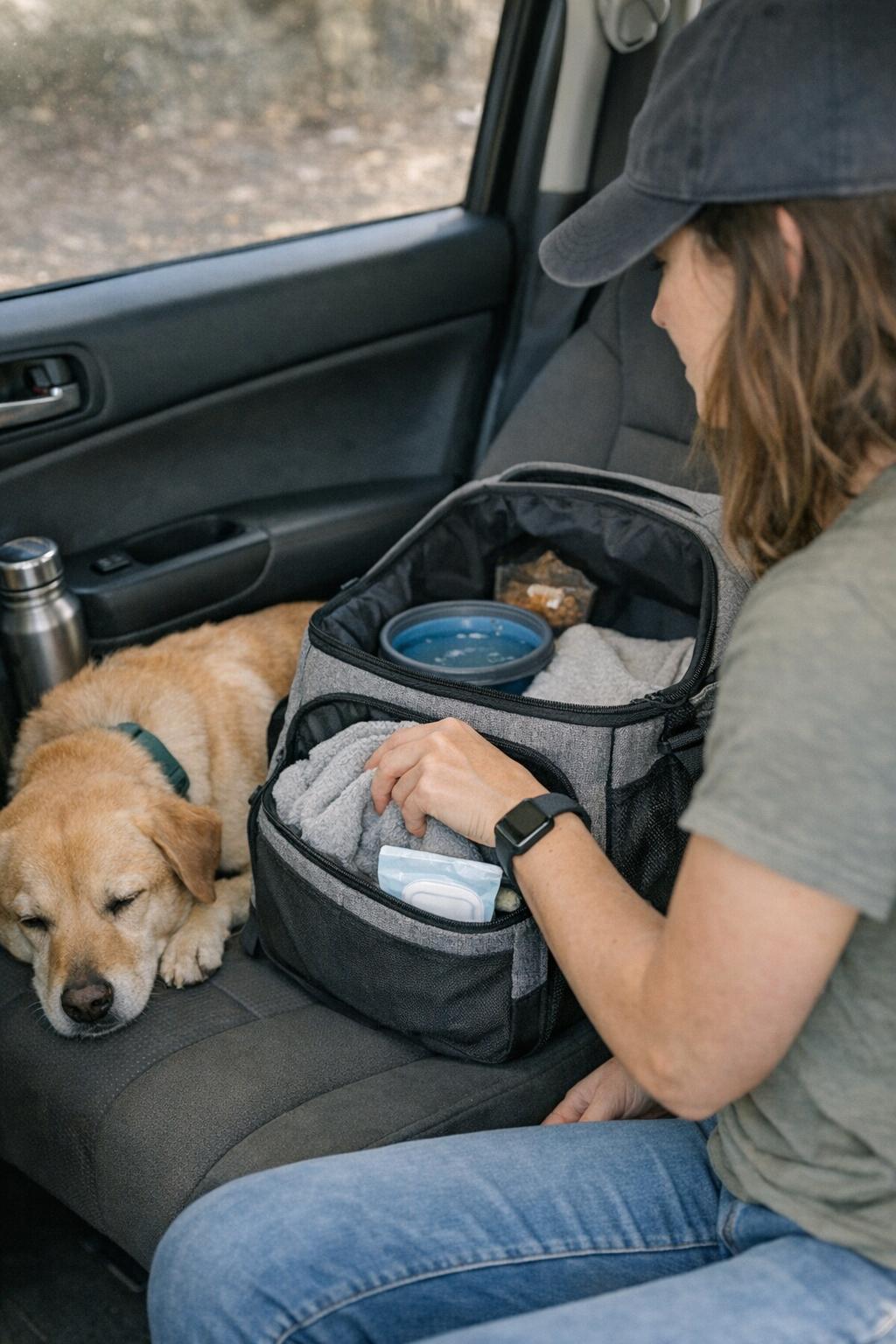
The problems with your pet’s travel bag don’t wait for the end of the trip—they hit fast, usually within the first unscheduled stop. It might look “organized” when you start out, but the real test shows up the moment your pet flags and you need one comfort item or cleanup tool immediately. The treat pouch is stashed under bowls; wipes are three zippers away; the blanket is pinned beneath a leash and water bottle. Reaching for any of it quickly turns into a lopsided scramble, especially in cramped car seats or during quick sidewalk breaks. Each extra second spent digging, repacking, or shifting gear isn’t just frustrating—it drags every restart, interrupts your pet’s comfort, and makes you question what “ready” ever really meant. This is the friction PawGoTravel was built to prevent—making repeated stops, fast resets, and seat-side comfort actually doable, not just well-packed on paper.
Where Well-Organized Bags Start Failing During Real Trips
Tightly sorted carriers and supply bags only seem efficient until you’re forced to interact with them under pressure. The layout that made sense late at night—bowls nested, wipes zipped away, blanket rolled tight—falls apart the first time your dog slumps with fatigue or your cat shifts nervously. Suddenly it isn’t about “having everything”; it’s about whether you can actually reach what counts, fast, without reconstructing the bag during each stop.
The moment most pet owners know too well: you’re parked, scrambling for a comfort item, and the neatness from home means nothing. The blanket is trapped underneath bowls and toys; the wipes need a full unzip and dig. If you’re juggling multiple mini-stops or are already behind schedule, every design flaw gets sharper and more annoying. Even the most organized setup starts to feel hostile to real movement.
Flaws Revealed by Repeated Stops and Early Pet Fatigue
Most bags only show their true colors when the trip breaks routine—an anxious pet, surprise messes, or just a hunger pang at the wrong moment. It’s here that the difference between “put away” and “quick access” becomes costly, especially when conditions keep changing.
Common Friction Points in Real Use
- Pocket faces away from you: Comfort items are stashed in a compartment that turns toward the window or away from your hand, forcing awkward twisting or full-lift maneuvers just to reach a single item.
- Important gear layered under rarely-used stuff: The treat or blanket always seems to require fishing past water bottles and sippers, guaranteeing you’ll mess up any previous arrangement.
- Cleanup tools buried or blocked: Spilled kibble or pet accidents mean digging behind zippered panels or loose toys, turning a routine cleanup into a hurried, two-handed production.
- Reset drag compounds: With each stop, the “order” unravels further—half-used items float up, pet supplies drift toward the bottom, and each restart gets slower as more pieces get knocked out of place.
After just a few stops, these friction points don’t just annoy—they cost you real time and pet patience. “Organized” is only useful if it survives actual use without interrupting the flow.
What Looks Ready at Home Isn’t Always Fast in Motion
The most convincing setups fool you at the start. Bags packed tight mean fewer loose items rolling around, but the moment you reach for comfort mid-trip, you find yourself elbow-deep in stacked gear. Maybe that blanket is meticulously rolled but positioned under bowls; the zipper faces outward instead of toward the seat; your pet waits through every second of your improvisation. When pets are already tired or unsettled, those small delays multiply. A bag that looked “together” at home quickly feels impossible to work with after two stops and some unexpected mess.
The mess may not spill out visually—but every extra handle, every blocked pocket, and every need to unclip or rearrange slows you down. The gear stays “contained” but at the cost of repeated clumsy resets. By lunch, your organized bag has you working around its order, while your pet’s agitation rises with every stall and shuffle.
Seat-Side Access: The Game Changer for Comfort and Cleanup
One shift completely changes the travel equation: bringing comfort and cleanup gear into a seat-facing (or genuinely easy-reach) pocket instead of hiding them beneath or behind everything else.
Reroute your access, and your reaction time improves immediately: Flip the carrier so its opening is at the seat edge; load wipes and comfort items in the front or in an exterior seat-side pocket. Suddenly, instead of a digging session, it’s one motion to blanket or wipes. Your pet gets what they need before their irritation spikes, and you avoid repacking entirely. After swapping to this setup, every pit stop becomes less messy—not just for your bag, but for the whole trip rhythm. You’re still “organized,” but you’re no longer at war with the bag’s structure.
Why Typical Organizers Still Fall Short
Most generic travel bags—especially those hyped for “maximum storage”—push you toward deep stacking and over-compartmentalizing. It feels logical until reality hits: as soon as your day’s actual needs deviate, you’re back to reshuffling, shifting, and cursing every extra pocket between you and the key supplies. Every unplanned delay adds up to one more restart where your pet stays uncomfortable, and you stay off your intended schedule.
Real-World Examples: The Friction You Actually Feel
- You stop at a rest area, and your dog slumps, looking for their blanket. It’s at the bottom—under bowls, leashes, and snacks—forcing you to tip or dump half the gear. By the time the blanket emerges, your dog is unsettled, and you’re already wishing for a simpler setup.
- A biscuit shatters mid-drive. Technically, wipes are packed, but they’re buried under a pouch of toys and behind a double-zip. Cleanup drags on, your pet fidgets, and by the third repack, your patience thins.
- The travel dish overlaps with your own water bottle, which blocks the emergency waste bags; at every stop this overlap means shuffling things around, repeatedly losing momentum.
Every pause turns minor access flaws into irritating delays. Instead of supporting the outing, your travel gear becomes a recurring obstacle you fight each time something unexpected happens.
Access Order Defines the Whole Trip
The single most important setup question isn’t “does everything have a place,” but: does each essential land in your hand at the moment you need it?
- Are comfort items where your hand naturally falls at a stop, or wherever they “fit” during packing?
- Do cleanup supplies come first, or are they guarded by layers of well-organized, but rarely touched, gear?
- Does each restart happen smoothly, or do you catch yourself rearranging and repacking over and over?
The routine only gets easier when comfort and cleanup aren’t buried. Bringing these up to seat-side or grab-access positions means the trip moves at your pace, not the bag’s structure.
Real Improvement Comes from Repeated Use Adjustments
It’s not lack of preparation that drains you—it’s drag. Daily or weekly outings reveal it fast: the bag that promises order actually blocks you in real use. Shifting to logical seat-side pockets, reducing item overlap, and solving for fast-in-motion access is what transforms travel gear from “good-looking” to actually functional. The only real proof is how it handles when trip conditions don’t cooperate—not how tidy it seems at the start.
Packing for order means nothing if the routine still gets jammed under pressure. Actual improvement starts when your travel setup works as fast as you do—keeping comfort close, cleanup instant, and each pause easier to handle.
Find practical seat-side travel gear and comfort-first organizers built for smoother movement at www.pawgotravel.myshopify.com