
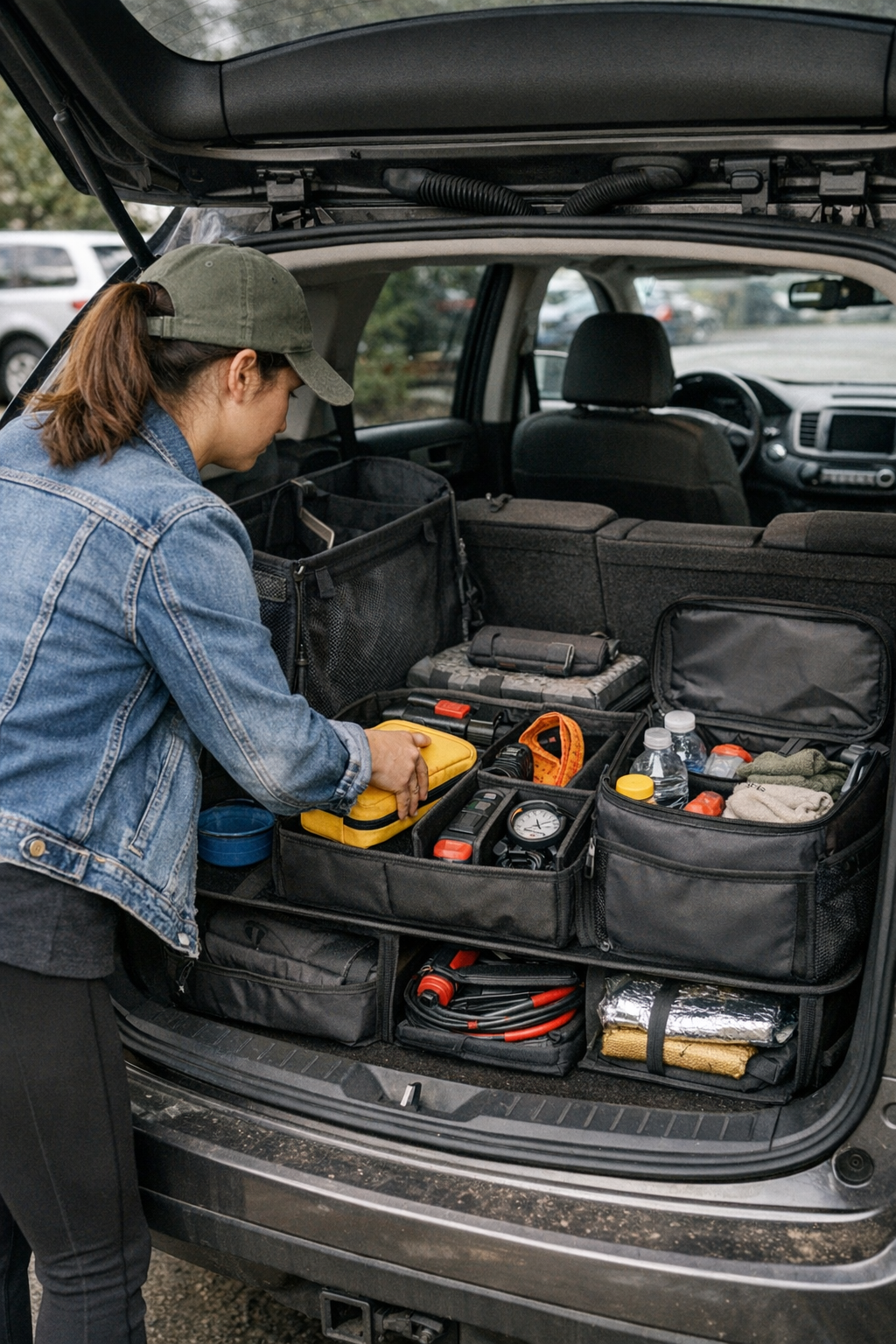
Your car resets fast after a quick clean—cords coiled, surfaces wiped, everything looks controlled. But that order shatters within days: chargers tangle with coins, dog leashes spill past the console, and wipes or pens drift across trays meant for something else. The real test isn’t how tidy your car looks after cleaning—it’s whether you can actually reach, grab, and use what you need without shifting, detangling, or hunting every time you drive. If your hands keep brushing aside the same clutter, you’re not alone. The gap between visual order and daily drivability is wider than it seems, and ordinary car-use routines quietly expose every weak spot in your setup. This is where most setups break down, even with the best intentions—especially if you haven’t looked closely at what stays separate versus what instantly starts to overlap.
The Real Trap: Storage Overlap that Undermines Order
No one drives around planning to make a mess. What actually wears down order is category overlap—when emergency tools, snacks, tech gear, and dog supplies all funnel into the same catch-all area because that’s what routine demands. You might start your week with everything separated—chargers tucked, tissues stacked, wipes anchored. By the third trip, cords creep under snack packs, and cupholders hide both quarters and dog treats. Plugging in your phone means untangling a cord from a grocery receipt, two steps slower than it should be, every time. What looked “organized” at the start is already resisting you at each reach.
The core problem: setup boundaries vanish after only a few real-world drives. With every acceleration or quick stop, small items migrate—chargers slip under gloves, wipes edge into phone-mount space, and sanitizer rolls into tech zones. This kind of chaos doesn’t come from neglect—it comes from daily movement. If you rely on one pocket or center bin to do everything, routine use will blur those boundaries almost instantly.
How Micro-Delays Build Up in Everyday Routines
Most setups look fine until you’re pressed for time. Imagine returning to your car in the rain, hands full, expecting a quick exit. Instead, your charging cord is wound around a snack wrapper, with your mask stuck under stray receipts. These aren’t big messes, but they chip away at your patience: an extra moment here, another second there, detangling and digging for basics. These micro-delays aren’t dramatic, but they grind on you, making each drive feel slightly slower and less predictable. With every short commute, quick errand, or family handoff, you sense the interior shuffle—never quite as crisp as after the clean, with little frictions multiplying across the week.
Especially in busy routines—school drop-offs, parking scuffles, shared car use—these delays compound. Instead of reaching and moving, you’re re-sorting before driving off, every time. Fast access vanishes. The “reset” you worked for is gone before you even notice.
Why Shared Dump Zones Break Down Fast
The center tray or deep door pocket is supposed to simplify everything—a go-to zone for fast storage. But these combined spaces quickly break down under repetition. What starts clean becomes a layered stack: sanitizer jammed under phone cords, water bottles bumping against forgotten wrappers, and tech gear buried between spare change and emergency wipes. On the surface? Still looks “fine.” In practice? Each reach means knocking over some other item, juggling cords, or dislodging half the bin. Even the simple act of grabbing a charger becomes a disruption, and fetching a mask means pushing past unrelated mess.
One rushed grab, one bump in traffic, and your supposedly organized zone collapses into a mixed clutter pocket. The issue isn’t truly losing things—it’s that nothing stays reliable. Every small trip erodes your system until the idea of “quick access” is just a memory, replaced by mini-sorting rituals that slow you down.
Stress: The Moment Mixed Storage Really Fails
The real cost of mixed storage hits during pressure—returning to your car with arms full and a phone battery dying, only to find every cable, snack, wipe, and coin jammed together in the supposed “access spot.” Suddenly, regardless of how carefully you cleaned last weekend, you’re digging through mess to find what you need, risking spills or knots, and—once again—leaving coins and trash to slip under the seat. Rushed days reveal how quickly a tidy look loses its usefulness, and how grueling it can feel to keep resetting what never stays set for long.
Recognizing the Cycle: When Tidiness Doesn’t Survive Real Use
The cleanup cycle is predictable: sort, separate, return to order—then blend and drift, again and again. But if categories aren’t strictly divided, this order collapses early. The routine becomes about restoring lost boundaries more often than actually using your space. By the third normal trip, what looked “done” is already creating slowdowns: tangled charging lines, mask slides, water bottles rolling past tech gear, each one a reminder that visual neatness doesn’t mean faster, easier drives.
How Purposeful Separation Transforms Your Driving Flow
The change that actually lasts comes from enforced separation—giving chargers, tech pieces, dog leashes, and wipes clear, dedicated organizers or routed spots. With each core item in its own holder or lane, friction drops instantly. Charging a phone becomes a reach, not a dig. Seats stay free from tool drift, and cargo isn’t a scatter plot by the end of the day. A charger run along the center edge and anchored away from the catch-all means no more coiling up to use your device at each stop. Dog travel setups that limit access to their own pocket stop their gear from sliding into tech or everyday spaces.
Is this setup perfect forever? Of course not. Real driving still means tossing items and shifting as needed. But the repeated pauses, the little hesitations—where did the cable go, which compartment buried the wipes—fade out. Over an ordinary week, it takes less effort to keep things in place, and the idea of “resetting” your car becomes a rare need instead of a daily chore. The system holds up under weekday chaos, not just after a big vacuum and wipe-down.
Small Fixes That Make a Daily Difference
Simple changes—using high-grip organizers, limiting each pocket to one item type, or routing cables into single zones—do more than just look tidy. They shift your whole car experience. Repeated reach and return becomes easier: you aren’t knocking over bottles to untangle a charger, or brushing wrappers off a mount to answer a call. Loading gear is quicker, and cleanup starts to feel manageable. Family members find what they need on a first try, and pet supplies are less likely to drift into tech corners. The difference isn’t in having less stuff—it’s in not having to fight to access the things you actually use.
The daily win is obvious: less wasted motion, less second-guessing, and a car that works with you, not against you, even after a stretch of back-to-back errands or shared drives.
For practical solutions that keep your essentials sorted and your routine moving, visit DriveWellSupply.