
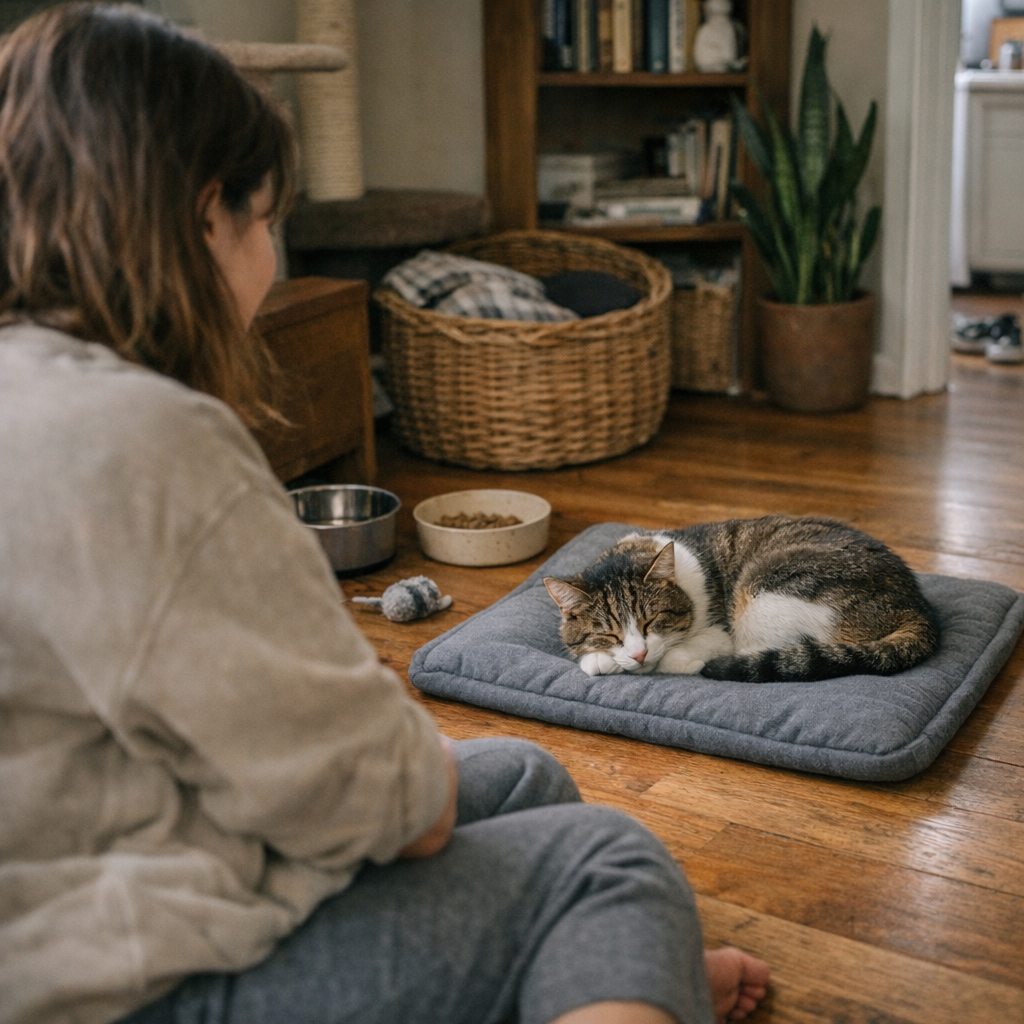
Every indoor cat owner knows the friction: you step into the kitchen after midnight, water pitcher in hand, and there it is—a pawprint-smudged blanket jutting into the walkway, or a supposedly “tidy” rest corner now rumpled and scattered. Night zoomies aren’t a joke when sleep is broken by restless paws and the setup you organized keeps coming undone. The real interruption isn’t just leftover cat energy—it’s the way our rest, water, and cleanup setups quietly reset themselves in the background, turning a peaceful setup into a nightly cycle of mess, minor detours, and broken rest. If your cat’s downtime never truly settles or your “organized” area stubbornly asks for attention, your home is already showing common StillWhisker signals: comfort zones that don’t survive through real, repeated use.
Hidden Triggers Behind 2 a.m. Cat Zoomies
Late-night pacing, sudden sprints, or restless cats aren’t always about boredom or lack of play. Even well-exercised, calm cats will bolt if their resting area collapses under routine pressure: when a bed becomes a shortcut on the way to the water bowl, or a once-straight mat is now folded over from your last sweep. That “just off by an inch” feeling—mat edges slipping, blankets bunching, a bed that migrates after every refill—creates invisible tension that keeps building. These setup glitches rarely draw attention in the moment, but stack up fast: by midweek, your “rest” zone has become the hardest spot to keep settled, and your cat’s deepest sleep happens somewhere else.
Repeated, Subtle Disruptions
Notice how grabbing a bowl or topping off water always seems to involve stepping around, or even disturbing, the same crumpled blanket or half-displaced bed. Over days, small shifts from your routine—one foot nudged the mat, one lift of a stray toy—drift your cat’s rest area out of line. It looks organized for hours, slides out of place during the first cleanup, and needs constant micro-adjustment just to keep from unraveling completely. Unlike a spilled water bowl or scattered litter, these friction points tempt you to ignore them—until every reset starts to feel obligatory and burdensome.
By Thursday, you can trace the evidence: a mat that’s never quite in the right place, toys stuck out of reach, and nightly decisions about whether to fix things now or live with awkward mess. The result isn’t outright chaos—but a nagging, low-level upkeep drain that quietly breaks both cat rest and owner patience.
When “Tidy” Setups Multiply Problems
The urge to hide the bed or design a “cute” rest corner—under a side table, beside the kitchen, behind a sofa—feels like the right move at first. But repeated routines quickly reveal friction: a refill bottle stashed beside the mat, a half-pushed basket knocking everything sideways, a broom that unravels the whole arrangement just to sweep nearby. The cost isn’t obvious on day one, but as you find yourself re-centering a mat or smoothing a blanket—again, and again—it’s clear “tidiness” alone doesn’t last.
Placements sandwiched into high-traffic or overlapping-use zones quietly backfire. Beds or mats pushed to hallway edges, near food prep lines, or within a broom’s reach get nudged, jostled, or crumpled into the background of daily living. The cycle repeats: the moment things look organized, normal routines undo it. By the end of the week, the rest zone bleeds into walkways, toys huddle by table legs, and your original setup gets stranded between cat comfort and constant rework.
The Lost “Invisible” Comfort
An out-of-the-way cat bed that keeps shifting becomes an invitation for mess, not rest. Every storage shortcut—baskets tucked close, wipes stored underneath, toys dropped within arm’s reach—begins to claim more space than it saves. What started as “organized comfort” becomes another inconvenient cleanup zone. Owners feel this not as one big problem, but as a hundred extra actions: nudging, straightening, reshuffling, or second-guessing every step just to keep basic order.
Real-Life Friction: Scenes From a Sleep-Starved Cat Room
Reach, Reset, Repeat. The usual late-night water refill means dodging a bed that’s migrated half a foot into your path. You catch the blanket with your heel; by sunrise, the sleeping spot is a bare patch the cat ignores. Every reset is work just to get back to “good enough.”
Cleanup Interrupted. Sweeping up litter or stray crumbs never goes smoothly: mats tangle with the broom, beds have to slide out of the way, blankets pick up dust simply because they’re in the collision zone. Once moved, nothing fits back as easily as before.
Toy Migration. New toys promise “hours” of play, but in practice, they gather under the nearest chair—and you end up on the floor every night, reaching past a bunched-up bed to recover each one. Five square feet hijack a much larger patch of your room during cleanup and reset.
Within a week, what began as a multi-purpose, “tucked” corner becomes a minor battleground of cat comfort versus owner effort. Resetting turns from an afterthought into a daily, disruptive loop—and the cat sleeps less deeply as the area grows less stable.
Why Some Rest Zones Work—and Others Don’t
The difference is structural, not decorative: setups that hold their shape under repeated, real-life use actually reduce nightly disruptions. Mats or beds that don’t shift when you step by for refills, aren’t caught in sweep runs, and aren’t buried with stray storage allow both you and your cat to forget about that area—because it works without demanding attention.
Tucked-Away Doesn’t Mean Peaceful. “Invisible” beds behind shelves or under tables break down as soon as routines overlap, or whenever access for cleanup interrupts their stay-put promise. Open, low-traffic spots just outside the direct paths—far enough from traffic, but not buried behind clutter—quietly outlast styled setups. While unremarkable after cleaning, they shine during actual daily life by staying restful with minimal intervention.
Reducing the Reset Loop
You’ll spot the difference after several resets: an easy-to-nudge bed monopolizes your time across a week, while a stable, accessible mat in an open corner simply stays put. After meals, litter cleanup, or toy pickup, the mat stays aligned, doesn’t pick up dust, and lets your cat settle—so you’re not fixing the same problem nightly. The less you have to correct, the more rest both you and your cat actually get.
How to Make a Cat Rest Area That Survives Real Daily Life
Choose position before style. The best setups avoid high-traffic “collision” zones and skip the urge to hide beds behind obstacles. Instead, aim for:
- Firm edges: Mats and beds with enough weight and grip stay where you put them, resisting drift from quick footsteps or a passing broom.
- Open but not in-the-way: Visibility for the cat, but not in central walkways or underfoot during food prep or cleanup.
- No storage pile-ons: Keep rest areas away from the zones where you tuck baskets, toys, or cleaning supplies—each overlap multiplies disruption.
- Instant reset: Pick structures you can realign in one move, not rebuild from scratch after every shift, so the barrier to keeping order stays low.
What holds up isn’t how well a zone organizes during cleanup—it’s whether the design survives the next dozen ordinary passes through the room without breaking down. Practical layouts may underwhelm the eye, but they “disappear” in the best way by not drawing repeated upkeep.
The Real Payoff: Nights That Stay Calm—And Days That Stay Smoother
Only over time does the improvement become obvious: the mat isn’t out of place after a couple days, resets are a one-second gesture, and the cat actually seeks out that stabilized spot to nap. Night zoomies don’t vanish, but they lose their edge—there are fewer explosive bursts from sleep interrupted by background mess.
More telling is how your routines shift: less weaving around cat items, fewer late-night resets, and a room that feels genuinely usable without constant rearrangement. The gap between “looks organized” and “actually works” emerges only after multiple rounds of use—and the setups that pass that test subtract daily strain rather than shuffling it around.
The strongest indoor cat rest setups aren’t hidden or perfectly styled. They’re the steady, friction-reducing corners that endure daily churn, protect actual rest, and quietly lighten every owner routine that comes after. One less source of frustration, one more spot that simply works—those are the signals of a StillWhisker-ready home.