
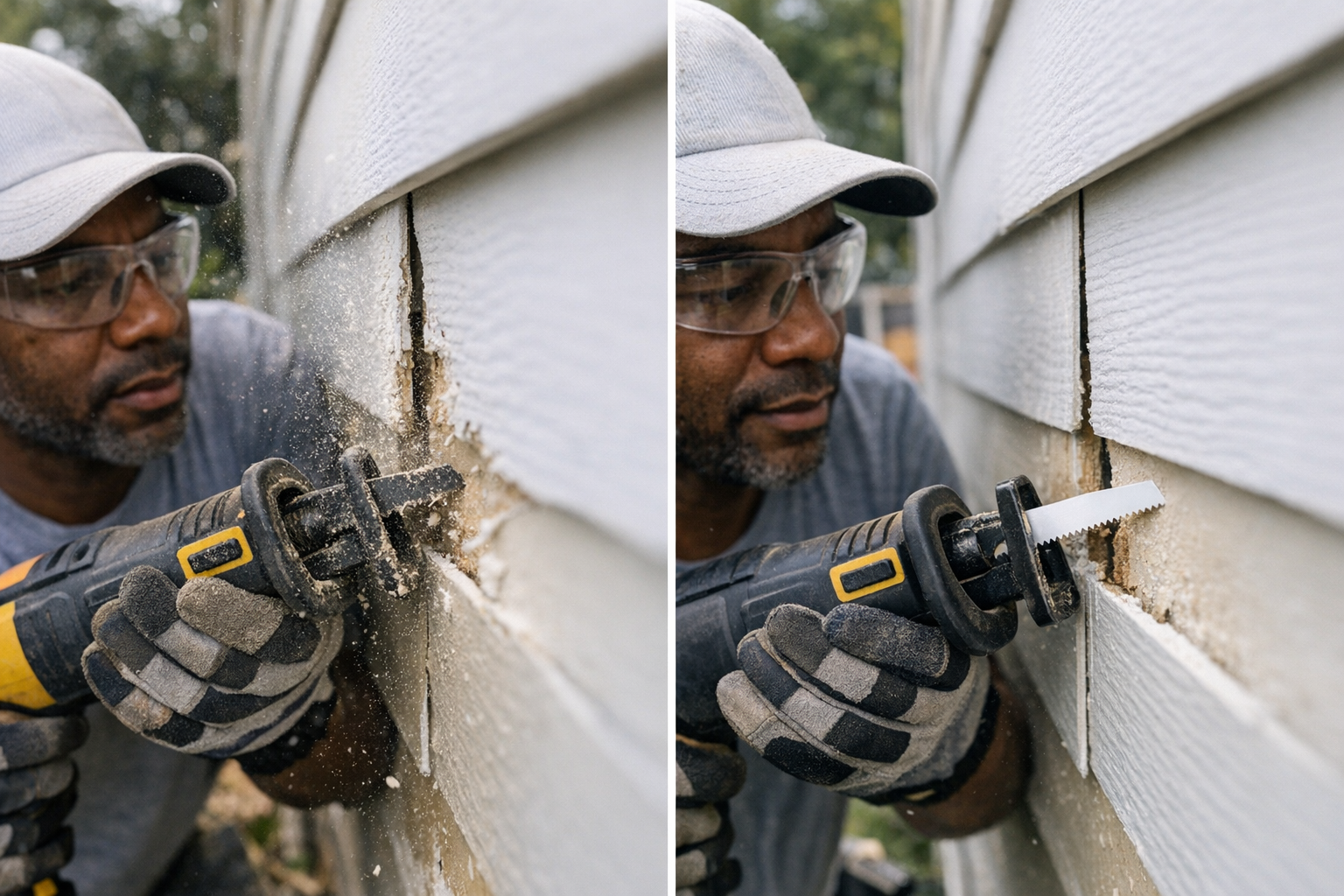
The difference between two reciprocating saw blades isn’t in the packaging—it’s in the ugly grind after your third board, when dust cakes your shirt and your finish work is hanging by a thread. In the aisle, blades all look the same: bi-metal, wood, composite, fiber cement. Easy to think any will survive a day of cutouts, trim work, or quick demo. But a real job exposes the flaw: a minor mark in the kerf, an edge chipping out mid-swing, the blade fighting you at every seam when it should track clean. Out in the field, it’s never the specs—it’s that repetitive saw chatter that tells you, too late, where you cut corners and where the frustration begins.
When a Sharp Blade Goes Dull Ahead of Schedule
Every job starts the same: fresh blade, decent cut, straight line. Maybe you’re running the saw along drywall, opening up a run on siding, or roughing out space in fiber cement. The first pass feels smooth enough—until a couple of sheets in, you sense drag setting in. Suddenly, the blade stutters. Your hands adjust on reflex, steering harder to fight the tool’s rebellion. What was a crisp line starts to crumble. You’re tracking the edge more than cutting, compensating for bites and splinters. Prep that should have been a single sanding pass morphs into a dusty, time-eating cycle of “just one more round” to fix jagged seams.
Lose the blade’s edge, and you lose the finish long before the spray hits. Chips and rough joints don’t disappear beneath paint—they catch light, collect dust, and trap mistakes. That quick finish coat only magnifies every flaw, pushing you back into patching, spackling, and redoing work you thought you left behind.
The Warning Signs You Can’t Ignore: Vibration, Dust, and That Familiar Grit
Vibration is the earliest red flag. As a blade wears, it shakes control loose from your hand, making each push more deliberate and less stable. Worksite reality sets in: you’re muscling through a board you should have skated across. By late in the run—especially in weathered trim or layered siding—dust flies, edges fuzz, and the once-steady cut chokes up. It’s not the environment, it’s your tool screaming for a swap you hoped to avoid.
The kerf tells the real story. Blades that keep to a tight cut—think a 1.2 mm kerf, not one that widens with every pass—hold edges clean, shoot out less dust, and mean less work chasing splinters. The difference is subtle in motion: a faint rasp, a shift in pitch, resistance where you didn’t expect it. Dismiss those signs, and you’re in the trenches later, fixing damage that’s already baked in.
Why Identical Blades Split in Real Use
Try running two blades—both “wood and composite” on the wrapper—through the same paces. Early on, you might not notice much. But switch to denser material or hit a patch of old siding: one blade walks the line, the other stalls, gums up, and leaves you wrestling just to finish a straight slot. The aftermath is obvious: a decent seam on one side, chips and chew-marks on the other. Paint or spray accentuates every rough spot, and suddenly, one “identical” blade has cost you triple the cleanup.
This isn’t hypothetical—a single slip turns three clean runs into one headache with extra sanding, patching, or even a recut to save face.
Compounding Fatigue: Humidity, Heat, and Workflow Breaks
Imagine knocking out exterior trim on a sticky summer afternoon. As the humidity creeps up, so does the fatigue. Two or three cuts in, your blade goes from slicing to snagging. Now you spot chips at every restart and a faint haze of splinters under the saw’s shoe. Do you stop for a fresh blade, burning time, or tough it out? There’s no winning: every flaw requires more sanding later, every break in rhythm knocks the schedule off. The “almost good enough” blade adds up—each small chip snowballs, every error compounds, and the finish suffers before you even reach for a sanding block.
Long-Term Damage Control Starts with the Right Blade
After enough jobs, you stop thinking in cut speed—you think in cleanup time and wasted effort. A blade that keeps its edge means less mess, less sanding, and more control as you switch across drywall, cement, or composite. The value isn’t just about cutting quick—it’s about not having to chase splinters through prep, not scattering dust in every direction, not losing the line because the blade flexed late. The payoff: a seam you can finish once and move on, with less arm fatigue and a cleaner bench at the end of the day.
Read the Signals and Minimize Rework
Spotting a blade on its way out isn’t guesswork. Increased pushback, new tremor in your wrist, a sudden rasp breaking the usual rhythm—these tell you the blade’s served its time. When dust clouds up faster, seams spit out splinters, or the kerf feels ragged, don’t wait: swap it. Early detection saves serious labor. Ignore the signs, and you’re staring at your workbench, redoing steps you shouldn’t have had to repeat.
Spray Reveals What the Saw Hides
Spray prep has no mercy. The paint gun will spotlight what you hoped would disappear—every chip, rough patch, or lifted seam gets showcased under a clean finish. Rush the earlier steps with a soft or spent blade and you guarantee yourself rework. This is the crossroads: the difference between “done enough for now” and a jobsite finish you actually want your name on.
The Small Setup Choice That Sets Up Your Whole Day
What you pick off the shelf echoes by late afternoon. A blade that starts clean and stays true is more than a quiet advantage—it’s fewer mistakes, less dust in your lungs, and time saved where it counts. The blade that vibrates, tears, and fights back? It’ll haunt your cleanup and drag the job out, eating energy you can’t spare. Listen to your tools, catch the change before you’re fixing problems instead of making progress, and you’ll end each project with seams as crisp as you planned—no compromises, no extra passes, and nothing the spray gun can’t forgive.
Find jobsite-ready reciprocating saw blades and more at Gumboll.