
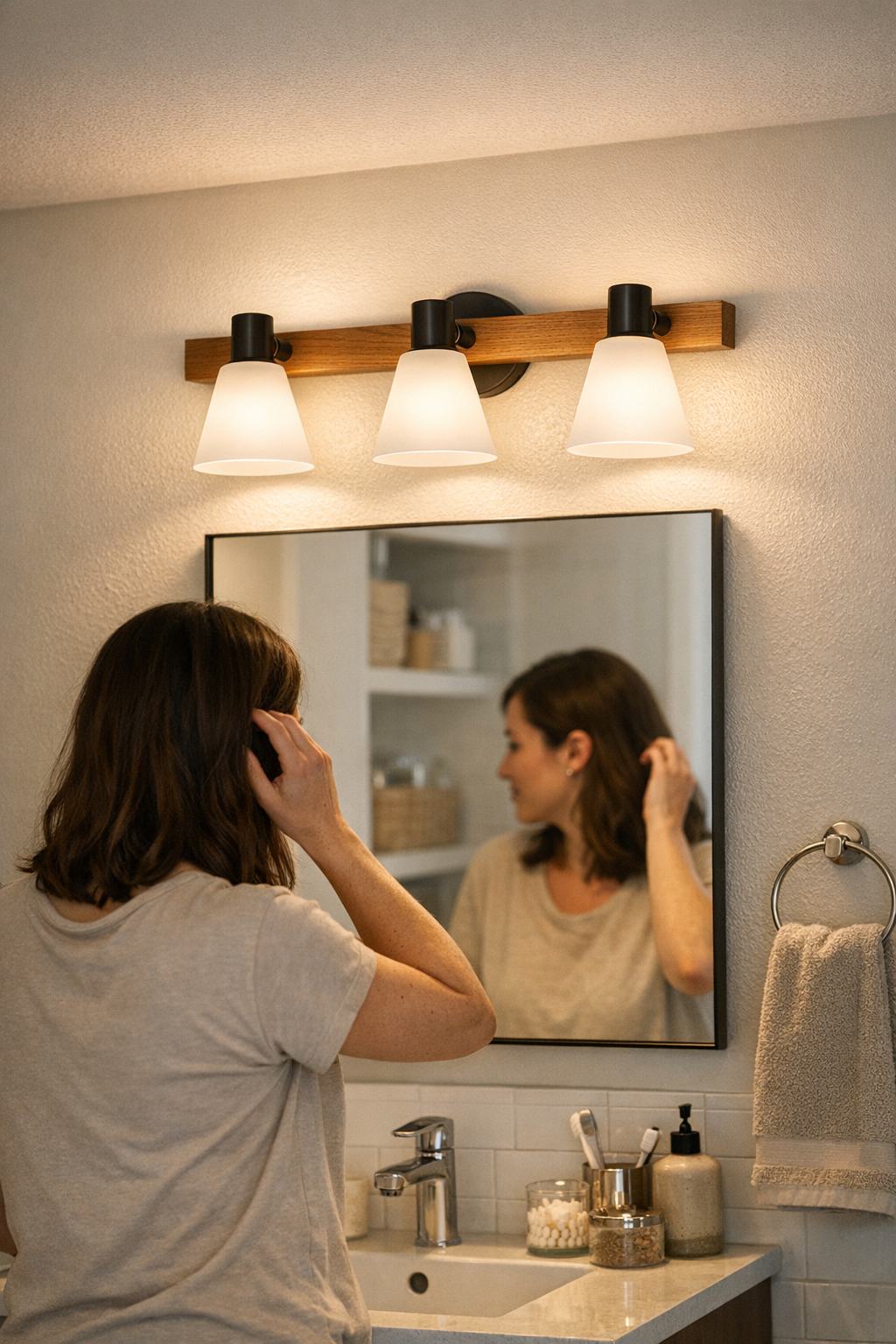
Most indoor lighting “solutions” fail the minute you walk through a room after dark. It’s not the light itself—it’s where the light lands and what it misses. Real friction starts as soon as you reach the stairway landing and half the steps vanish in shadow, or you stand at the bathroom mirror and find your face sliced in two by glare and gloom. Wiring-led fixture choices might fill a floor plan, but they rarely fill the needs that show up during an average week: squinting to match socks in dim laundry corners, hunting for a hallway light switch while hugging the wall, or shifting position just to see your own reflection clearly. The difference is sharp: a room can look lit and still tangle up the routines inside it. That gap is where daily discomfort creeps in, and it’s where the real work of indoor lighting begins to matter.
When “Good Enough” Placement Is Never Quite Enough
Blueprints make any fixture look like an improvement. But the first rushed morning or late-night errand turns flaws obvious: try walking a narrow stairwell and finding the top step lost in murk, or using a mirror split between daylight and darkness. Fold laundry beneath a ceiling light that looks bright on paper—the cabinet edge still disappears under shadow, no matter how many times you swap bulbs. These persistent annoyances trace back to one root cause: lighting picked for cable reach, not for real use. Fixtures that only serve the ceiling leave the people below making constant adjustments, each awkward gesture a signal that placement—not brightness—is the heart of the problem.
Shadow lines and missed targets stack up over time. Every day, routines reveal the underside of poor placement: half-lit stairs start to feel dangerous, split hallways keep you hugging walls, and a “bright” kitchen leaves your work surface indistinct. Even a new install becomes another source of low-level strain—stepping slow, hesitating at corners, squinting at mirrors—while the “solution” cements the inconvenience you hoped to solve.
Why Fixture Placement Shapes Every Movement
The critical mistake keeps repeating: putting the fixture wherever the existing wire just barely reaches—the result is a room that looks illuminated but functions as a patchwork. Problem zones include:
- narrow hallways with hard corners or branches
- stair landings where pooled shadow covers the top step
- bathroom mirrors that see real grooming, not just appearance
- work surfaces, cabinet runs, or entry points with tight task needs
An off-center ceiling mount or a wall light set to dodge new conduit doesn’t just look odd; it builds in frustration. Shadow sprawls across counters when folding linens, grooming turns into a battle with glare at the mirror, and every corridor walk becomes a test of memory and confidence as one side slips into darkness. Placement always trumps power—no bulb will fix a bad angle. The moment your behavior changes just to get basic visibility, the fixture’s in the wrong spot.
Surface Brightness vs. Useful Light
A stronger bulb fools you for a minute. Surface-level glare only shifts shadows, never removes them. Brighter bulbs deepen contrast, throwing edges into sharper shadow and increasing discomfort where you need calm, even light—the mirror glares, countertop details blur, and every routine slows down. In bathrooms, a face divided by brightness and dark makes shaving or makeup unpredictable. At the kitchen or laundry counter, you lean away or stretch sideways, searching for a usable patch of light. The point is blunt: placement commands every movement, while wattage fights a losing battle with the room’s shape and activity zones.
Typical Frustrations that Linger After “Quick” Installs
Real routines draw out the pain points. Here’s where rushed installs, guided by wiring not need, fail over and over:
- Stairways stuck in semi-darkness. The top or bottom turn is always a risk; every load of laundry or sprint upstairs is slower, more watchful.
- Hallways with one safe lane. Nighttime trips push you against walls just to stay oriented, the other side lost in shadow.
- Mirror zones that drain patience. Shadow splits, glare blinds—fixing it after is nearly impossible without shifting the light itself.
- Cabinet and laundry counters veiled in gloom. The room looks bright at a glance, but the working edge blurs away when you need it.
- Everyday routines become slow and awkward. Even grabbing keys or folding towels means awkward angle changes and repeated squinting—tiny tasks that never feel simple.
This isn’t a list of minor headaches—it’s a diagram of how a single shortcut during install locks in inconvenience that you feel every single day.
What Happens When You Respect the Room—Not Just the Wiring?
Fixing this isn’t about gut renovations or expensive rewiring. A modest move—adding a short conduit or shifting a fixture by just 30 centimeters—can erase the gloom that slows you down. A subtle fixture shift will bring continuous, balanced light to laundry workspaces, restore full visibility to hallways, or finally let the bathroom mirror show your whole face in normal use. The outcome is not about visual “wow”; it’s about the muted sigh of relief when you realize you aren’t tripping, leaning, or second-guessing your movements as you cross, groom, or work.
Smart placement delivers, every time:
- Shadow control: banishes awkward darkness from stairs, mirrors, and work surfaces
- Natural movement: lets you walk, fetch, or groom without caution or extra steps
- Consistent comfort: calms glare, reduces eye strain, and keeps sight lines balanced
- Routine flow: makes habitual tasks straightforward, not slowdowns to be managed
Tip: Quick Coverage Test After Installation
After installing any new light, stand at each main zone—stair turn, mirror, countertop—and do what you usually do. If you find yourself shifting, craning, or avoiding glare and shadow, the placement still needs work. Sometimes a small shift or changing to a flush mount, wall sconce, or task fixture is enough to reshape the whole experience.
Shortcuts in Wiring Always Reappear as Long-Term Hassle
Forcing wires or gambling on awkward box placements saves almost nothing. What you really get is a ceiling that looks finished but never actually helps. Electrical shortcuts tie you to years of minor but constant hassle: dark steps, incomplete mirrors, vanishing cabinet edges, and daily routines that always take more attention than they should. What’s saved at install is lost in every repeated annoyance—clipped movement, hesitancy, the ongoing sense that the room won’t quite cooperate.
The best lighting setups start when fixture placement is dictated by repeated use—not just the nearest wire. Bathrooms, hallways, laundry rooms: all of them reward moving the light just enough to line up with the real pathways and tasks that fill your year. Skilled installers and savvy homeowners know it’s the small, targeted change—a fixture nudged to the right spot, the right fixture in the right role—that adds up to hundreds of quieter, easier routines. Change the placement, and the room finally works for you, not against you.
Ready to make your space as usable as it looks? Explore practical indoor lighting solutions at LightHelper.