
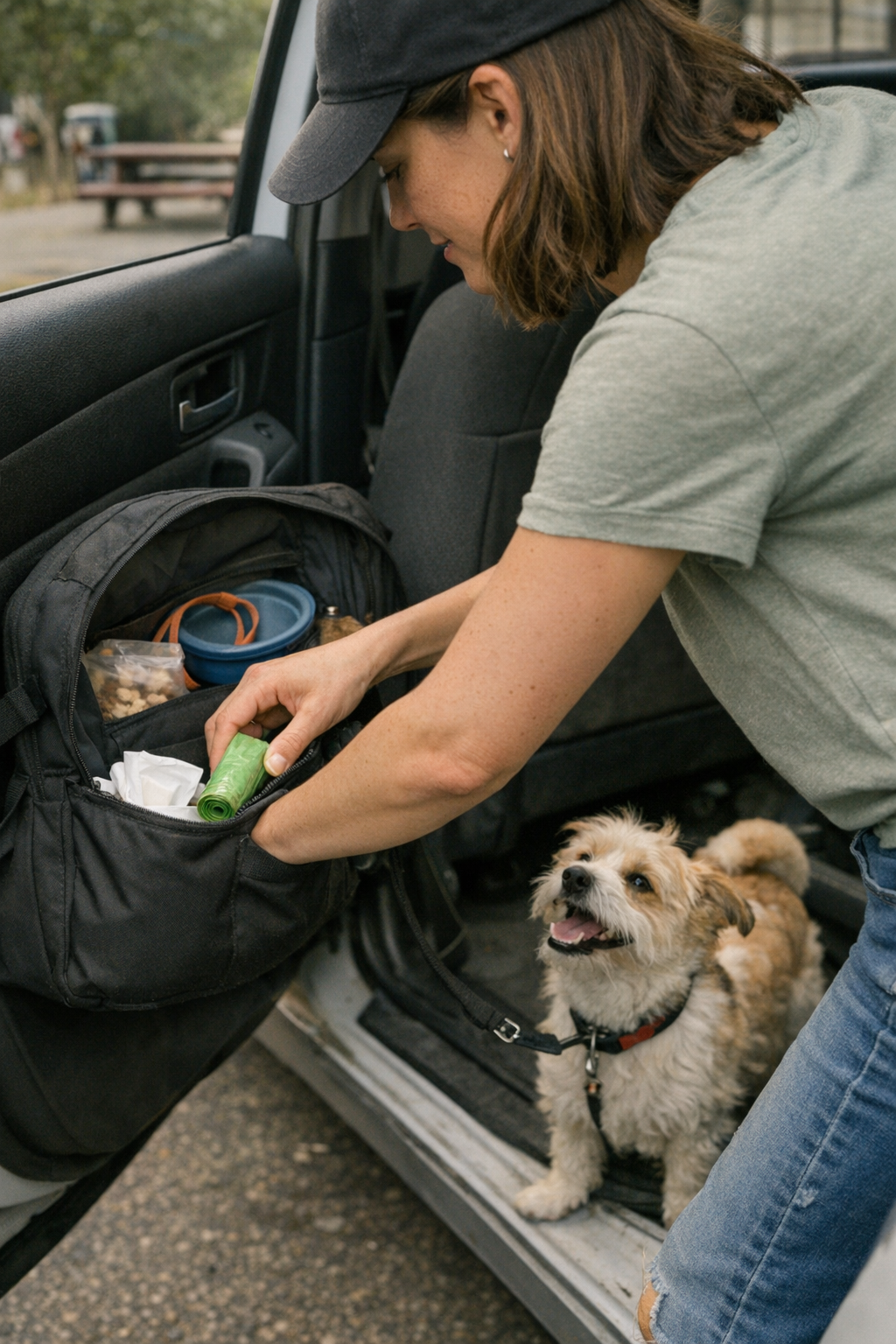
Most pet travel routines don’t fall apart because you forgot a key item—they break down because small, repeated slowdowns keep stacking up every time you move. That “ready-to-go” bag by your door feels solid at home, but any normal outing exposes its limits fast. You reach for a wipe and come up empty, dig through twice-zipped pockets, or fumble with overlapping leashes and waste bags just to handle a routine pit stop. By trip three, every pause to search or double-check becomes its own cost—less a one-off mistake and more a recurring interruption that drags at each restart. The difference between set up and actually workable? It’s not neatness. It’s friction—or the lack of it—and the PawGoTravel world starts where most setups start to slow down.
Where Smart Packing Breaks Down in Real Travel
The at-home confidence is deceptive: everything stored, everything zipped, bag at hand. Fast-forward to a real travel hour. You’ve got your leash, your pet is already pulling, and your bag is loaded—yet retrieving a single item means two-handed juggling while your dog circles the parking brake. Those well-considered inner pockets? They quickly become barriers at the exact moment you need one thing fast. Even for short errands or pit stops, the supposed “organization” forces repeated stop-and-shuffle, breaking rhythm just to keep up with a pet that never waits for your perfect setup. By the end of a round of errands or a drive broken by multiple breaks, the neat bag that looked ready is now just in the way—slowing cleanups, tangling gear, testing patience every restart.
The Hidden Cost of Slow Access
Organization that hides away essentials creates friction you only feel once you’re on the move. Reaching for a cleanup bag that’s slipped behind a pouch, or finding wipes crammed out of reach, doesn’t just delay you—it messes with the whole stop. Now your leash is twisted, your dog is wriggling, the wipes take that crucial extra effort, and what looked “ordered” at home demands finger acrobatics on a crowded curb. Pet-side movement forces you to feel every step: the more you sealed things up, the more you have to open and close, reshuffle and dig. Under pressure—whether it’s a sudden muddy paw or a rush to get back in the car—the order flips against you, slowing every movement that counts.
Real-World Example: The Two-Bag Test
Lay two setups in your trunk: one, all items in their calculated compartments, zipped and sorted; the other, just core items in a single open side pocket. The first looks ideal as you load up. But once you’re juggling leash and carrier at a busy stop, you notice: two hands to open, inside lining snagged, dog pulling while you hunt for one buried bag. Each small slow-down is invisible at home—painfully obvious in stop-and-go routines. With the looser setup, you reach for waste bags or wipes in one motion, before your pet can make things harder. By round two, the payoff is clear. The edge isn’t visual—it’s practical, under pressure and repeat handling.
The Trap of Visual Order
Packed appearance isn’t functional readiness—pet travel tests how easily you can actually access what you need, right when you need it, over and over. If every walk, rest stop, or bathroom break triggers the same hunt for a treat pouch or the right cleanup item, that’s not readiness—it’s an interruption loop. Bags that bury most-used gear inside neat sections guarantee repeat frustration. Unzipping, rooting, closing again—it’s a routine that turns micro-delays into mounting stress, draining your flow and patience as you retrace the same slow pattern each outing. Eventually, the bag itself feels like one more thing you have to fight, not a tool helping you move.
Single-Pocket Reach: A Simple, Lasting Fix
The best way to cut repeat friction isn’t by adding more pockets or gadgets. It’s as direct as putting high-use cleanup supplies and quick-grab items into a single exterior pocket, always on the same accessible side—angled toward where you exit the car or step off a curb. That side-pocket needs zero explanation: at each stop, your hand lands right on the wipes or waste bags, and you’re already handling your pet before they ratchet up the chaos. There’s less “order” inside, but it stays easy to reset. Even if a backup leash tangles with a toy at the bottom, your main essentials stay one move away. The interruption is gone where it matters: the restart, the moment your setup usually stumbles.
Why Owners Resist This Change
It’s tempting to pack for maximal order, thinking more mini-pouches equals less mess. But real travel exposes this: too many compartments create more steps, not less friction. The pet-travel setups with the fewest mid-stop interruptions almost always have a single quick-access spot for daily-use gear, even if the inside isn’t catalog-pure. A “used” layout that puts wipes, waste bags, and leash clips into a side pocket is simpler to handle at every restart, every bathroom rush, every muddy-paw recovery. Once you live through a few awkward stops, giving up a little internal tidiness for real-world speed isn’t just logical—it’s obvious.
The Real Measure: Less Drag, More Flow
A few trips in, the wins are concrete: fewer resets, faster cleanup, no more opening the wrong pocket under pressure. The right pet travel setup is the one that stops slowing you down by the third stop, not the one that photographs well before your first walk. Repeated use without repeated rearrangement is the real cost-saver—less time rearranging, more time moving, fewer chances to fumble with leash, keys, and cleanup gear all at once.
This isn’t a theory any traveler can ignore. If you’ve scrambled for a wipe while your dog is muddy and your patience thin, the value of instant side-pocket reach is obvious. The whole trip feels lighter not because your kit is pretty, but because every needed reset is faster, simpler, and happens with almost zero thought. You start reading your bag by muscle memory—hand on pocket, wipe out, problem solved—and each transition is smoother, every ordinary stop less of an energy drain.
Building a Pet Travel Setup You’ll Actually Use
The best pet travel setup isn’t about first-use neatness—it wins at the seventh stop, when you’re not fumbling, not irritated, and not slowed by your own gear. Travel routines that keep key items instantly accessible turn every pause and restart from a mess into an easy reflex. The right setup handles interruption before it starts: quick grab, no digging, no extra drama. Pet travel stops being a series of fights against design decisions and just becomes movement again—ready when you reach, reliable with every routine use.
Find practical pet travel gear designed for repeated, real-world use at PawGoTravel.