
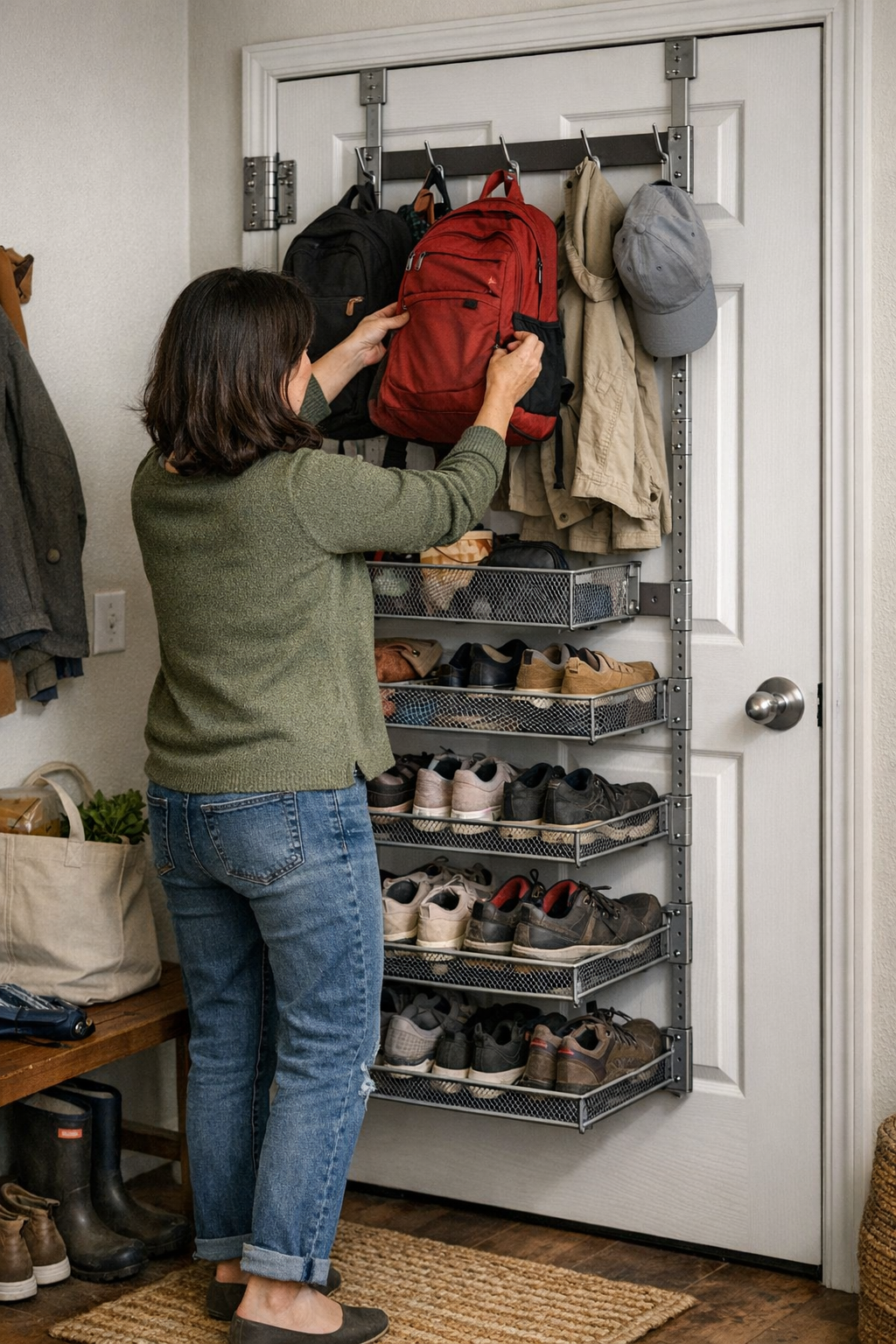
Most entryway storage looks organized for exactly one day. You hook up an over-the-door rack, sweep the floor for that “finally fixed” effect, and watch clutter vanish—but only until real life leans on your setup. Wet boots appear, bags flop onto the nearest hook, and the careful shoe row fans out until the threshold tightens again. Drop one backpack the wrong way and the door jams; return home with groceries, edge past the rack, and suddenly the space that promised order now blocks every move. Instead of routine flow, you end up with a clean look that collapses the moment daily pressure kicks in—especially if your hardware isn’t built for shifting, repeated loads. A setup that seemed to absorb the mess slowly becomes another obstacle, forcing more resets, more sidesteps, and more friction each time you come or go.
When Good Racks Go Bad: The Hidden Toll of Everyday Loads
Transition spaces magnify every small mistake. Over-the-door and wall racks promise vertical storage, but each new coat, pair of muddy shoes, or slung bag doesn’t simply rest—it adds weight that strains hinges and door frames. Standard door hardware is not engineered for these shifting, daily stresses. If the rack’s support isn’t up to the job, you don’t just accumulate clutter—you compress the entry path itself, making each passage less smooth and more awkward.
The difference shows fast. By midweek, a rainstorm swells the shoe pile; someone returns late, wedges a backpack onto an already-full rack, and now the door grinds at the frame. That slick swing turns stiff. Kids shove their gear through the bottleneck after practice, and you find yourself nudging the door just to step inside. Minor friction—an almost invisible catch, a rack that dips—builds up day by day, gradually shifting the problem from visible mess to movement-pause frustration.
The Catchpoint: Real Scenes from the Threshold
Most entryway setups don’t fail all at once—they just get harder to use until you stop using them well. First, the rack leans. Next, the hinge creaks. Then the door needs a special tug, or starts sticking partway. Grabbing a coat one morning, you feel the whole rack twitch. Adjusting shoes or bags becomes its own routine, a ritual of micro-rearrangements just to clear the path. The original tidy look is replaced by a set of silent negotiations at the threshold.
This cycle plays out in homes everywhere: organized for the photo, undone by the week. Moving piles from rack to bench or spiking overflow into corners doesn’t fix the root issue—the structure just can’t keep up with the way your household actually enters and exits every day.
Why Reinforced Hinge Support Changes Everything
Most racks treat the door as a backdrop, not a working, moving part. But that’s exactly where everyday stress accumulates—and where weak support fails first. Ordinary hinges flex, alignment drifts, and what felt “solid” at install turns unpredictable under daily use.
Add reinforced hinge support, and the contrast is clear.
- The door swings like it should, even after a muddy soccer day loads it up.
- Locks line up—no gap at the latch, no need for extra push-and-pull.
- Redistributing clutter actually works; you’re not shuffling things just to make the rack sit flat.
- The daily reset becomes a quick habit, not a dreaded event.
Telltale Signs Your Setup Is Failing
Watch for these early warnings before a small annoyance grows into permanent bottleneck:
- The door sticks, resists, or needs a shoulder bump to move.
- Hinges emit new noises, or the edge of the rack rubs after a busy spell.
- The rack leans, sways, or sags—especially when the door stands open.
- Tiny gaps widen at the latch or where frame meets jamb as alignment suffers.
Ignore these and you risk more than paused movement—swapping cleanups for repairs, rehanging a door, or resigning yourself to a path that no longer works with your family’s routine.
The Difference Between Organized Looks and Reliable Use
Entryway storage systems often win on appearance and lose in real use. The true test shows up under stress: post-storm returns, gear pileups, missed resets. A Sunday-night tidy look is easy; a setup that doesn’t unravel midweek is not.
- Are you forced to shuffle items just to get in or out?
- Does a crooked rack or sagging mount keep you from resetting quickly?
- Has returning bags or shoes quietly regained its original level of annoyance—just moved to a new location?
With the right reinforcement, your threshold stays functional. Shoes and bags don’t sprawl, resets speed up, and the “drift” slows—so routines remain smooth for everyone crossing the zone, not just for the next photo or first day after cleaning.
When Reinforcement Brings Its Own Trade-Offs
No fix is friction-free. Some reinforced hardware adds bulk or reduces swing angle—tough on very slim entryways or doors that open flush with a wall. Always measure wall and clearance space before upgrading to heavier-duty solutions. Do a trial run with the typical gear load you expect—so you avoid trading one kind of blockage for another and can spot pinch points before they become part of daily life.
Small Shifts, Smoother Routines: Practical Tips for Lasting Entryway Flow
Max storage isn’t always best flow. Instead of maxing out every hook and shelf, try these fixes:
- Hang heavier bags low and close to hinge-side mounts, where the door is strongest.
- Assign strict drop zones for each person’s shoes or bags—mapped to real movement, not photoshoot symmetry.
- In busy households, stagger arrivals and drop-offs to prevent pass-through pileups—especially after school or work peaks.
- If there’s no room for error, shift heavy loads to wall-mounted units nearby instead of loading up a flexing door.
The Real Win: Thresholds That Don’t Block Your Routine
The goal isn’t just fewer piles—it’s less friction every time you cross the entry. A reinforced, well-matched rack keeps shoes off the floor and the threshold open, so you’re not doing the reset shuffle or nudging a blocked door on busy mornings. Choose hardware and setup patterns for real routines, not showroom silence—and you’ll see the difference: fewer backflows, snappier resets, and a threshold that works with, not against, your everyday life.