
Invisible Delays: How Small Pet-Care Tasks Complicate the Routine
Everyday pet care looks manageable on paper—grab the food scoop, refill the water, wipe a dribble, drop the brush on its hook. But in real homes, each “quick” task leaves its mark when it isn’t closed out in the moment. One misplaced scoop, one towel drifted into a laundry pile, one wipe left somewhere “for later”—and pet care shifts from smooth routine to a series of frustrating pauses. You reach for the bowl and find clutter in the way. You want to refill water, but the bottle is blocked by a stack of unmatched lids. Slowdowns like these aren’t obvious at first, but over a week, they grind routines down: visible order fades, missing basics stall your hands, and the cost is a drag you keep tripping over.
How Deferred Care Compounds into Frustration
Pushing chores like water refills or quick wipedowns “just a little later” never feels critical in the moment. But the next time you’re juggling dinner prep and need to feed your pet, the feeding scoop has vanished—maybe into the pantry, maybe the sink—or the bowl feels tacky because no one rinsed it last night. Instead of two easy motions, you’re scavenging for a works-for-now substitute, cleaning out stuck-on crumbs, and retracing steps. That pause isn’t minor; it becomes a friction point that comes back again and again.
Over days, these pauses pile up: meal prep that takes twice as long because the right item isn’t in place, cleanup that never really finishes, clutter clustering in the very spot you have to stand. Essentials like pet wipes, or the brush for muddy paws, migrate and vanish just as you need them. The illusion of “later is fine” falls apart under the weight of these small but multiplying inefficiencies.
Scenes from a Real Pet-Care Routine
Try a mid-afternoon reset: you head to the kitchen aiming only to top off the water and toss a toy back. The towel for wiping the water bowl isn’t where you last left it—now hidden under a pile of unopened mail. The leash meant for quick yard breaks is wedged under a shoe rack. Crumbs gather under the bowl mat—a few too many to ignore, but not dramatic enough for a full cleaning session. The water bowl is filled but sports a dull ring around the edge. Each action, instead of flowing, now means detouring, digging, or pausing for tools that should have been ready.
At night, the slowdown deepens: the measuring cup is running through the dishwasher, so you use an old mug and hope it’s close enough. The so-called “pet station” collects loose treat bins and leftovers from yesterday’s mail run, forcing you to reshuffle everything just to pour out food. Even a tiny storage container parked in the wrong spot means another reach, another shuffle, one more break in flow you can’t ignore.
Spotting Where Routines Lose Flow
Routine drag isn’t easy to pin on a single mistake. Instead, it’s a pattern: tools you need out of reach, items squeezed into the wrong cabinet, cleaning done twice because it never sticks. An organizer box might corral wipes and look organized until you realize you’re always stepping around it to reach food bowls. A brush hung by the door seems sensible, but when it migrates after a quick porch cleanup and doesn’t return, you’re tracking it down when muddy paws hit again. Visual order alone won’t shield you from these interruptions; it’s the small setup misses—blocked access, borrowed tools, towels out of rotation—that leak time out of the routine.
These cracks reveal themselves over time. That towel meant only for pet spills gets used on the kitchen counter and disappears. The scoop is borrowed for flour and doesn’t come back. By the end of the week, what looked organized never quite feels workable, and “didn’t I just fix this?” becomes a recurring question.
Closing the Gap Between Tidy and Usable
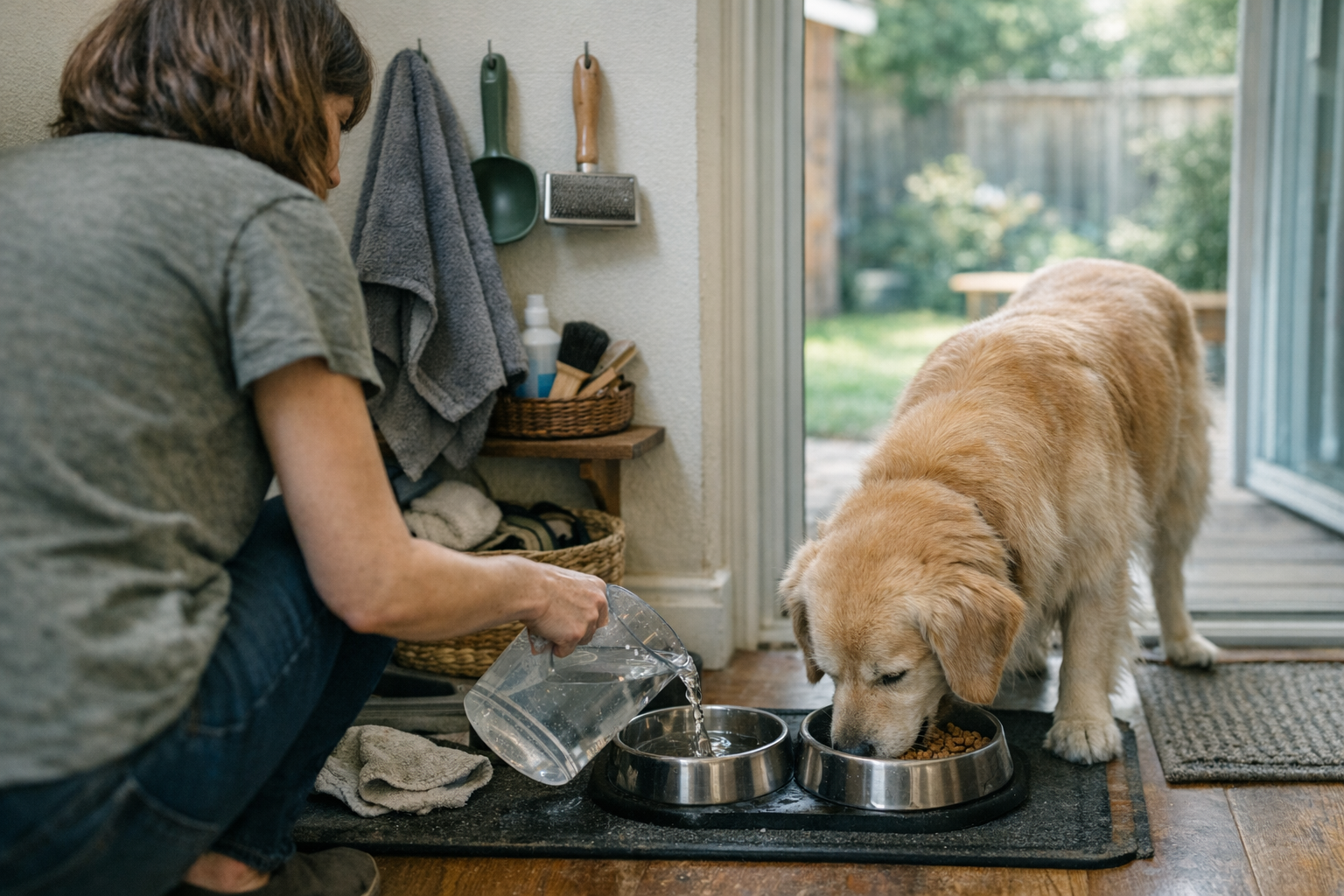
There’s a gulf between tidy space and actually usable routine. The difference is reach—having the wipe, the scoop, the bag, right where you stand, every time. Hanging a microfiber towel directly above the feeding spot—versus stashing it across the room—makes one-handed wipedowns possible in seconds. No moving between rooms, no “I’ll handle that later,” no repeated shuffle just to deal with water on the floor.
Apply this to other tools: a brush on a dedicated hook inside the mudroom door, poop bags clipped by the leash instead of in a bin three rooms away, refills stationed near the water bowl. Each item fixed to its real-use point closes a window where tasks get skipped or half-finished. If you have to cross a room or move a blocking basket to get to your supplies, your care setup isn’t working with you—it’s slowing you down at the same friction point, again and again.
Building a Routine That Minimizes Reset Friction
The setups that actually reduce routine drag aren’t the prettiest or the most color-matched—they’re the ones that make access to wipes, scoops, towels, and brushes nearly automatic. Grouping pet supplies right at the feeding or grooming zone, not scattered in storage containers that look tidy but separate from real flow, shrinks task distance and lets you finish actions in one go. Cleanup, refilling, after-walk wipes—they all turn into close-out tasks, not repeat interruptions.
Over a few days, the benefits show. You stop circling back to finish “almost done” chores. Fewer items are left out of reach; fewer surprise messes force a late reset. For shared home spaces—kitchen, entryway, living room—these small adjustments cut collisions between pet care and everything else, producing a calmer routine without asking for perfection.
Perfection isn’t the point. But when tools, wipes, and feeding gear are all within arm’s reach of the action, the nagging “I’ll do it later” moment disappears—so does the slow drag. The result: daily pet care resets in real time, not after it becomes a hassle.
Shop everyday pet-care solutions built to keep routines simple at CalmPetSupply.