
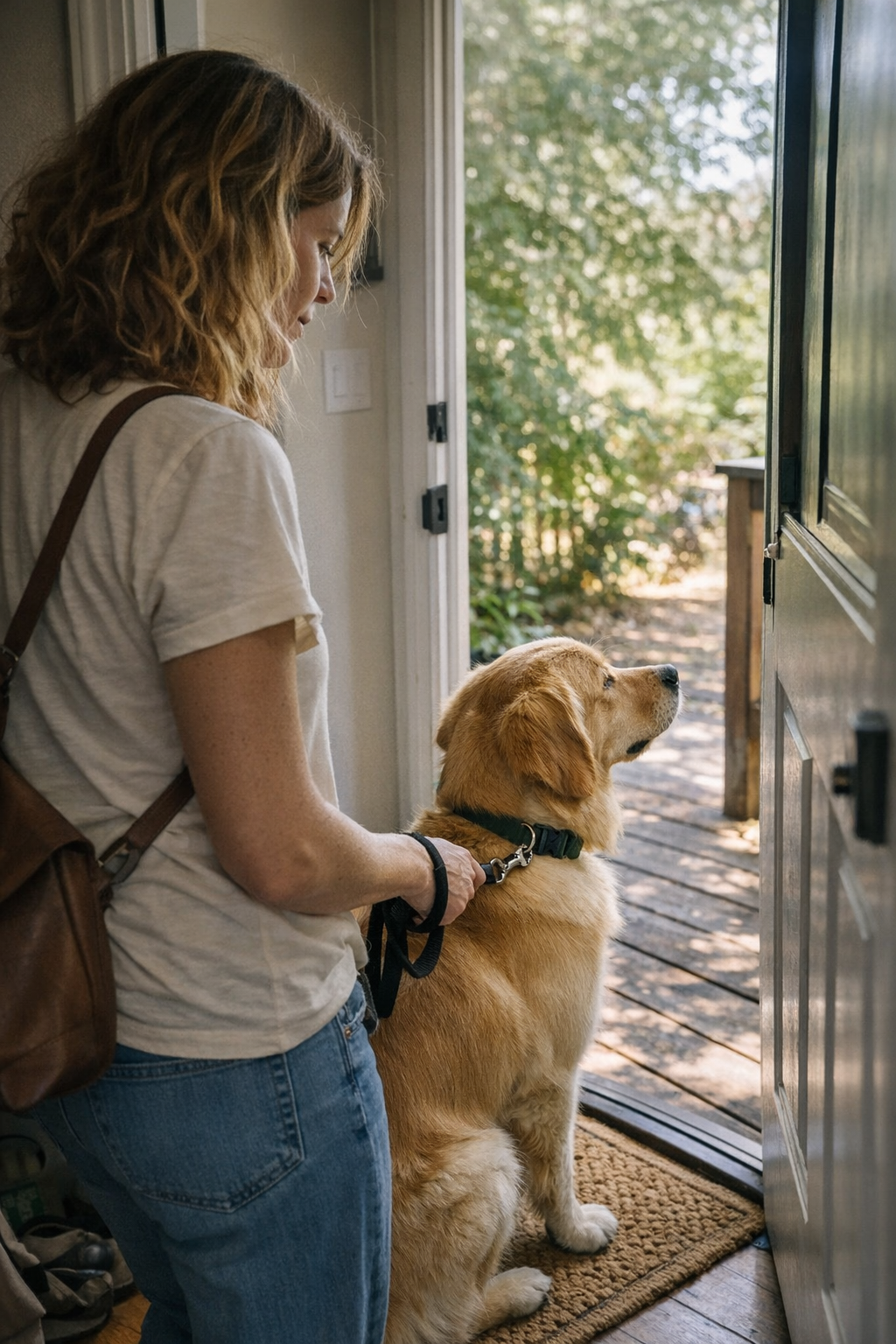
Everything about dog walks feels routine—until one tiny snag at the door upends everything. You reach for the leash and hit a tangle of chew toys. You grab your dog’s collar, but your coat is blocked by a tumbling water bowl. That first slow, awkward pause—or the rush to skip it—determines whether your outing is smooth or just another round of tug, shuffle, and doorway scramble.
Most routines don’t fail in obvious ways. They fray in seconds: a leash missed for one heartbeat, paws dancing because the towel isn’t where it should be, or a missed pause that leaves your dog spring-loaded and ready to bolt. Get these moments right, and exits start neutral, even relaxed. Ignore them, and friction adds up, trapping you in a loop where “organized” setups quietly sabotage the flow of every walk, return, or quick trip outside.
Why the Doorway Pause Decides the Whole Routine
What breaks up the start of your walk isn’t chaos or bad training. It’s the micro-friction at the threshold—hurrying to clip the leash, tripping over gear, or expecting your dog to seamlessly follow. Skip the pause, and your dog surges ahead or stalls, dragging your routine off-kilter before you’ve even shut the door. The difference shows immediately: steady walk versus tense, jerky zigzag. This isn’t about your dog “listening;” it’s structure collapsing where it matters most—in the three feet before and after you step outside.
The hidden cost? Every time you lunge through the door, leash tension spikes, and your dog gets more wired to treat thresholds as launchpads, not reset points. Week by week, those seconds compound, making re-entry messier, walks less focused, and even quick bathroom breaks a study in missed timing and repeated annoyance.
Why “Just Going” Triggers More Problems Later
Speed feels efficient—clip the leash, crack the door, move. But skipping the pause forces your dog to choose impulse over calm: a leash snaps tight, gear snags on the doorframe, and both of you stumble through a half-prepared threshold. It isn’t just embarrassing once; it’s the root of those surges, tangled leashes, and last-second barks that creep into every routine: bedtime outings, muddy re-entries, urgent runs to the yard. With every “fast start,” the door itself trains your dog to leap, not wait. You end up cleaning more, calming less, and circling back to fix what rushed motion always worsens.
When Rush Echoes Through the Day
Even if you think you’re shaving seconds, a skipped pause leaves bigger messes. Dogs—especially the energetic or still learning—tag the sound of the latch or the swing of the door as a green light for chaos. Surges, barks, bolting for that first squirrel, or tracking unexpected mud inside all become extensions of that one weak moment. These aren’t rare flukes—they’re predictable outcomes of collapsed structure at thresholds that get repeated all day.
What a Useful Doorway Pause Really Looks Like
It’s easy to call any slowdown a “pause.” But in repeated use, only a real reset works: leash short and slack above the collar, shoulders floppy instead of taut, dog looking back at you—even for a second—instead of out the door. A pause that works isn’t about asking for a sit or statue stillness. It’s seeing restless paws flatten, a tail drop, and attention flicker from outside back to the routine. The best resets take five seconds, just long enough for outside energy to cool before it can surge through the door, not just for one outing but for the whole day’s flow.
The Real-World Cost of Skipping the Pause
- Leash snags just when you try to close or lock up
- Push-and-pull struggles at every transition—not just the front door
- Walks start tense, not steady; focus scatters before you hit the sidewalk
- Returns home stay chaotic—muddy paw prints, barking, or missed cleanup
These aren’t background hiccups—they’re the mounting glitches that quietly erode the sanity of routine dog-life, and they almost always sneak back in when your setup “looks” tidy but fails under repeat pressure.
Where the Routine Breaks: Real Scenarios
The Leash Fumble Dance
You grab for the leash and find a chewy or two tangled in it, or a crate edge partially blocking your reach. While you rummage, your dog interprets the cluster as “go-time”—shoulders coil, paws twitch, leash is clipped in a scramble. The timing is done; the window for a reset is lost, and you’re shoved straight into managing a dog who thinks hesitation means launch.
Post-Walk Return: Setup Falls Short
Dog’s paws caked with dirt, you’re ready at the door, but the towel hangs on a side hook or is buried behind the crate. Quick wipe turns into a hopscotch, dirt spreads across the floor, and now both you and your dog are half in, half out—grabbing, blocking, tripping over each other because supplies were stashed for “neatness,” not quick reach during rhythms that keep repeating.
Off-Kilter Exits: Owner and Dog Out of Sync
Your dog pauses to scan the door for sounds; you juggle a phone, a bag, maybe groceries. You both move—the dog zigzags, your bag hooks the doorknob, the leash tugs, and now you’re improvising through another off-balance exit. In months, this slips into the background as just how the door “works,” but that mis-step is structural, and blunts every return, walk, or quick let-out after.
None of these are disasters. But when setups repeatedly force little fixes—untangling, reaching, shuffling—they break the flow that should make routines feel smoother after dozens of uses, not more jagged.
How a Real Pause Resets the Flow
Five true seconds at the threshold quiets the day’s chaos before it swells. Stop together, don’t rush. Door creaks open an inch; leash is fixed short, not loose. Your hand is near the collar—dog’s body softens, you sense calm in real time. Don’t wait for a “perfect” still; wait for the twitchy energy to drop. Even a glance back counts. Most of all, it’s not ceremony—it’s practical: a break between the mess of previous steps and the next thing. The small investment turns into walks with less yanking, fewer urgent resets, and re-entries that don’t demand two more cleanups before you’ve even hung your keys.
Practical Steps for the Doorway Pause
- Pause at the threshold. Don’t block the door fully—just create a sliver of waiting, enough for energy to settle.
- Leash tight near the collar, not flapping mid-length where it can snag.
- Watch for real signs of softening— lowered shoulders, tail easing, eyes flicking back.
- Wait out the pulse. Five seconds. If your dog twitches, wait until there’s a visible drop in drive.
- Exit in sync—not a drag or a slingshot, just one steady shared step through.
This micro-habit adds seconds but cuts off dozens of micro-problems before they flare.
If Pausing Isn’t Enough: Adjusting Real Setups
Not every entryway gives you a fair chance. Distracting window, crowded mat, or gear piled for looks rather than movement. Try shifting the routine to a back door, side exit, or any less bombarded threshold—one less likely to derail the pause. Shorten the leash for closer, quieter control. If the towel, wipes, or treat pouch always prompt a detour, move them within arm’s reach of where repeated use actually happens, not just where storage is easy. Over time, these tweaks shift your dog’s rhythm just as much as your own—building a true pause into the bones of your routine. “Looks organized” is nothing when “works every day” is still a struggle at the pressure points.
Invisible Weak Points—When “Tidy” Still Disrupts the Routine
Entryways can look clean on a slow Sunday, but bottleneck instantly on a busy morning. The crate’s edge, a shoe rack, or a half-full water bowl that “fits” out of the way blocks movement when you’re actually using the space. In real repeated use, setups either cut friction or keep bringing it back—no matter how good they initially seem. Most routines start failing at the same stress points after a few weeks: reaching past storage to grab a leash, re-entering without fast wipe access, or retracing steps when gear isn’t staged in the line of motion. Recognizing where your dog-life setup stalls in real time—especially under