
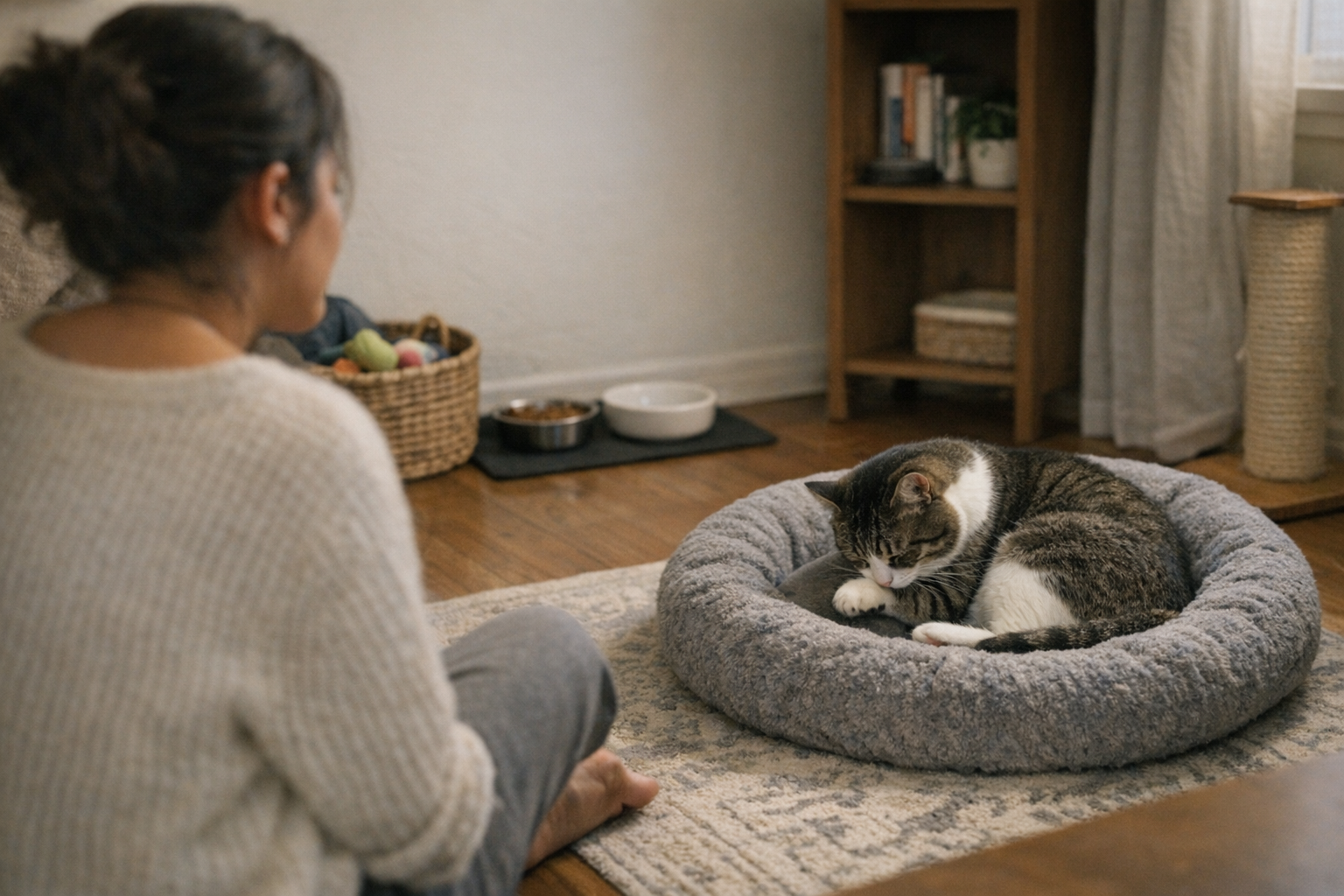
An indoor cat room can fall apart faster than people expect. Setup looks calm—mats lined up, bowls in place, a soft bed tucked by the wall. Then real use hits: by the second evening, there’s kibble in the walkway, toys jammed under benches, and crumbs floating into the rest zone instead of containment. Every “organized” touch just becomes another spot to tidy again. If you collapse onto the couch at night, chances are you’re met not with peace, but with a new round of scattered toys and surprise crunches underfoot. The line between tidy setup and a routine that actually works gets tested every single evening.
Where Setups Seem Calm, Nightly Friction Builds
The pattern is familiar: you try for order, expecting less mess and an easy reset at night. But if a food mat sits in the traffic lane or the bed sits near where toys migrate, that surface calm collapses into endless micro-fixes. Usual symptoms:
- Kibble fragments turning the floor into a minefield that never fully clears
- Toys drifting out of the basket to curve around or hide beneath tables and sofas
- Rest corners and mats used as a shortcut, then picked up with every streak of play—so they collect grime and clutter instead of staying usable
The room that looks “done” at 2pm becomes a maintenance loop by 10pm. Cleanup stops being one pass and starts dominating the night—resetting mats, fishing out toys, wiping up crumbs on repeat.
Overlapping Spaces: The Source of Repeated Disruption
The bigger problem isn’t mess itself; it’s the awkward overlap among eating, playing, and resting zones. Even a few inches of poor placement—bowl edge too near the run path, rest mat bleeding into the toy zone—trigger a pattern that multiplies upkeep.
Food mats placed for convenience get undermined by nightly sprints that scatter kibble just past containment. That toy basket, neatly set at arm’s reach, guarantees play debris spreads to the sleep area. Each time you fix one problem, the layout ensures another mini-cleanup is next.
At first, it feels like a one-time slip. By week’s end, moving a toy and wiping the mat are just standard—over and over, exactly because the zones keep bleeding together overnight.
Recognizing the Transition from Occasional Annoyance to Friction
Most owners wave off small messes as normal—that’s cat life. But if every night you’re delaying rest to fish toys from under furniture or grabbing a wipe for the crumbs right back where you started, those are setup signals, not just quirks:
- Refilling bowls only after prying away a toy that blocked access—every single night
- Cleanup tools pushed aside by the drifting mess, so actual cleaning drags on longer
- A rest area that reset clean in the morning, but by bedtime is again layered with toy fluff and food grit, even though “zones” look separate
This micro-overlap eats at evenings—the friction grows, stealing minutes and energy, making a supposed calm space feel like a moving target.
Why “Looks Tidy” Doesn’t Equal Lasting Calm
Tidy setups can’t survive real routines if their boundaries blur under pressure. The most frequent owner realizations aren’t about mess, but about feeling trapped in cycles:
- Cleanups that mushroom—five minutes turns into fifteen before you can relax
- Messes materializing where you just wiped
- The same zone going wild again, no matter how often it’s redone
The hidden culprit is overlap. Day after day, the looseness between areas keeps converting quick tasks into drawn-out resets. It doesn’t matter how “organized” things look—the boundaries are weak, and routines show it.
The cat reveals every flaw: eat, dash, crash, roll, sprawl—if the layout lets a toy cross into the food run, or crumbs migrate to the sleep mat, you’re locked into ongoing correction instead of a real evening.
Real-Life Scenes Where Setup Weaknesses Show Up
Reach Blocked, Reset Delayed
Try refilling a water bowl and discover a ball wedged just at the base—not an emergency, but you now have to move the toy before even touching the bowl. Same for quick wipes: you finally fetch a cleaning cloth, only to find it was shoved behind a scratching post during the last toy burst, adding a delay you weren’t counting on.
The Quiet Area Keeps Getting Loud
Imagine a freshly vacuumed rest area, cat curled in contentment. That tranquility shatters minutes later—a chase sends toys and crumbs tumbling in, demanding not just one reset, but another round of sorting, picking, patting, and re-fluffing so anyone can be comfortable again. The corner meant for unwinding turns into a low-stakes battleground every single day.
Resets That Never Stay Finished
Every night, the cycle repeats: reset, realign, reclean. Bowls straightened, mats smoothed, and within the hour, disorder creeps back in, undoing the effort almost out of habit. It’s not misbehavior—just boundaries too weak to hold up against normal cat energy.
Improvements That Actually Hold
Buying fancier storage or prettier bins never solves this. The real change comes from splitting up zones in small but strategic shifts:
- Slide the toy basket further from the sleep zone—just enough to catch most play fallout before it hits the rest area
- Swap in a food mat with a higher edge, so there’s a clear stop for scattered bits and cleanup takes one quick swipe instead of five
- Move the rest corner out of traffic paths and away from main play lines, even if it’s only a few feet—protecting it from late-night energy spikes
Results show up right away: toys mostly stay where they belong, food mess is contained, and rest mats stop doubling as the nightly debris field. Instead of three scattered cleanups, you get one main pass that feels under control.
How to Recognize Unclear Boundaries at Home
Routine friction has obvious tells—if you watch for them:
- Food smears and toys land on or next to the rest mat almost every evening
- Mess spreads into feeding or sleeping spaces regardless of reset attempts
- Cleaning always means chasing signals around the room—not one fixed spot
- Each reset lasts a little less time, and you feel like upkeep is compounding quietly in the background
If any of these show up, your zones are visually or physically blurred—inviting constant intrusion and maintenance instead of actual use.
Making Simple Shifts for Less Evening Friction
The most effective fix isn’t a complete redesign. It’s a direct nudge: move food, toys, and rest areas out of each other’s line of fire—even just a few feet makes ripple effects. Examples: place the toy box behind a chair’s leg, or rotate the food bowl so it’s not in the path between window and bench. These tweaks cut down the “scatter and repeat” pattern that keeps sabotaging evening calm.
Small differences matter—keep the bowls just off the main run and the toys away from the rest zone, and you rarely step on kibble at night or sweep up after the cat’s last dash. Most setups will never be perfect, but visible and functional boundaries give your evening routine a real chance to stick.
From Surface Tidy to Functional Calm
The payoff isn’t in how a setup looks but in how it acts after dark. Rethinking the zoning—by inches or by obvious paths—stops your routine from getting swallowed by repeat maintenance. If your cleanup loop keeps pulling you back, it’s the structure, not just the cat. For setups that defend calm against nightly disruption, look for practical boundaries and tools that make reset less of a scramble, not just a design flourish.