
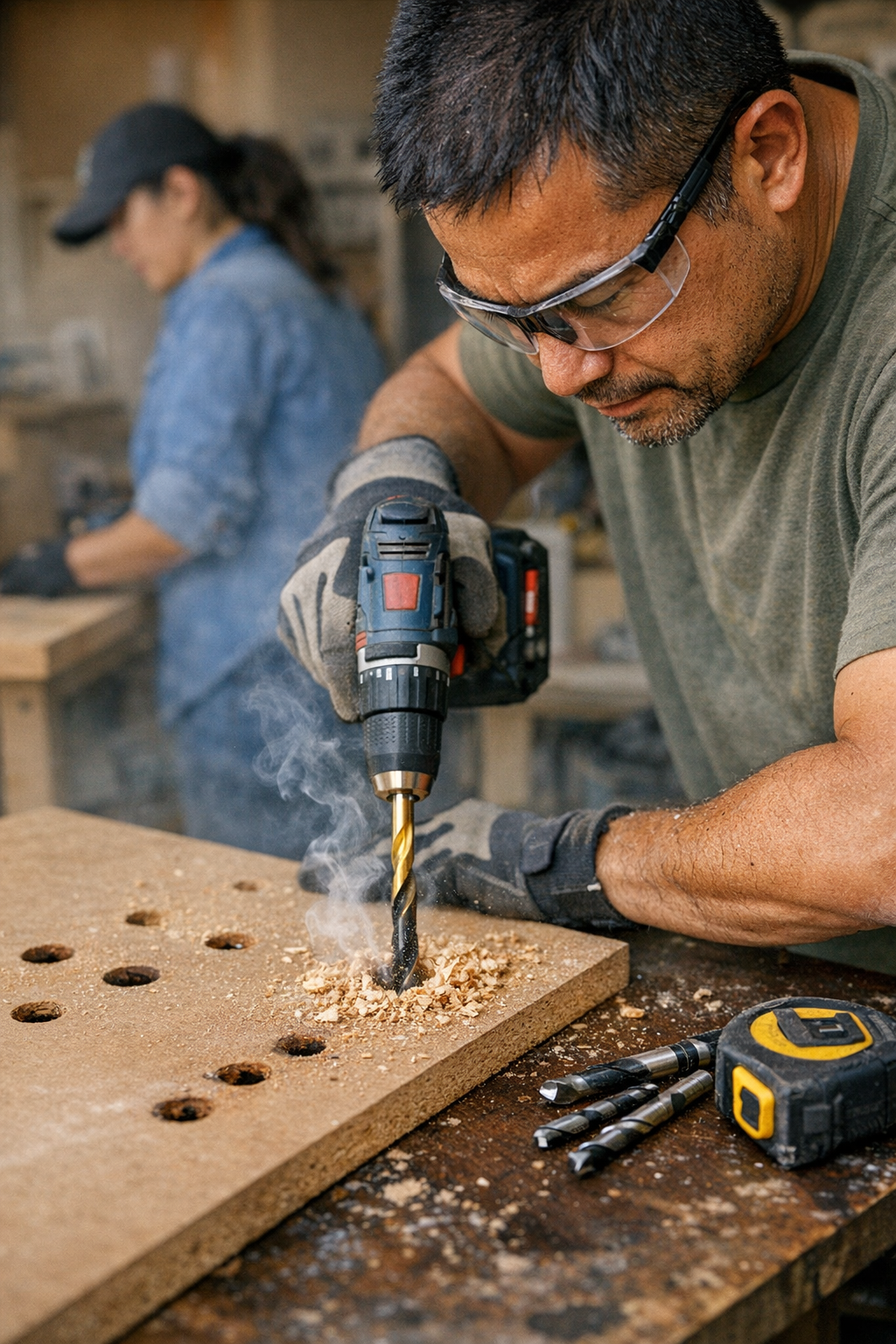
If you’ve stood over a half-finished panel drilling your twentieth hole—shoulder tensed, drill spinning hot, bit tip feathered with smoke—you know the real bottleneck isn’t your muscle or your patience. It’s whether your bit, blade, or driver holds up when the work gets repetitive, the wood gets denser, and every inch starts to fight back. The difference between a clean run and a dragged-out mess is usually the moment your tool starts to lose its edge—or you start to wrestle it just to keep going.
The Moment Your Drill Bit Turns Into Work
The warning signs don’t jump out at hole number three. For a handful of fast cuts, nearly any new bit can fool you—but on the twelfth, or the sixteenth, friction creeps in. You press the trigger, but now the bit whines, hesitates, and you’re pushing harder chasing that smooth exit—except the far side splinters, the wood smells burnt, and you’re suddenly one step closer to a sanding marathon.
Miss these early cues and your progress stalls: edges chip out, holes run ragged, and your finish work multiplies. The real trouble isn’t a dull point. It’s the heat rising, chips clogging the flutes, and a worn edge that turns both tool and workflow against you—dragging the whole job down a notch at a time.
Where Overheating and Drag Sneak Up
Soft pine lets you get away with a cheap bit. But start drilling in MDF, red oak, or face a stack of repeated fastenings, and bit quality announces itself—sometimes too late. Heat and drag only show up after a pocketful of holes, when you’re already shouldering through each pass. The burn line by the exit face, the tight aroma of scorched fiber: they’ll cost you in clean-up, and they’re a sign your bit has crossed a line.
Let these “minor” signs pile up and suddenly hardware doesn’t seat flush, pilot holes wander, and each new set takes longer. Day after day, tiny losses compound. The difference isn’t theoretical—it’s lining up panels that refuse to cooperate and cleaning up material that shouldn’t need it.
Chip Removal: Non-Negotiable for Good Drilling
There’s no shortcut—chip buildup is the silent killer of both pace and edge. Clogged flutes mean trapped heat, slow progress, scorched stock, and an arm that aches from compensating. Assembly lines and shop teams know the pattern: swap in bits that clear chips fast, and everything speeds up. Rely on muscle instead, and you’ll churn through bits—and patience—twice as fast.
The Bit Quality Divide—Exposed by Real Work
One new bit looks much like another until you face a stack of tasks. Anyone who’s ruined a project after a half-day of repeat drilling can tell you: bargain bits start to whine and bind, producing little more than scorched powder long before you’re done. The tell? Instead of steady shavings, you’re left with dust and rising temperature at your fingertips.
Compare that to a titanium-coated split-point with an honest chip-clearing design. Each pass throws thick, healthy chips and comes out clean—not just for three holes, but for thirty. The downstream effect is obvious: fewer scorch marks to sand, entry and exit holes that actually match, and less fatigue in your grip and your time sheet.
When Shop Fatigue Sets In
You’ve likely lived it: a production wave installing hardware, sheet after sheet on the table, a box of screws waiting. Early on, things move. By set three, the bit drags, and you find yourself withdrawing mid-hole, checking for heat, or waiting it out. Every extra pause telegraphs to the next step—control slips, alignment drifts, and you’re wrestling trial fits and filler instead of stacking finished panels.
Small Tweaks, Big Payoff
Switching to a well-designed, coated bit—especially those split-points built to clear chips fast—won’t magically fix sloppy work. But you’ll feel the change as the day runs: chips clear with less effort, heat doesn’t linger, and you’re not constantly stopping to let the tool cool down. In real tests, tip temperature drops from 230°F to 170°F is believable—and so is getting to cleanup with less sanding because exit holes stay neat.
Pro tip: Don’t wait for clogs. Build a habit of clearing chips every three or four holes—even a quick tap or blowout keeps things moving. Across a day, those saved seconds grow into fewer tool changes and less grip fatigue.
Know When to Step Back and Reset
When the bit starts to complain—smoke wafts up, chips turn brown, you feel yourself leaning in—it’s time to stop pushing. That shiny-glazed look on the bit? That’s lost edge, not “just hot.” If you hesitate to touch the bit for fear of burning yourself, that’s the moment for a break, a bit swap, or a check-in with your drilling rhythm. Touch with care; let it cool before even checking.
Pacing Over Speed—How Drilling Gets Smoother
Hammering through at max speed only guarantees heat and wear. Keep RPMs steady and moderate. Pause often, clear chips, and don’t be lured by the promise of faster cutting—the bit and material last longer, and your line stays true. You’ll finish cleaner in the same time or better, with less touch-up required.
Do Specialized Bits Actually Matter for Repeat Drilling?
They do—and the difference is cumulative. A bit built for chip ejection, with a tough coating and precise point, means steadier holes, minimal blow-out, and much less frustrating rework. The payoff isn’t hype: it’s noticing how much less you’re fixing, patching, or adapting your workflow over the long haul.
Don’t Let Small Problems Grow Into Big Delays
Dull edges and creeping heat can be tolerated hole by hole, but over an afternoon of repeat drilling or fastening, the slowdown—and the fatigue—compound. The real fix is as much habit as hardware: watch for that extra resistance, the hint of smoke, or the tiny scorch at the edge. Adjust your rhythm, make chip clearing a reflex, and choose bits matched to the task. Smart adjustments and honest tools don’t just get you to the finish—they keep you sane on the way there.
Find proven bits and accessories for real work at Gumboll.