
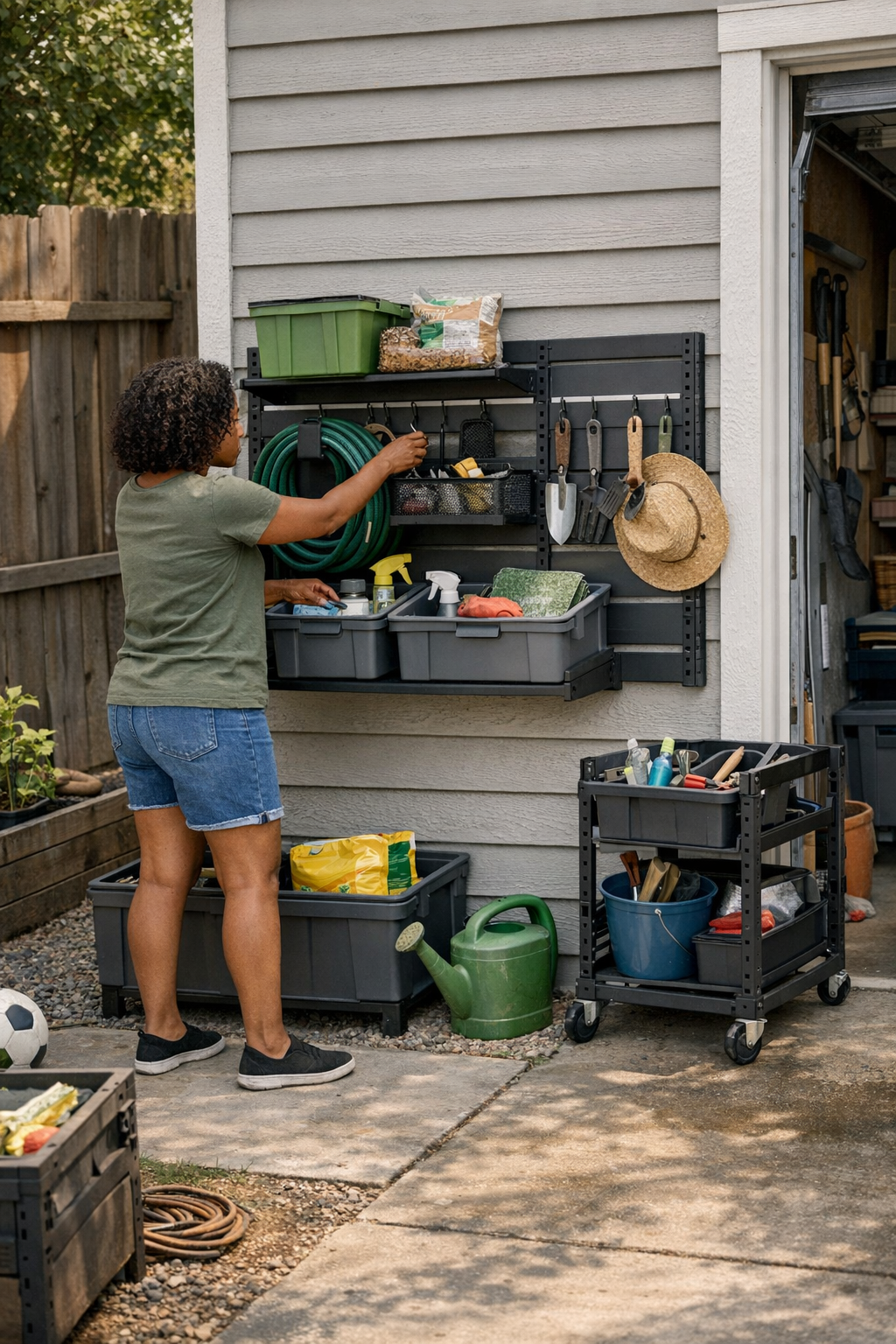
Is your outdoor storage setup actually working, or does it break down the moment real life kicks in? The cracks show up fast: a soccer ball abandoned halfway to its bin, garden clippers dropped and forgotten where the job ended, bins wedged sideways in the shed corner just to make space for the new batch of gear. What looked “organized” yesterday starts to break down by late afternoon, as the family unloads after practice, watered plants, or a messy project. The return flow bottlenecks, and suddenly that clear floor or open path you worked for is buried again—right when you need it most.
A Closer Look at Everyday Clutter Creep
Storage that stays “reset” during a quiet hour often collapses during the real rush. Picture this: two people lugging shovels, someone else balancing pool floaties, one kid zig-zagging in hunting for a missing ball—everyone’s dodging leftover gear just to get in the door. What looked spacious the night before becomes blocked with every return, until you end up shuffling buckets and stepping over shoes just to clear a path.
The trouble rarely roars in—it seeps. A rake left across a threshold nudges the next person off course. A bin overloaded with sports gear forces the soccer net to rest on top, which means someone else leans it elsewhere “for now.” Step by step, zones meant for movement—garage thresholds, narrow strips next to the fence—become chokepoints. The system punishes fast returns, so the friction multiplies. You finish putting one thing away only to realize you’ve blocked the way for something else.
The Real Cost of Floor-Based Storage
Most setups start out with lined-up bins, a low shelf, maybe a storage box near the garage wall. That works until the rush returns—especially after a real Saturday outside:
- The rake doesn’t fit back so it gets propped beside the bin, waiting for “later.”
- A basketball rolls under the bench, out of sight and one more thing to remember next time.
- Drippy boots stack up inside the back door because there’s no fast outside option.
Before you know it, the floor isn’t storage—it’s a drop zone. Especially in the narrow side-yard or the busy path inside the gate, every quick unload slows the next. Pathways shrink. Resetting at day’s end feels like getting ambushed by your own system. More stuff lives “almost put away” because fully returning it just isn’t worth the hassle.
Wall Space Wasted: When “Mounted” Means “Still a Pile”
Wall storage sounds like a cure, but too often it’s only halfway there. Hooks get put where only adults can reach. Wall rails bunch up, forcing bulky kids’ toys or garden tools into tangled clusters. Even when the floor briefly looks emptier, one overloaded hook becomes the new pile-up corner—replaced but not fixed. The friction shifts but doesn’t go away.
Wall-mounted systems matter only if they match real movement. You need to hang, snap, or sling gear in place on the fly. If tools don’t go up quickly, or kids can’t reach their hooks, the clutter just flows to wherever’s easiest. True wall systems create “see it, grab it, return it” zones—visible, reachable, and unmissable when they start to overflow. But it still falls apart if all the action hits a badly planned section. Wall space, done wrong, just hides a problem in plain sight.
Return Flow: Where Real Clutter Begins
Think about those busy, back-and-forth afternoons: kids rotating toys, gardeners tossing gloves, someone else trying to fish folding chairs from behind half-blocked bins. The only way the reset holds is if everything lands in the right spot, fast—without detouring or double-handling. But deep shelves and stacked bins invite “good enough” returns: stuff tossed nearby, not actually back, waiting for a big organizational sweep that gets put off yet again.
Each half return is a setup failure multiplied. One item placed “almost there” pins another behind it, tripping up the next use. A too-full bin causes a sports bag to get dropped on top, where it slides, spills, or goes missing. A crooked tool blocks the pathway until someone finally does a reset—usually later than planned. The setup breaks down exactly when the routine speeds up.
Wall-Mounted & Modular Systems: Why the Shift Matters
Getting storage off the floor changes not just how things look, but how everything moves. Suddenly, the easiest path is the real system path. A muddy ball goes right onto a wall hook, not underfoot. Tools snap back onto a rail—no balancing act with packed bins, no tripping over dropped boots at the gate. Raised storage—say, 18 inches off the ground—kills the excuse for “just for now” drop-offs and keeps the walkway open. There’s less pushing stuff aside just to get to the grill or back gate.
Swap bins for a modular wall panel and you see it in daily life: every return is faster, and the traffic lane stays clear. Overflow can’t hide—if something lands on the ground, it sticks out, drawing a quick adjustment instead of a delayed scramble. Patterns build: you hang it, grab it, move on. “Usable” and “overflow” zones become obvious. Reset sessions shrink.
Tip: Zones That Match Life, Not Just Storage
Tacking up rails or panels is only half the answer. Your setup must fit your actual routines. Break storage into clear, labeled, or color-coded sections: a row for tools, separate bins for balls, child-height hooks for kid stuff. If you don’t, boundaries start to blur and everything drifts out of place—gear returns fast, but not where it belongs, feeding future chores. Real, lived-through zones mean anyone—adult or child—knows what “put away” means as soon as they’re at the wall.
Problem Spots: See Them, Reset Them
Every system, even a smart one, has slippage: dead corners fill with misplaced gear after a rain, or a single overworked hook starts growing a nest of random tools. The trick is catching these breakdowns early, before “just for now” becomes permanent. Sometimes a hook needs to shift left a foot or a dead crate becomes a “quick throw” tray that gets cleared at sunset. Notice the pattern: the same spot always attracting overflow? Time to update, not ignore.
Visible is better than hidden—mess seen is a mess you’ll solve. Wall setups keep the truth exposed. Pileups can’t bury themselves at the back of a floor bin. You see small issues while they’re small, so resets are short and regular, not rare and overwhelming.
When Routine and Setup Sync, Maintenance Shrinks
Most “clutter” comes from a mismatch between setup and movement—not a lack of space. As a true-fit system takes root, the loop gets faster: gear leaves, gear returns, lanes stay open. Less gear gets stranded halfway home. Overflow stops hiding. That means less shuffling and more real time outside. The difference goes beyond a tidy look—it’s about not getting tripped up by your own stuff every weekend. Over time, resets feel less like chores and more like five-minute tune-ups.
Small Tweaks, Real Results
The right adjustment—like raising storage above trip height or adding a flexible bin for quick seasonal swaps—can unblock the whole flow. Catch yourself dumping overflow in the same spot? That’s an alert: either make it a real zone, or fix the system so the routine finally works. The goal isn’t showroom-perfect. It’s a setup that hands back your space, opens the path, and shrinks the reset so you aren’t always fighting the same pile over and over.
Let the real-use patterns guide you. No solution lasts forever, but the setup that fits your rhythm keeps the clutter and frustration in check—especially when the yard’s busy and nobody’s got time for a massive reset.
Find practical outdoor storage solutions for real-life routines at TidyYard.