
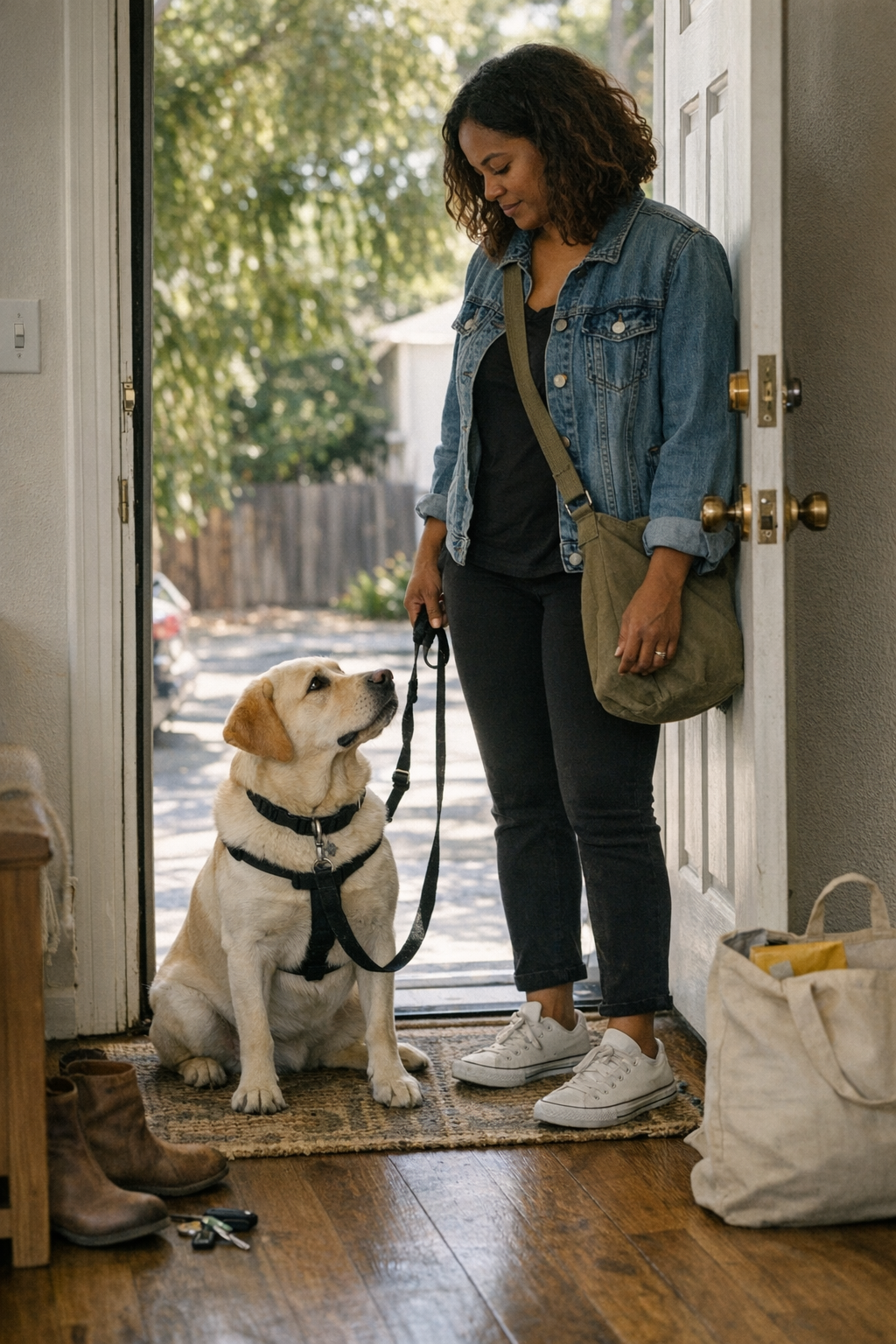
The real test of any dog setup isn’t how tidy it looks, but the moment you step back inside with your hands full and your dog pulling ahead. Straight away, the leash handle brushes against the bag looped over your wrist, keys slip sideways, and the towel you meant to grab sits just out of reach. The front door isn’t just the entrance—it’s the flashpoint where everyday gear, restless paws, and repeated friction collide. Small delays—leash tangles, missed wipes, bowls nudging underfoot—don’t feel like a problem until you see how every return home keeps running into the same pile-up and leaves you a step behind your own routine. If your setup only solves mess on the surface, DogPile territory is where pattern friction really shows itself.
When the Door Is More Than Just a Door: Seeing Routine Friction in Action
Most dog owners chalk up front-door chaos to “just how it goes.” But after a few weeks, the interruptions repeat: you squeeze in with wet gloves, a half-torn poop bag, and a dog bouncing against your shins. You reach for a towel or wipes, but the excitement window snaps shut—your hands are juggling keys while your dog’s leash coils around your ankle. The first moments are a blur of negotiating movement and attention. The ordinary return has turned into a scrappy traffic jam, every object crowding for space at once.
This isn’t a crisis. It’s routine friction. Step inside after a walk, and even with a supposedly “organized” entryway, you’re still untangling a leash, sidestepping a water bowl, and catching a dog body-slamming the crate before you’ve reset the mood. The actual test comes in those first twenty seconds—the time when a smooth transition is either recovered or completely lost.
It Always “Works”—Until Time Is Short
Most days, the mess is manageable. But run late, hear the phone ring, or find someone waiting at the door and those small snags add up fast. The leash blocks your step just when you mean to grab your phone. A bowl placed “out of the way” slides exactly into your path as your dog races past. Cleanup supplies are in view, but your arms are too loaded to actually reach them. Each thing is minor, but together, it all slows down your whole flow and makes every return a hassle you fight repeatedly instead of a routine you trust.
Managing the Front-Door Rush: Why Small Resets Matter
“Off!” turns into background noise. Shoes become obstacles. A towel “within reach” feels like a setup only until you try grappling one-handed with a muddy, bouncing dog. Small skipped resets harden into permanent friction. Each unaddressed leap, missed wipe, or half-managed bag becomes the new baseline for “normal,” making the next entry not smoother, just more work to manage.
The first few seconds at the door set the tempo for everything that follows: feeding, crate entry, post-walk cleanup, and even bedtime reset. Let excitement win at the threshold, and every next step steals more of your focus. Instead of fading, that tension compounds—turning expected relief into yet another interval of restless movement and delayed calm.
Repeated Routines, Repeated Friction
Whether it’s a long walk or a two-minute mail run, the cycle returns: leash underfoot, bags blocking the hall, paws skipping across the mat before you can wipe them. “We’ll settle later” becomes wishful thinking, because every rushed, crowded entry resets the mood for distraction instead of calm. Hands full and brain elsewhere, you feel the drag of slow reset every single time—never dramatic, but always there, quietly stealing time and adding stress you only notice after the fact.
Common Weak Spots in the Entry Routine
Hooks, bins, and bowls can make an entryway look perfect. But tidy is not the same as usable. A leash on its hook only helps if you aren’t gripping groceries. The towel’s “right there” until you’re blocking yourself with your own dog. All looks fine until speed, cold hands, or a bouncing dog reveal which part of your setup isn’t actually working. What interrupts you isn’t clutter, but how easily—under pressure—you can move, grab, and reset. “Organized” setups stall out when actual routines keep producing the same stumbles, because visual order isn’t built for repeated motion under real conditions.
When Items Interfere With Flow
Dog gear constantly invades human pathways. Mats slip, wipes vanish under jackets, leashes snag on boot trays, bowls inch closer to where you actually want to walk. It’s fine for five minutes, but by evening, you’re dancing around the same misplaced items and wiping paws in a half-crouch with the wipes now lurked behind the mail. A bowl that saves the floor can block cleanup; a clever towel hook can require an awkward pivot at exactly the wrong time. Most setups look better for a day, but the weak point returns—where gear spread, access, or dog excitement interrupts every transition you’re hoping to smooth out.
The Real Reset: Turning the Door Into a Pause, Not a Pass-Through
The true shift comes when you use the doorway as an intentional reset zone instead of a rush-through bottleneck. Instead of letting energy spill in—bags dropped, leash off mid-spin, bowls nudged aside—you build in a pause: everyone stops, every single time, before anything else moves.
In practice: you step in, no gear dropped, no shoes kicked. Your dog halts beside you—leash slack, two paws anchored, attention turning back for a split second. You reclaim control of the space before it turns chaotic. There’s no correction, no bustle—just visible quiet until both of you are steady enough to finish the return. This small stop is what flips the entry from a scramble to a transition you can actually trust.
Breaking the Excitement Loop
Most entry routines teach dogs (and people) to rush through the chaos. Every hasty squeeze past the door, every “off!” or urgent redirect is part of the same feedback loop—attention fuels excitement, and the scramble repeats. Breaking the pattern means doing less, not more: requiring a real pause first, so the body language and tension reset before the next move. Over repeated returns, you’ll find fewer corrections needed, calmer entries, and routines that start to feel possible instead of chronic hurdles.
Results You Actually Notice (and Why the Routine Lasts)
The effect is measurable in small physical ways: you don’t trip over tangled leashes as often, supplies that looked “useless” become reachable, and your dog learns to pause in the entry zone—even before you say anything. Suddenly, the time from door to “everyone’s calm” is shorter; the stress you used to accept just fades out of the routine.
How It Feels After a Month of Use
- Leash tangles and bowl collisions drop, replaced by quick, predictable movements
- Dogs start pausing in the entry, often before you ask
- Cleanup and feeding zones remain functional, not buried under bags and shoes
- Returning home feels less like staging a rescue, more like reclaiming a useful transition
- Pausing at the door becomes a reset you can count on, not a fleeting correction
There are still weather days, late arrivals, and multiple pets to juggle. Routine doesn’t mean perfection—but now the scramble is an exception, not the baseline.
Real-World Tweaks to Support the Pause
No single product fixes flow, but setup decisions sharpen or soften every return. Useful improvements include:
- Sturdy entry mats: Big enough to claim “pause” territory, grippy enough not to slide under paws or rushed feet.
- Leash hooks and wipe bins within arm’s reach: Set so you can use them while still outside or with the door open, not after you’re boxed in.
- Bowls kept clear from crossing zones: Placed past that initial flurry, so quick returns don’t mean stepping directly into the water bowl.
- Bag drop spots that claim their own zone: Prevent packages and groceries from overflowing into leash-and-dog space.
But the real change happens when these spots are tied to the same habit every return—stop, reset, then move. Decorative mats won’t fix friction. Only setups used as intentional pause zones really clear the bottleneck.
From Tidy to Trustworthy: Why Visual Order Isn’t Enough
A neat setup isn’t a functional one until it can handle repeated movement, hasty returns, and out-of-sight moments. If your entryway only looks organized, you’ll keep wrestling the same invisible delay: towels out of reach when you need them fast, bowls that clean the floor but block the hallway, toys that roll back into the path you just cleared. A trustworthy setup isn’t just arranged—it’s used, adapted, and tested against the friction of real returns.