
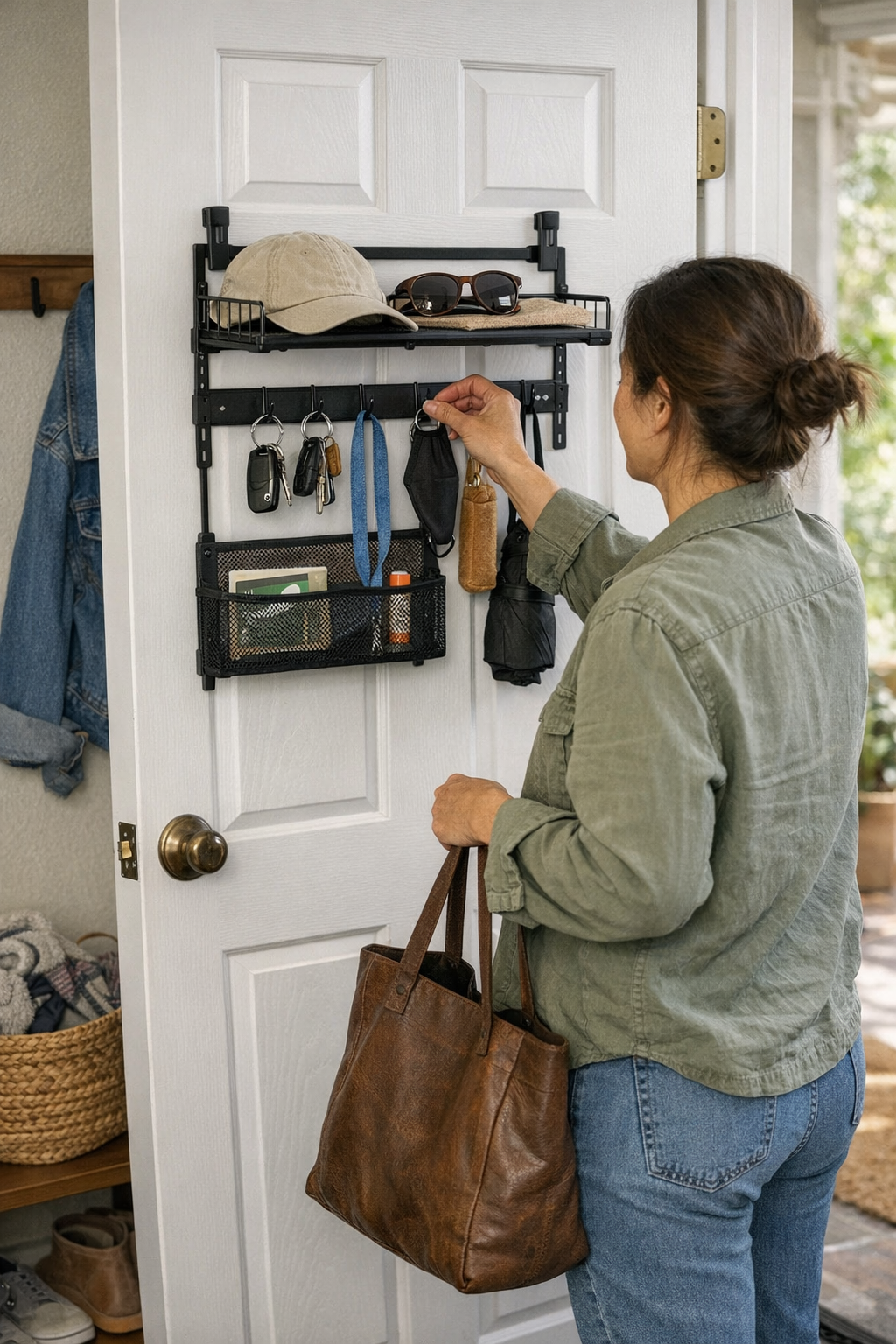
The front-door overlap zone is where routines jam up, not just where intentions get misplaced. Mornings reveal the problem: shoes multiply out from the wall, bags topple onto the bench or floor, and someone’s already digging for a key that disappeared into yesterday’s pile. That entryway setup—a bowl on the bench, a basket underfoot—lasts about three days before it loses any sense of order. Suddenly, what was meant as a simple drop-and-go station becomes a bottleneck: shoes block the path, keys get buried, and resets turn into a full-blown search-and-rescue instead of a one-step tidy as you come and go. This is the real cost of the wrong threshold setup: not just clutter, but a routine that breaks every time it’s used.
Why Vertical Storage Changes the Game in Transition Spaces
Layout—not just storage amount—determines if a transition zone stays usable under pressure. Floor baskets and wide benches pose as solutions, but quickly unravel. Add two people’s morning habits and things go sideways:
- Shoes march off the mat and narrow the pass-through, especially after a wet day.
- Keys get stuck under junk mail—every single rush-out a mini excavation.
- Small items like gloves or cards disappear into the stack, resurfacing only after a second reset.
Switching to a wall-mounted rack—a slim, eye-level unit by the door—alters this fallback cycle. Hooks and sleeves make daily-access gear visible instead of buried. You feel the shift not in the first few days, but deep into the third week, after the treadmill of returns and exits: where the bench would’ve been an overflow trap, now essentials hang right where you reach as you pass through. No more digging. And the “clean zone” stops flooding back onto the floor.
Real Friction: What Happens Before and After the Switch
The Pre-Rack Shuffle
Picture a workday entry: a gym bag lands crooked on the bench, shoes nudge up against the edge, and someone’s elbow-deep in a bowl for a key, only to yank out someone else’s badge by mistake. Another bag enters the lineup; mail and sunglasses pile in random order. By next morning, that bench is a small mountain. There’s no easy “grab and go.” Instead, each arrival or departure requires sorting, shifting, and guessing what’s still missing. Multiply that chaos by a busy week, and the entryway becomes a friction zone—resetting doesn’t shrink, it compounds with every use.
The Immediate Impact of a Wall-Mounted Rack
Add a slim rack at the right height near the threshold, and something snaps into place. Keys and badges claim visible hooks; hats and sunglasses stay out of the fray. You don’t stack accessories—each has a slot. The gym bag? Still needs ground space, but what’s truly “daily” hovers above the avalanche zone. At first, the change is quiet. But later, you notice: no one’s lost a card in two weeks, shuffles are down to a few seconds, and you don’t dread opening the door to unsteady piles. The system prevents return of the old pile-on, even when routines clash by the entryway.
The Capacity Tipping Point: Knowing the Limits
Wall-mounted racks create visible order—but only up to their real limits. They’re ideal for fast-grab essentials: keys, passes, small wallets. Stack them with too many hats or bulky bags, though, and you’re right back in overflow territory:
- Jammed hooks breed snarls and “what’s mine?” moments in the morning scramble.
- Too much bulk makes the unit sag—or strains the door if it’s a hanging model.
- Once grab-and-go takes more than one motion, the reset time grows again, and mess radiates outward.
The best setups broadcast their own limits. An overloaded wall rack doubles as a warning: if you hesitate to hang one more item, it’s time for a quick sort long before the mess spreads to the floor or bench again.
Entryway Movement: How Setup Shapes Traffic Flow
Small entryway changes can shift the whole flow pattern. In the crunch of a weekday pass-through: two people grab for shoes, one reaches for a bag, another heads for the rack. Floor baskets mean feet tangle and elbows bump—the reset takes up physical space and time. Shift that everyday clutter vertically: now each person sees and grabs what’s theirs, the walk-through path stays navigable, and guests reach for visible hooks instinctively. It’s not that the entryroom becomes perfect—it just avoids that slow-building crawl from clear to blocked that most households resign themselves to. Less tripping, less waiting for a corner to clear, more functional movement.
Setup Tweaks That Make a Difference
Placement Is Everything
A wall rack only works if you get the details right: mount it at reachable height in the natural grab zone near the door, not tucked out of immediate sight or blocked by hardware. Too high, and it gets ignored; too low or behind a swing, and it sits empty. The practical test? Mark the spot with tape and run a week’s worth of comings and goings before drilling in—you’ll know fast if the location interrupts movement or invites use. That one tweak can mean the difference between a rack that actually empties your hands and one that gathers dust while clutter piles elsewhere.
Keep It Slim, Keep It Dedicated
Wall racks solve for “grab-and-go,” not for everything. Oversized boots, winter coats, sports gear—they need floor space or closed storage, not another crowded hook. Overloading the rack with mixed categories just migrates the mess to a higher plane. Instead, limit the rack to the few items you always reach for and edit it weekly. When the rack’s purpose gets diluted, so does its everyday impact—and the clutter creep returns, a little more vertical but just as inefficient.
What Real Improvement Looks (and Feels) Like
A door rack isn’t there to make your entryway pretty—it’s there to keep the entry functional under real, repeated pressure. This difference becomes obvious as:
- Resetting the threshold drops to a 10-second task instead of a 10-minute hunt.
- Lost accessory searches disappear from the daily routine.
- Thresholds stay clear, even as people overlap on busy days.
- Everyone in the house can spot and take what’s theirs—handoffs become smoother, not another reset chore.
The space doesn’t freeze at “just right”—but the right rack helps edit the mess before it ever sprawls. Overflow stops spreading outward, and the bench and floor actually stay usable between resets.
Recognizing the Difference Between Neat and Functional
Not every “organized” zone survives real use. If three arrivals in seven minutes still creates gridlock and disarray, a setup is cosmetic, not functional. Wall-mounted racks don’t end the need for editing; they just shrink the work from a full sweep to a minor correction, and let real use—not showroom looks—set the standard. Movement gets smoother, lost-item hunts fade, and what felt like a permanent bottleneck at the door finally lets routines flow in and out without the old friction hanging around.
Explore practical wall-mounted storage for real-life transition zones at Betweenry.