
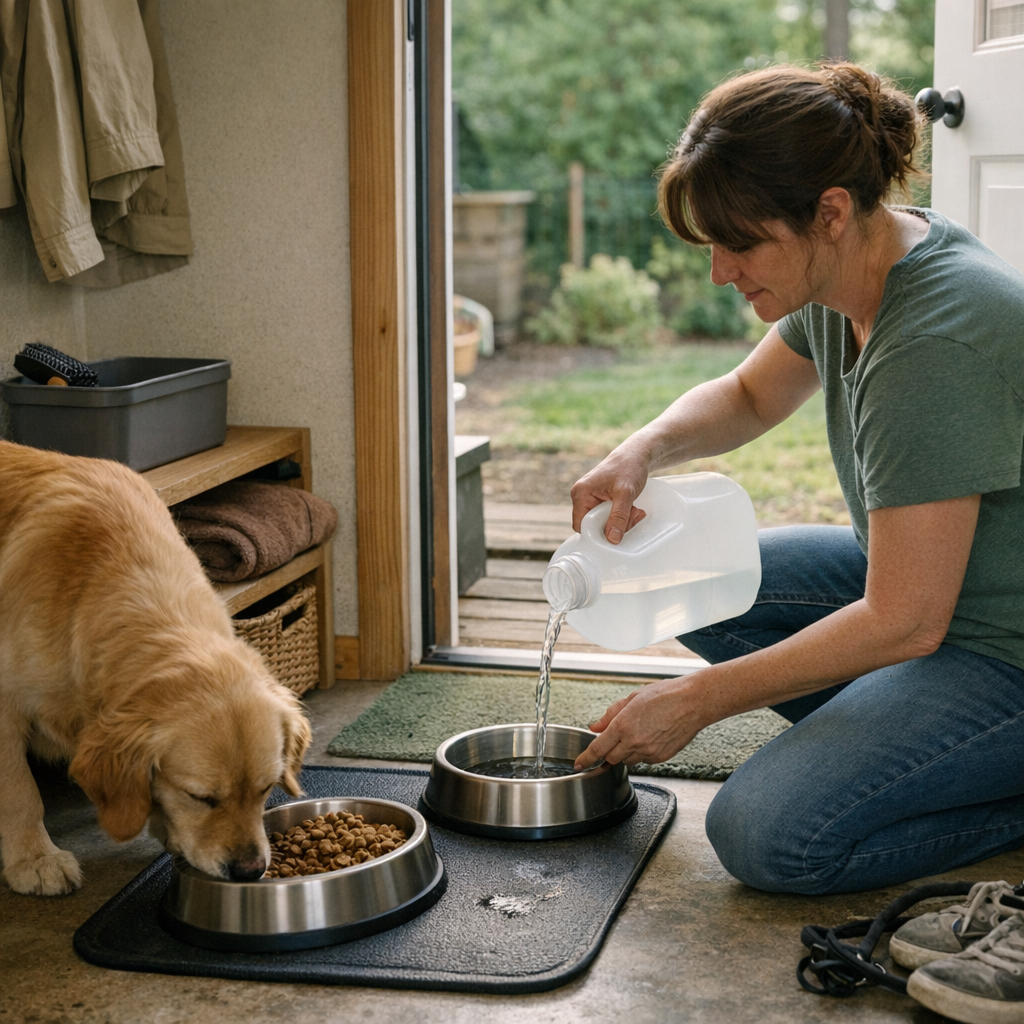
Daily pet care seems simple at first: scoop the food, refill the water, wipe up, move on. It’s only after a week or two that a pattern appears—key items vanish just when you reach for them, or simple routines take longer than they should. If you’ve found yourself balancing a stacked bowl to access the water dish, or searching for the brush at grooming time because it wasn’t put back, you’re seeing the quiet drag that starts when setups in feeding, water, and routine cleanup don’t actually stay ready. These aren’t one-off hassles—they’re the small, repeated slowdowns that show a pet care area isn’t really working. In the CalmPetSupply world, these moments define what needs fixing: not just scattered clutter, but the practical faults in how dog and cat basics are stored, reached for, and put back after every use.
Why Do Pet Care Routines Slow Down?
Surfaces can appear tidy—supplies lined up, kitchen counter clear. But real pet routines aren’t static. Yesterday’s towel ends up buried under groceries, the treat bin lands in the wrong cupboard, and the scoop gets moved far from the station where you need it. These minor slips don’t spark chaos; they just stretch the next task. Suddenly, refilling a bowl means hunting through two cabinets, and cleaning up spilled food requires a trip down the hall for the right towel.
The real cost is in the wasted motion and lost attention. No one grabs the towel immediately because “it’s only a little mess.” But skip a reset here and there, and your whole setup grows harder to use. Sharing the routine with a partner? That growing disorder turns a two-minute handoff into a five-minute clarification, since the basics can’t be trusted to be where they belong.
Everyday Examples: Where Routine Friction Begins
Picture a rushed morning: you’re ready to feed before leaving, but the scoop wasn’t returned last night. You substitute a spoon—now you’re guessing at portions and picking up stray kibbles around the mat. The cleaning spray is tucked behind laundry supplies, so you postpone the wipe-down. Next, you attempt a quick grooming but the brush has migrated to the living room. These aren’t failures of organization—they’re the real-life breaks that snap the flow of pet care, even when shelves appear organized on paper.
The effect builds: a tidy space offers zero help if the brush or bowl isn’t right when you reach for it. Order means nothing if your hand lands on an empty spot, forcing a shuffle through drawers or detour around cluttered hallways.
The Risks of “I’ll Put This Back Later”
Most routines slide because of the easy shortcut: leaving things for “later.” You mean to return the bowl after feeding or fetch the refill bottle after work—but these pauses add up. The next dog walk, the water jug waits near the door, towel on a chair, treats on the kitchen counter. It doesn’t feel messy, but each missing item multiplies the effort for every handoff or shift in task, breaking up flow at every basic step.
By morning, routines sprawl. Feeding means an extra loop for each item. After-walk cleanups take three trips instead of one. These costs aren’t dramatic, but they’re real—especially in shared homes, or when routines rely on someone else to fill in.
Looking Tidy vs. Actually Running Smoothly
A pet area can look swept and neat after a cleanup. But when your brush gets buried behind mail, or you need to move baskets to access the wipes, organization becomes performance—it’s visual, not functional. Resets stay half-finished. And the second someone else takes over, the illusion vanishes: a partner searches for the refill bottle or can’t find the treat bin just when needed. Even a calm-looking space exposes its weak points the first time routines speed up or get shared.
A routine that depends on moving a stack, opening two bins, or explaining where the “real” supplies are—this isn’t a ready zone. Tidy doesn’t count if it jams up again with each round of feeding, refilling, or cleaning.
Scenes from Daily Care: Small Interruptions Add Up
- You go to feed, but the dish is behind cookware, so dinner drags out.
- Wiping the mat is delayed because the towel’s with bathroom linens, not at arm’s reach by the food area.
- Toys and brushes keep reappearing in walkways—so every transition means another step or reach-down.
- During busy spells, one blocked shelf turns grab-and-go care into a mini detour.
- The area seems organized, but if you’re hunting supplies or stacking things mid-task, the routine is losing ground.
How Immediate Return Restores Flow
The simplest, strongest shift comes from restoring each item to its one spot every time, no exceptions. Refill bottles return to their hook, towels back to their own hook or bin, scoops never drift from the feeding zone, and treat lids get snapped shut before you walk away. The result is visible: bowls line up, tools stay within arm’s reach, and no part of the routine gets bogged down by a missing tool. Messes shrink before they require a cleanup.
Over a week, cycles speed up. Cleanup never piles up, water refills don’t stall, every essential is exactly where logic says. Anyone can jump in—there’s no recitation of “the real spot,” just a smooth, obvious system. The area looks calm because the flow is real, not just cleaned up.
Bottom Line: Organizing for Life, Not Just for Show
It’s easy to race for a tidy look or clear countertop and declare the space “finished.” But a truly practical pet care zone—feeding, water, grooming, cleanup—stays ready because every tool snaps back to its spot with no delay. You’re not organizing for appearances; you’re building a routine that doesn’t fall apart after the third reset. The test is simple: if feeding, refilling, or cleanup gets slower or more stressful as days go by, the visible calm hasn’t translated to true ease. A system that’s always ready means every daily care job—no matter how rushed or shared—just works.
See everyday-ready routines and practical pet care setups at CalmPetSupply.