
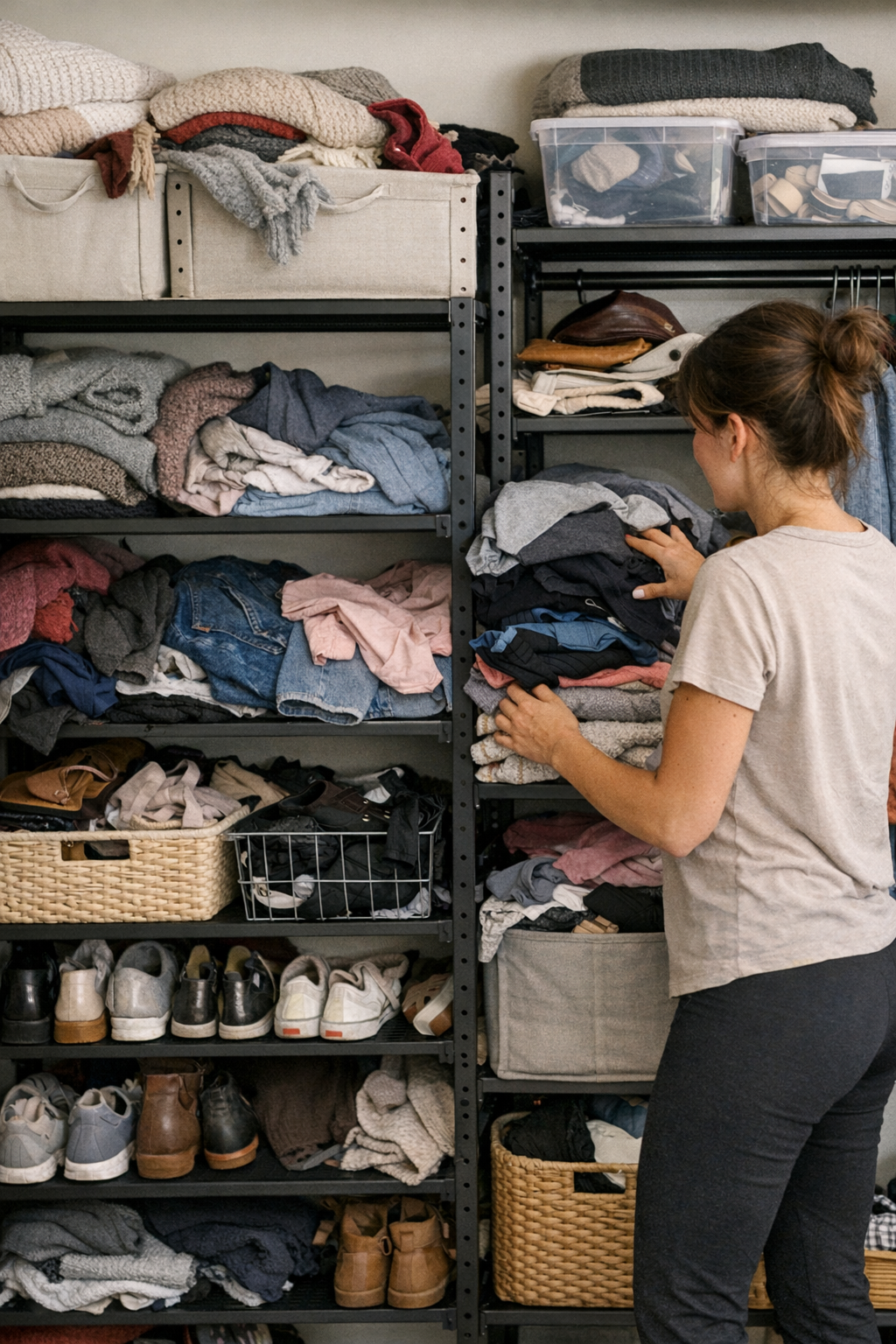
The promise of an organized closet rarely survives daily living. What starts as a perfectly mapped-out system—shoes lined up on the rack, sweaters folded in bins, labels on every basket—quickly meets reality. Shelves fill faster than you expected. A single bin morphs into a dumping ground for anything without a home. Slowly, your once-neat setup turns clumsy: shirts topple from stacks, sunglasses vanish into baskets meant for gloves, and every “quick tidy” gets slower. The layout didn’t change. The friction did—and it’s the small, creeping clutter that wears you down.
Why Closet Setups Fray So Fast
We start with clear roles: shoes at the bottom, shirts on the middle shelves, scarves and hats assigned to labeled bins above. But daily life is a moving target. Seasons change. New clothes squeeze in next to keepers you rarely wear. That spacious scarf basket now bulges and slumps, cramming against spring hats you want to grab in a hurry. Piles of gym clothes, never planned for, hover between sections and grow until the next elusive closet overhaul. It gets easier to shove things “somewhere,” especially if it means shifting a stack or dragging out a bin just to put one item away. Suddenly, a system meant to create order resists every tweak—and it’s your time and patience that get lost.
Hidden Friction of Fixed Storage Zones
Assigning every shelf and bin a permanent category seems clever—until a single purchase or wardrobe change tips the balance. Fixed shelving and rigid roles mean there’s no place for new shoes unless something gets buried or a stack sags at the edge. A week’s laundry waits on the floor. Off-season clothes slide farther and farther back, turning labeled bins into murky overflow zones. Within weeks, it takes three moves to retrieve yesterday’s jeans or a favorite bag. The closet doesn’t look bad, but invisible effort drags at every step: you avoid certain areas, dump “for later” piles out of sight, or shuffle stacks rather than dealing with what no longer fits your categories.
The Real Signs Your System Isn’t Working
The slow collapse shows up everywhere you look:
- Stacks that once held their shape topple because every grab from the bottom threatens a landslide.
- Shoes stray from their row, invading random corners or blocking the door.
- Bins host a growing mix of gloves, scarves, and whatever you were too rushed to sort.
- A simple morning routine turns into a search-and-rescue as you dig past three misplaced items for something in the back.
- The tidy reset you managed easily last fall now doubles in time because categories keep blurring.
The problem isn’t laziness. It’s that fixed roles don’t flex as routines shift. Without regular tweaks, “organized” becomes a thin disguise for slow, hidden clutter creep.
Making Storage Roles Flexible—Without Starting Over
The answer isn’t a full reset; it’s small, live-in adjustments. Adjustable shelf dividers and flexible bins are less glamorous than grand overhauls, but they rescue function when needs change. Limit folded stacks to numbers that actually hold—six shirts instead of ten. If shelves start to crowd or topple, it’s a signal, not a failure. Switch shelf order when seasons shift: let boots or sweaters move down, and lighter items rise. The quicker you spot crowded bins or sagging stacks, the less time you lose. Instead of waiting for chaos, set a calendar reminder for a 15-minute review every few months—just enough to adjust for what your routine actually demands.
Sometimes it’s simply kicking out whatever’s turned a bin into a junk zone. Other times, it means rethinking whether you really need three sections for scarves when last season’s hats are getting crammed. The goal isn’t perfection, but visible, adjustable roles that match the way you use the space today—not last year.
Open Shelves vs. Labeled Bins: Living the Trade-Off
Open shelves give you instant feedback. You see trouble before it turns to chaos—a tilting stack, an item edging toward the floor, categories slipping out of bounds. It’s easy to grab and go, reshuffle fast, and use vertical space for what you actually reach for. Labeled bins promise clarity, but only if you keep up with what’s inside. When life gets busy, bins quietly turn into blind spots, collecting clutter that never gets sorted. They hide mess—until you’re forced into a weekend triage session.
Most closets need both: open shelves for high-traffic items, a few bins for what rarely moves. The catch is that roles should shift as your needs do—or else new routines will always end up crammed into old labels. Quick reviews and small swaps keep the balance, and make it easier to spot when a category is overdue for an edit.
Spotting and Stopping the Slow Creep
You don’t need to rebuild your closet at every sign of drift—but you do need to notice when it’s becoming slower or less useful:
- Retrieving a daily item now means reaching past piles or rooting through bins you barely recognize.
- Overflow lingers at the closet edge, with no easy place to stash it.
- You hesitate to put things away, because you’d rather avoid wrestling a crowded shelf or jumbled bin.
- Shelves feel packed tighter, even when your wardrobe hasn’t really grown.
Visible, routine maintenance is the real secret. If you’re constantly moving a stray gym shirt or digging for matching socks, it’s a gentle prompt: adjust now, before the system breaks down. Sometimes a shelf tweak or bin swap is all it takes to buy back that sense of ease. Ignore the signs too long, and a quick reset turns into a weekend project you’ve learned to dread.
A Closet That Actually Keeps Up
Life never stays static, and a closet shouldn’t either. The real win isn’t showroom perfection—it’s storage that adapts without endless overhauls. As shelves fill, bins drift, or stacks slump, treat it as feedback. Rotate, combine, or shrink categories before frustration sets in. The difference isn’t just visual; it’s morning routines that flow, resets that go quickly, and a space you actually want to use, not just hide behind the door. A closet might look organized for a week, but only a flexible, regularly reviewed system feels easy month after month.