
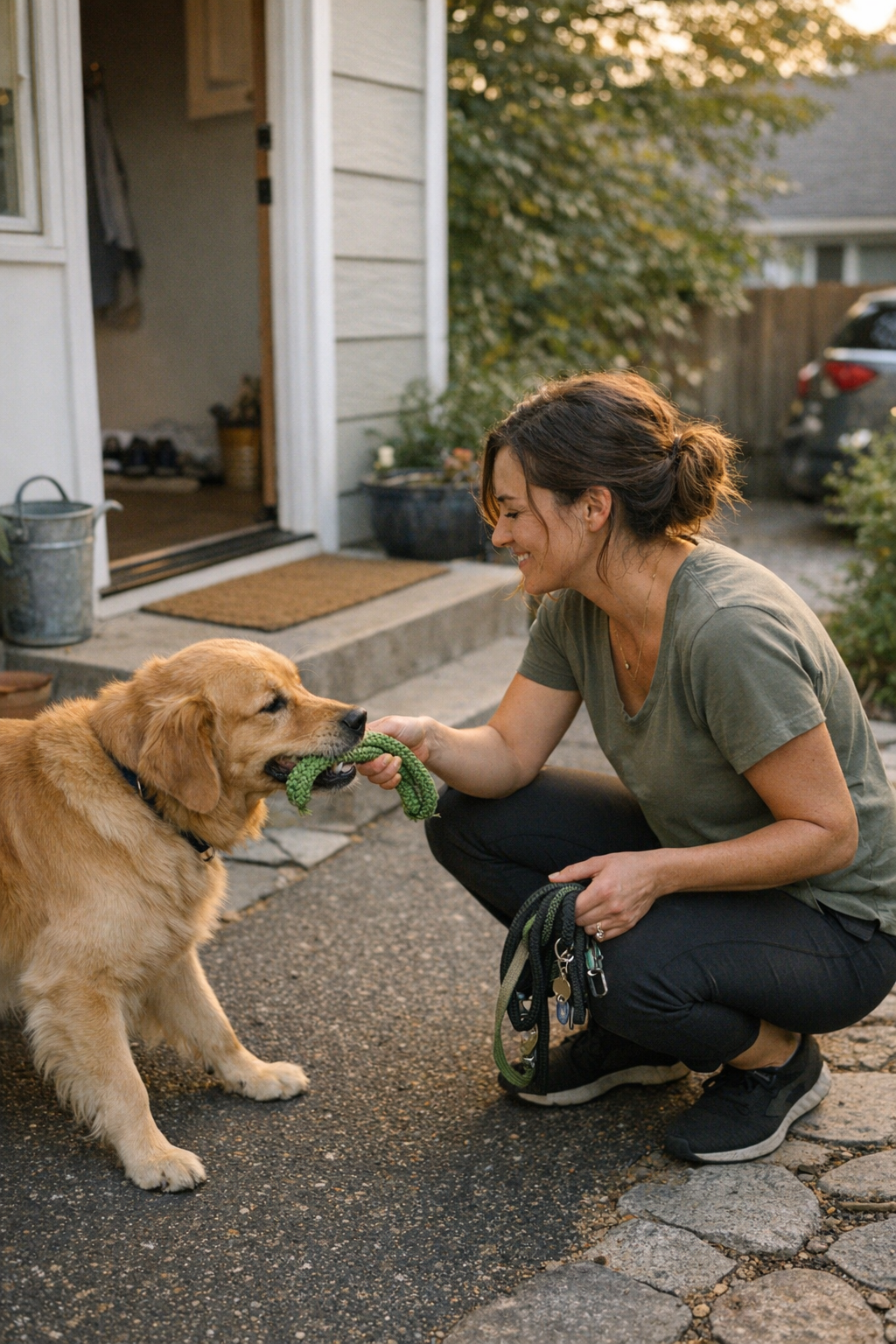
The weak spot in most dog homes isn’t always obvious—until it happens for the third, fourth, tenth time: You come back from a walk ready to reset. The leash should drop, you should step in, your dog should settle. Instead: keys twist under a clump of leashes, your dog paces at the door, you need wipes but they’re on the far counter, and the water bowl is dry—or worse, hard to reach behind the clutter. The reset stalls, and you’re left juggling gear, blocking the hallway, or hoping your dog stays patient. These aren’t one-off annoyances. Over days and weeks, the end of every walk starts to drag, turning “home” into a repeat friction zone instead of a relief point. If this loop feels familiar, you’re in the real, practical world DogPile is built for—where how you set up small things shapes the entire routine.
Why That Post-Walk Pause Keeps Coming Back
The textbook version: a walk ends, both of you slide back inside, calm returns. What actually happens? At the entry, your dog sniffs, stalls, hovers at the line between out and in—sometimes nearly refusing to cross it. You end up half-in, half-out, leash hand caught on the knob, awkwardly stretching for wipes while your dog circles your feet. It’s easy to blame an “independent streak,” but the friction isn’t random. Every missed handoff—dog waiting while you wrestle with gear, a bowl you can’t refill quickly, towels out of sequence—locks the routine in limbo. Instead of winding down, you both get stuck negotiating that gap, making everything after slower and less certain. The real problem isn’t your dog—it’s a transition point your setup keeps failing to solve.
Spot Where the Reset Actually Stalls
At first, you tweak everything except the real source: longer walks, faster pace, new routes—yet the same pause returns. The weak point shows up in small, repeated ways: hesitating at the last patch of grass, circling the doorway, re-entering only to double back out. It’s not a mood; it’s an unresolved routine break. You can see it in how often you find yourself stopped in the entry, keys half-put away, dog hovering behind you, supplies out of reach. Over time, these little stalls define the rhythm (or lack of one) every time you try to reset after a walk.
Why “Tidy” Setups Still Cause Routine Slowdowns
Many entryways look organized—everything on a rack, nothing on the floor, gear hung out of sight. Yet function keeps lagging behind form: After a walk, you try to grab the leash, but you’re reaching past umbrellas. Wipes for muddy paws are in a drawer across the kitchen. The water bowl looks fine until you realize filling it means shifting a pile of toys aside with your foot. The area is neat, but every piece is in the wrong order for how you actually move. Tidy doesn’t automatically solve for function. If it doesn’t match your real routine flow—where your hands are full, your dog’s still moving, and your patience is low—it falls apart at exactly the moment you need it most.
The setups that really work aren’t just attractive—they’re built around the real, repeated handoffs: leash off, paws wiped, bowl refilled, dog redirected before gear hits the ground. When any link is out of reach, the transition sags, no matter how clean it looks.
Small Friction, Big Disruption: How Routine Weak Points Add Up
No single snag is dramatic, but together they define the quality of your evenings:
- Leash loop tangles around a door handle as the dog pulls toward the kitchen.
- Cleanup wipes are there, but grabbing them means crossing back over a muddy entry floor.
- Your dog circles the same spot, waiting for a cue you haven’t figured out how to give—stuck until you reset the order.
Individually, these are tiny. Stack them up and the damage is real: feeding off-schedule, water left empty, the dog still restless long after the walk. The friction piles up until the whole routine feels like one long unfinished handoff. Over time, even something as basic as coming home turns into a series of small avoidable stalls that interrupt your evening and increase the odds of skipping what comes next—grooming, play, even rest.
What Keeps Triggering the End-of-Walk Hold-Up?
Most owners eventually spot what’s wrong: their dog isn’t just dawdling; the routine itself is out of sync. Even if you shorten the route or change your timing, your dog struggles to switch off “walk mode” because nothing signals a real transition. If the leash only comes off after you’re already blocking the hallway, or if the reset steps are scattered and awkward to reach, the boundary stays fuzzy. For your dog, that means lingering, stalling, restarting; for you, it means a reset that never really resets. It’s not about willpower—it’s a structure problem that visible “fixes” rarely touch unless they match the reality of your space and habits.
When Routine Jams, It Drags Everything Else With It
Weekdays are tight: you walk in with arms full, expecting a quick turnover. Instead, you’re balancing keys, leash, a dog that won’t step clear, and maybe a bag of groceries. Each awkward shuffle—leash twisting underfoot, bowls not where you need them, supplies out of reach—amplifies the bottleneck. Water refill gets skipped, paws go unwiped, feeding is delayed. Enough rounds of this and you start dreading the one part of the routine that should be automatic: returning home. When the handoff breaks, nothing feels as easy as it should, and the cost becomes a normal part of the cycle.
Smoother Homecomings: Adjustments That Work With Real Life
This isn’t a training problem—it’s a system design issue. Don’t reach for a new gadget first. Instead, trace where your routine catches. What gets blocked, tangled, or delayed every single time? The answer is nearly always in the setup.
The Mini-Activity Reset: Drawing a Clean Line
One of the simplest shifts: add a tiny transition ritual—three minutes of fetch, two rounds of tug, or a familiar sit-and-wait cue—right at the threshold, before you walk in. This isn’t about extra exercise; it’s a marker both of you recognize as “walk is over, inside starts now.”
- Your dog gets a mental anchor to stop looping outside the door or racing ahead unchecked.
- You get a window to get the leash off, corral keys and gear, and grab wipes—before you pile into the line of fire in a muddy hallway.
- The post-walk reset—water, food, cleanup—can happen with less drama, since your dog isn’t stuck on “maybe we’re still on a walk.”
A small, clear pause like this turns chaos into an actual sequence, not a scramble for control every single evening.
Make Boundaries Obvious—How Small Changes Alter Repeated Flow
A single habit like removing the leash outside instead of inside can recode the entire handoff. To a dog, that gesture is the difference between “maybe we’re going back out” and “we’re officially done.” When that transition links to a quick, repeatable activity and immediate access to towels or toys, you cut down on gear pile-up, dog hesitation, and owner-side interruption. The goal isn’t a new trick, but a routine you and your dog can both read, even after a rushed or messy walk.
How Everyday Setups Turn Repeat Friction Into Routine Flow
Looks can deceive: organized hooks and caddies don’t solve anything if they fight your real movement. If wipes are out of reach or bowls block your only route through the door, you either backtrack or skip steps. Toy bins on the wrong side of the room mean dropping gear mid-motion, and a leash rack too high or too far makes reaching awkward with a squirming dog. The same friction comes back every time—the only thing that shifts is where you notice it. Real solutions let you move through each step in order, without unnecessary doubling back, stalling, or reshuffling.
Test your setup in real time: after a real-world walk, can you unclip, wipe paws, swap gear for toys, and refill water without breaking stride, scolding, or bending around a dog in the way? If not, the system is costing you more than you realize—over and over, every single day.
Red Flags Your Routine Isn’t Resetting Smoothly
- Leash always piles up somewhere inconvenient, never the right hook.
- You have towels and bowls, but their placement always forces an extra trip across the entry—muddy paws included.
- Your dog hovers or doubles back by the door instead of moving on to food or water