
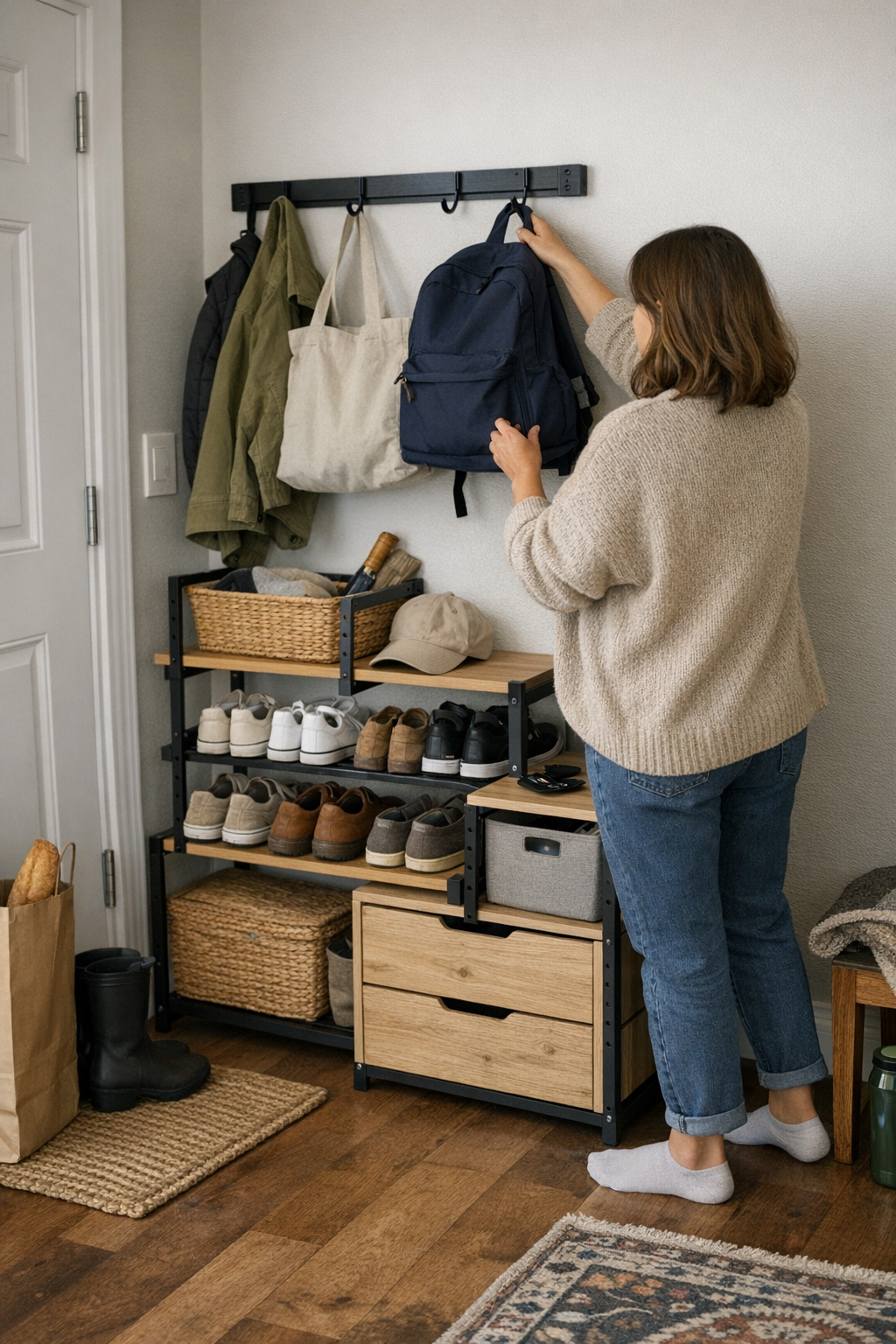
When the door starts dragging and the entry clogs up, it’s no longer just about “where to put the shoes.” Door-mounted racks promise relief from floor clutter, but real-world routines test that promise fast. Bag drops, overflow shoes, and “just for now” gear pile up—suddenly the rack isn’t just full, it’s slowing every return and exit. Each added item makes the door heavier and every reset clumsier. The space between in and out gets tighter, not clearer.
When “Organized” Starts Feeling Like a Barrier
Most entryways begin with a single hope: make daily comings and goings less chaotic. Hanging a rack on the door feels like instant order, a way to “catch” shoes and backpacks before they sprawl. But watch what happens after a week of mixed use:
- Shoes spill past their slots, overlapping in unpredictable patterns—pairs unpair, one boot blocks the others, and retrieval means shuffling through the jumble or digging behind stray sneakers.
- Bags and jackets crowd each other, swinging together in a tangled mess where grabbing one means disturbing them all—or sending something tumbling as the whole rack wobbles with the door’s motion.
- “Just for now” becomes semi-permanent, as umbrellas and spare grocery bags claim hooks and never migrate out, loading down every available inch.
What started out as “neat” becomes something you work around. Getting through the door on a busy morning turns into sidestepping loose shoes, freeing a jacket stuck by the zipper on another, or wrestling a closing door that no longer swings smooth. The so-called organization now stands between you and a clean entry.
Hinges Under Pressure: The Hidden Cost of the Overloaded Door
The real risk isn’t the mess you see—it’s the slow warping you don’t, hidden in the hinges and frame. Every new load added to the door rack isn’t just making the entry look crowded: it’s shifting physical pressure to where the door was never meant to carry it. Here’s how the warning signs show up in real use:
- Closing the door gets harder, especially when shoes have stacked unevenly—sometimes you need to lift or jerk the door just to latch it.
- Edges no longer align, as subtle door sag creates thin slivers of daylight or lets cold air leak past the shifting seal.
- Every swing creaks or groans, and after a few soggy mornings or kid rushes, the once-smooth action becomes a dragging, scraping hassle.
Each little adjustment—a sneaker crammed in, a backpack hooked on the top—pushes the rack from a helper to a silent stress point. The cost isn’t just visible: it’s cumulative fatigue running through the whole entry setup, landing hardest when you least want it—right as you try to hurry out or come back in.
Floor Cleared, Flow Compromised
Door racks clear the floor, but at the cost of blocking the path. They work as long as loads stay light and tidy, but for mixed, everyday traffic, the cracks in the system expose themselves quickly.
See what happens in real motion:
- Bag drops jam the swing, suddenly halting a routine exit because a satchel dangles too low and jams at the threshold.
- Shoe rows overflow, pushing sideways so retrieving one pair means shuffling or nudging others, turning a quick grab into a mini-reset each time.
- After a morning scramble, the setup becomes a puzzle of misplaced shoes and unclaimed bags—the “clean” look only returns after physically moving or unloading the rack to regain access.
Real Scene: Entryway Drift in a Narrow Apartment
Picture a narrow entryway in a busy apartment—designed for two people, used by three. By midweek, two backpacks crowd the rack, this week’s groceries hang off a stray hook, and a jumble of boots, sandals, and sneakers wedge the wire shelves. The door starts dragging. Then rain: wet bags drop down, pooling against the threshold. Instead of crossing in or out easily, someone has to stop, unhook, or pick through at least three items just to open the door all the way. Attempts at order just layer new obstacles—resetting turns into a routine disruption, not a fix.
Why Hardware Stress Grows Unnoticed—Until It Doesn’t
Most door racks are designed for a few, light items. As mixed loads take over, hardware strain builds below the surface. The door absorbs damage slowly until it becomes hard to ignore:
- Misalignment creeps in: the rack sags lower, and the door skews out of square after each overloaded stretch.
- Metal twists or hooks warp, subtly at first, but enough to make the rack move awkwardly and the door stick.
- Movement resists or drags, signaling the underlying frame is carrying more than it was designed to tolerate—a penalty that only gets worse with repeated crowding.
Wall-Mounted and Floor Storage: Rerouting the Routine
Switching to a wall-mounted unit or floor-standing setup reroutes the entire threshold flow:
- Weight shifts off the door, letting it swing free—shoes and bags are supported by purpose-built anchors or floor legs, not hardware designed only for opening and closing.
- Resetting shrinks to a couple of movements: shoes forward, bags and coats to assigned spots, with no tugging or realignment needed each time.
- Passage stays open, because storage doesn’t move with the door or block the threshold. Each item has a deliberate home within the entry zone, not balanced in a shifting tangle.
Over time, the relief is clear: not just a tidy surface, but a truly usable entryway. When weather or busy weeks hit, gear piles up—but resets don’t. The door closes quietly, and you spend less time undoing the day’s clutter just to feel like the entry isn’t a constant obstacle course.
Real Change: What Holds Up When the Routine Stretches
A month in, wall-mounted or anchored floor storage turns “just leave it there” into a frictionless routine—drop shoes, hang the bag, done. Drift shrinks: shoes don’t migrate, overflow gets absorbed (and cleared) with fewer moves, and the urge for last-minute decluttering fades. Even after a chaotic run, the reset isn’t a chore—just a habit. The entry may get messy, but it never blocks you from coming or going.
Practical Entryway Tips for Real Daily Traffic
- Limit door racks to single categories or lighter items. If door storage is a must, dedicate it strictly—hats, light scarves, or one shoe set—not every type of gear at once.
- Check for warning signs of hardware stress: if the door drags, squeaks, or needs lifting, scale back before real misalignment locks in.
- Map the reset routine after a busy day: if getting organized takes too many steps or backtracks, reroute to wall or floor storage for smoother flow and less threshold congestion.
A Setup That Works Beyond the First Impression
The best entryway storage stands up to weekly repetition, not just the urge for surface-level order. Door racks can fake tidy at first, but as real use piles on, the pressure shows: blocked paths, sagging hardware, slower routines. Wall-mounted or floor-standing systems absorb the load—freeing the door, opening the threshold, and making each return or reset feel lighter. When the setup actually fits how your entry is used, tidying up stops feeling like another mini hurdle the second you walk in.
Explore more practical storage for stubborn transition zones at Betweenry.