
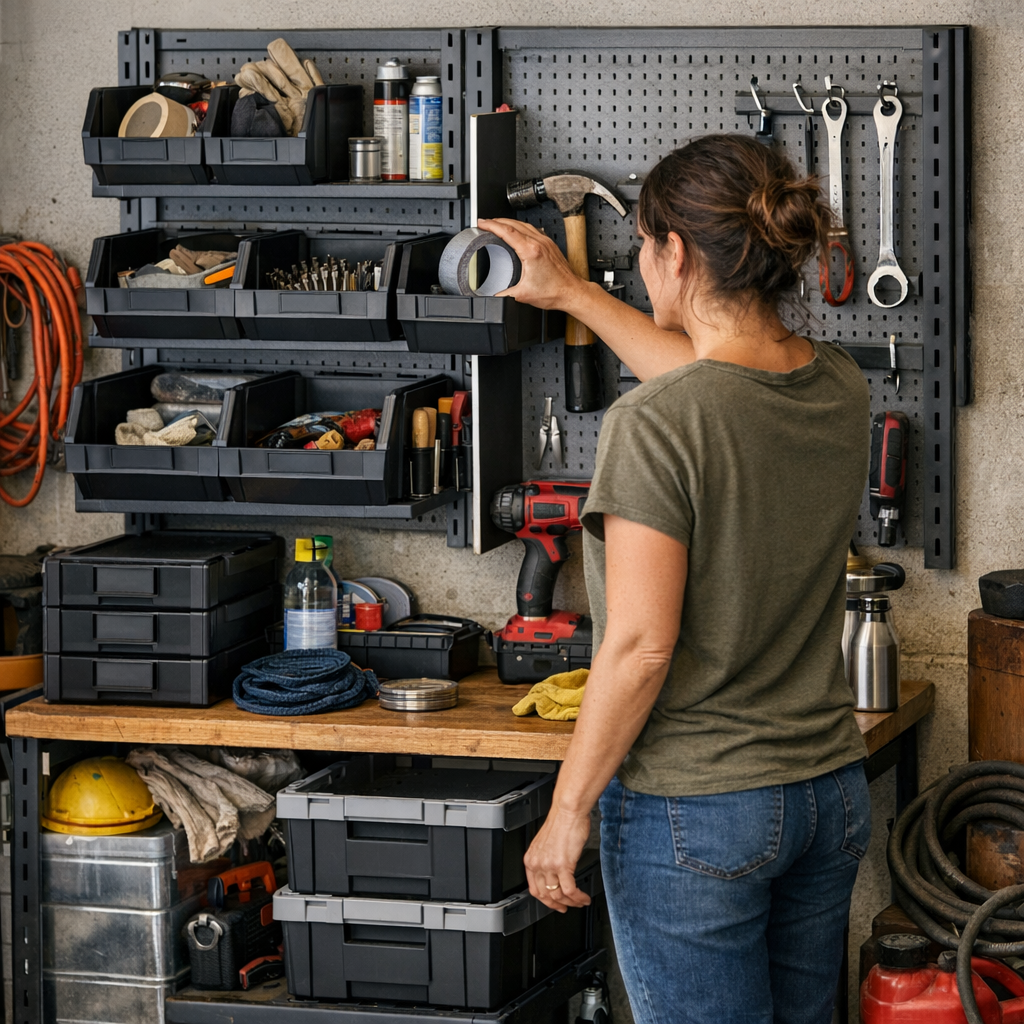
The real test of a wall storage system isn’t how perfect it looks on day one—it’s what you find after a week of messy projects and busy routines. The initial buzz is pure optimism: freshly installed shelves, labeled bins snapping into place, every tool clipped to its grid. But come Thursday night, the old shuffle returns. You slide a box aside to reach paint brushes. A rolling cart, just an inch off, blocks you from the one drawer you need. The tight corner, meant for spare hardware, turns into a dumping ground. The promise of total order quietly unravels—and the problem isn’t that you lack storage, but that the setup can’t keep pace when real life moves in.
Why “Organized” Falls Apart After the First Week
The pattern repeats itself: brand-new wall grids and bins hold up for a few days, maybe a week, but soon you’re nudging bottles aside for a screwdriver or fishing bits out of the wrong tray. The culprit isn’t sloppy habits—it’s a flaw in the system. Wall setups that only prioritize “neatness” overlook what happens when routines hit: return flow breaks down. You squeeze tools back wherever there’s open space; bins overflow; lines between zones fade. What seemed like plenty of storage ends up demanding constant maintenance.
Suddenly, resets get slower. That easy reach becomes a two-step maneuver around a cart, and once-clear access zones start to clog with overflow. The system becomes background noise—always close to tidy, never quite effortless.
Why Boundaries Matter More Than Bins
What separates a wall that works from one that just looks good? Physical boundaries. Not just lines on a plan, but tactile edges—real dividers, visible gaps, purposeful stops. These boundaries force every tool and carton back into its home, not just “somewhere nearby.” Overflow gets blocked before it starts, and categories no longer melt into each other.
Without these stops, even the sharpest-looking setup collapses during daily rush. Reach for a wrench, and yesterday’s hammer slips into its spot. A bin swallows two categories. The next return becomes a question, not a reflex, and resetting the wall turns into an extra chore.
What Real-World Friction Looks Like (And How It Stacks Up)
Three days in, the small aches of setup failure start piling up:
- Shifting the Same Cart—Just to clear the way, you nudge a rolling cart three feet left, over and over, breaking flow.
- Always Reaching Around an Edge—A cabinet blocks access to the one bin you actually use most, so you find yourself stretching and bumping tools off their hooks.
- “Dead” Corners That Stay Dead—A wall zone never gets used right, slowly collecting whatever doesn’t fit elsewhere—a box of gloves, a pack of spare fasteners, a mystery tangle of cords.
- Overflow Magnet Zones—One stretch of wall starts out as “overflow” but becomes the dumping spot. Each tool added makes the reset less likely, and the mess harder to ignore.
- Endless Reshuffling—You spend actual project time pushing bins back into place and re-sorting tools that have bled into the wrong zone.
This is the difference between “everything has a place” and “everything returns to its place without thinking. When boundaries are missing, every routine reintroduces disorder. A setup should fade into the background—handling clutter before it starts, not demanding extra attention after the fact.
How One Divider Can Change Everything
Forget overhauling your entire wall. Sometimes, the simplest fix—sliding in a vertical board, mounting a pegboard panel, or even repositioning a single basket—draws the line nothing else could. Suddenly, tools can’t wander. Bins don’t swallow each other’s contents. The boundary turns a soft suggestion into a hard stop.
In one real garage, just installing a narrow divider between paint supplies and automotive gear made a visible difference the very next project. The “wandering” of items stopped cold, the old pattern of stacking on the dividing line went away, and cleanup after a full session shrank from fifteen minutes to five. Overflow simply didn’t have room to start.
The Practical Payoff of Obvious Stops
Even a small, deliberate boundary delivers outsized benefits:
- Cuts off sprawl and spillover, so tools stay findable and bins don’t blur together.
- Makes putting things back a snap, even on the busiest day—no cramming, no “I’ll sort it later.”
- Signals to everyone—family, helpers, or coworkers—exactly where each zone ends, removing the guesswork from daily use.
Is Your Wall System Working Against You?
Ask these questions before blaming yourself for clutter:
- Do you keep losing the same tools or supplies, even with labeled bins?
- Are bins and hooks slowly merging, with categories leaking into each other?
- Does every return feel like it seeds a bigger mess for later?
- Do busy entry points or work zones keep collecting pile-ups that block movement?
These patterns aren’t about needing more space—they reveal not enough structure. Subtle boundaries, or the lack of them, guide your real habits. The less you need to “think” about where things land, the less friction there is every time you use your wall.
When Looking Organized Just Isn’t Enough
Don’t get fooled by perfect symmetry and neat lines. A wall filled with bins can still create work if it doesn’t reflect how you move, grab, and reset. If grabbing a hammer means shifting two boxes, or if a quick return starts a domino of reshuffling, the setup is only working on the surface.
The metric isn’t fullness—it’s friction. Clear walls with clear boundaries make resets quick and invisible; fuzzy boundaries mean more time spent cleaning than doing actual work. Over the long run, a system with sharper divisions will always win out, no matter how impressive a floor-to-ceiling wall of bins might look in photos.
One Change, Big Difference
Don’t wait for frustration to build into a cleanout day. Try adding one divider, repositioning a cabinet, or moving bins so there’s an unmistakable stop point. See how quickly routine use gets easier. The best wall setups aren’t just installed—they’re gradually tuned to fit how you actually use the space, making your routine smoother and your workspace feel truly yours.
Discover more practical, real-world storage solutions at StackNest.