
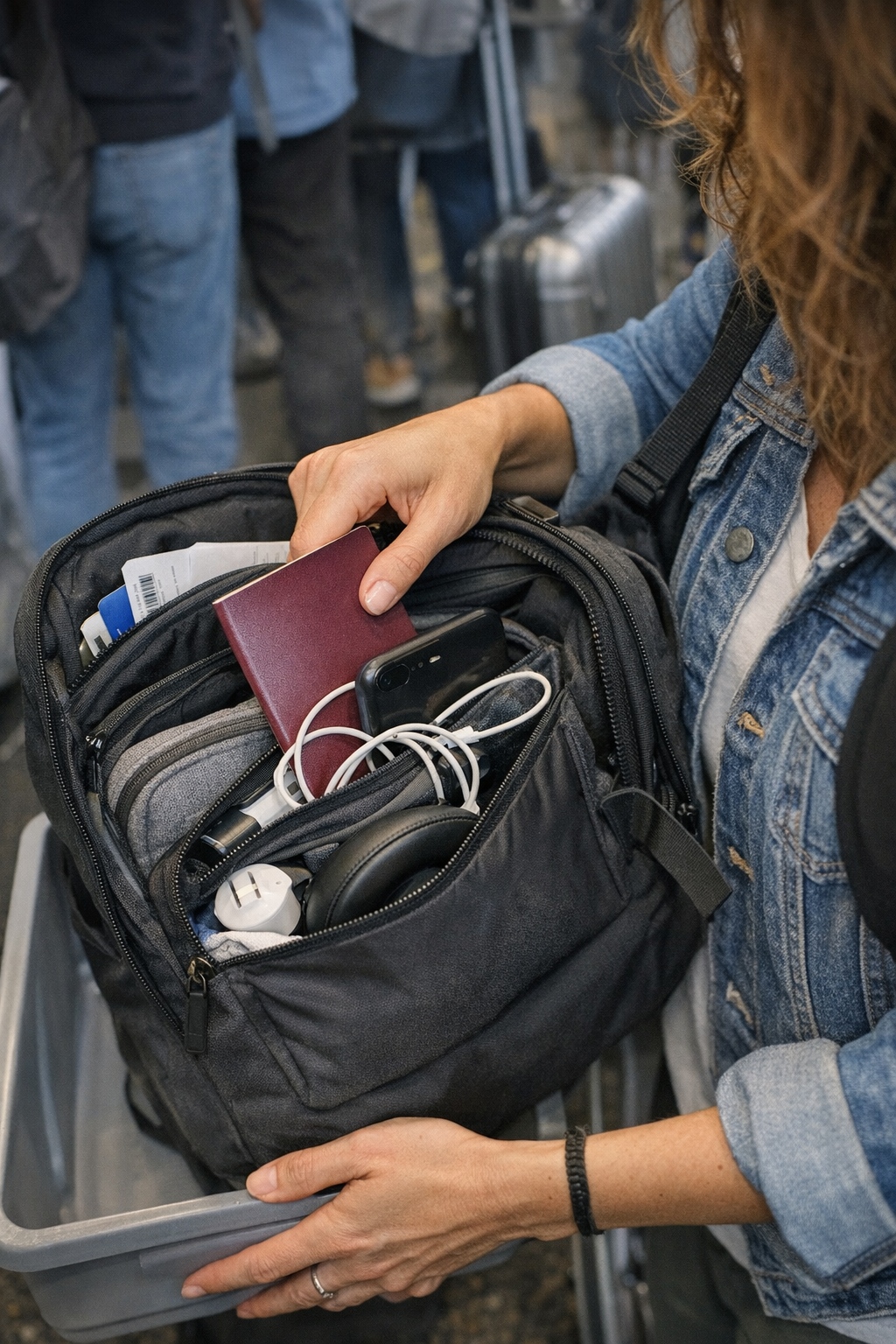
The real carry-on trouble doesn’t start when your bag spills open—it starts when your setup collapses the moment you’re moving. On the surface, your carry-on might look streamlined and perfectly packed. But the instant you hit the airport line—boarding pass handoff, tray balancing, passport check, one last phone check—you realize: a bag that seems organized while standing still can turn into a slow-motion mess under pressure. Slow retrieval forces you to dig, pause, and re-adjust just when you need speed and access. This is not about visual neatness; it’s the difference between a smooth trip and a sequence of small breakdowns—each one eating away at your focus and flow, flight after flight. That’s where the structure of your carry-on matters more than you think, and why the world of carry-on tools and layouts at CarryOnSupply exists in the first place.
The Hidden Snags in “Organized” Carry-Ons
Most travelers get trapped by bags that look tidy until the moment real travel starts. At home, pouches and pockets seem clever: documents in a slip, tech in a cluster, toiletries separated. In motion—shuffling through a live line or grabbing your ID single-handed as a tray slides by—these supposed shortcuts jam. You reach for your passport and snag a cable, or your front pocket that seemed perfect is suddenly packed too tight with receipts, a pen, and your boarding pass. Pull one item, and another leans out; fumble for headphones, and your phone edges closer to the floor. Every small tangle or micro-delay feels minor until they begin stacking up through the trip, turning what should be routine into a string of small stumbles.
Cumulative Friction: How Small Delays Add Up
A few wasted seconds don’t matter in daily life—until you’re in a moving airport queue with travelers behind and hands full. Unzipping an extra pouch for every retrieval, or fishing under layers that overlap, slows everything. It’s easy to blame a one-off mistake, but the same friction returns every trip: the passport you could grab at home now means pushing past chargers, confusing slot order, and stacking two pouches on a tray just to get your ID out. Over time, hesitation and minor fumbles add up: misplaced tickets, dropped earbuds, and that familiar, rising sense that your setup isn’t really built for real movement.
Every trip, the drag multiplies—not just in wasted seconds, but in avoidable drops, misplaced essentials, and the dull stress of feeling one step behind your own routine.
When “Compact” Turns Into “Complicated”
Going slim and layered promises elegance but often delivers hidden hassle when you need speed. Overlapping pouch stacks, deep pockets, and multi-use slots look minimal but force repeat shuffling. Your tech pouch blocking the passport slot? Now you’re swapping pouches or jostling things twice to get the right item. Even if you love how compact your bag looks, the time cost shows up at the worst moments—every extra movement when boarding or clearing security is another chance to miss a beat. The inside friction you don’t see in a product photo is what holds you up in the real boarding line.
Real-World Boarding: Where Problems Surface
Boarding exposes the cracks in an “organized” setup. Join any busy line and you’ll notice: someone doing a pocket shuffle, or bent sideways repacking their tray by the gate. Weekday morning, major terminal: my own careful layout—the passport slipped next to a phone—fell apart as I tried to pull ID with one hand. The charger edge snagged my headphone pouch, shifting everything, sending my phone tumbling out just as a tray slid against my leg. Two-second delay, but the ripple: hands full, line tightening, risk of something hitting the floor and breaking comfort for the entire flight. It’s not rare. These small fights for access signal a setup that looks neat but fails the repeated-use test, piling up the odds of an awkward loss or scramble exactly when you don’t have margin.
Boarding and Seat Entry: Where Order Breaks Down
Fast-moving boarding and the squeeze towards your seat expose weaknesses no packing video ever shows. Bag in one hand, jacket over an arm, ticket wedged where it should be easy to grab—until a slip pocket collapses or a pouch blocks your reach mid-lift. Tech organizers built for tabletop order snag your hand or stop you just as you pivot by another passenger. What looks practical at rest turns into extra shuffling, blocked movements, or having to reset your entire setup in the middle of the aisle. With each boarding or seat entry, the pressure to access one specific thing—without repacking everything else—grows.
Why “Looks Good” Isn’t Enough: The Reality of Repeated Use
A fresh packing job holds up only until reality hits: repack after security, mid-flight grab for a charger, hotel arrival shuffle, or layover rush. You think you fixed the system, but items drift back into the wrong slot, pouches block each other, and that slim control vanishes the moment you need it most. Order fades and friction returns, because most setups aren’t built for fast, repeated movement—they only look organized in static photos. Every repack or quick retrieval that forces you to unzip, dig under, or pull a pouch free is proof that visual neatness does not equal reliable flow. Small layout failures multiply over the chaos of even a single trip.
Building a Setup for Real Travel Movement
Smoother boarding isn’t about adding more layers or chasing hyper-minimalism. The real advance is dedicated separation: one clear, single-purpose zone for each must-access item. Avoid clustering tech, documents, and comfort together. Instead, give each a slot or pouch that’s always a single reach away—front-access zipper for passport and ID, flex room for chargers and cables, no pouch stacking where live movement happens. With just a margin of separation built in, you gain seconds and lose confusion, especially at key pinch points: document checks, tray drops, or squeezing past seats. Test your setup as you move, not just at rest. The only standard that counts is how quickly you can reach, reset, and keep moving—every time, not just once.
Setups that actually work show it in motion: no second-guessing which pocket or fighting past your own organization. They don’t win style points for Instagram—they win every time you avoid a fumble or have one calm hand free when it matters.
The Subtle but Real Impact of a Better Setup
Real change appears in transit, not on a packing table. Switching to one slim passport slot, tech corralled in its own case, and each comfort item unblocked by other gear turns access time from slow to automatic. I measured every tray transfer: just a few seconds shaved off is the minor benefit. The major shift is missing—the dropped boarding pass, the tangled charger, the last-minute panic. Nothing ruins a calm airport transition like scrambling for what should have been ready. Over a full trip—multiple boardings, repacks, transfers—the freedom to move without a reset builds real flow and lowers travel stress in ways you only notice after making the switch. That’s the real test: does your setup need less correction, not more, every time you reach for an essential?
For practical carry-on tools and accessories designed to work under real travel pressure, visit CarryOnSupply.