
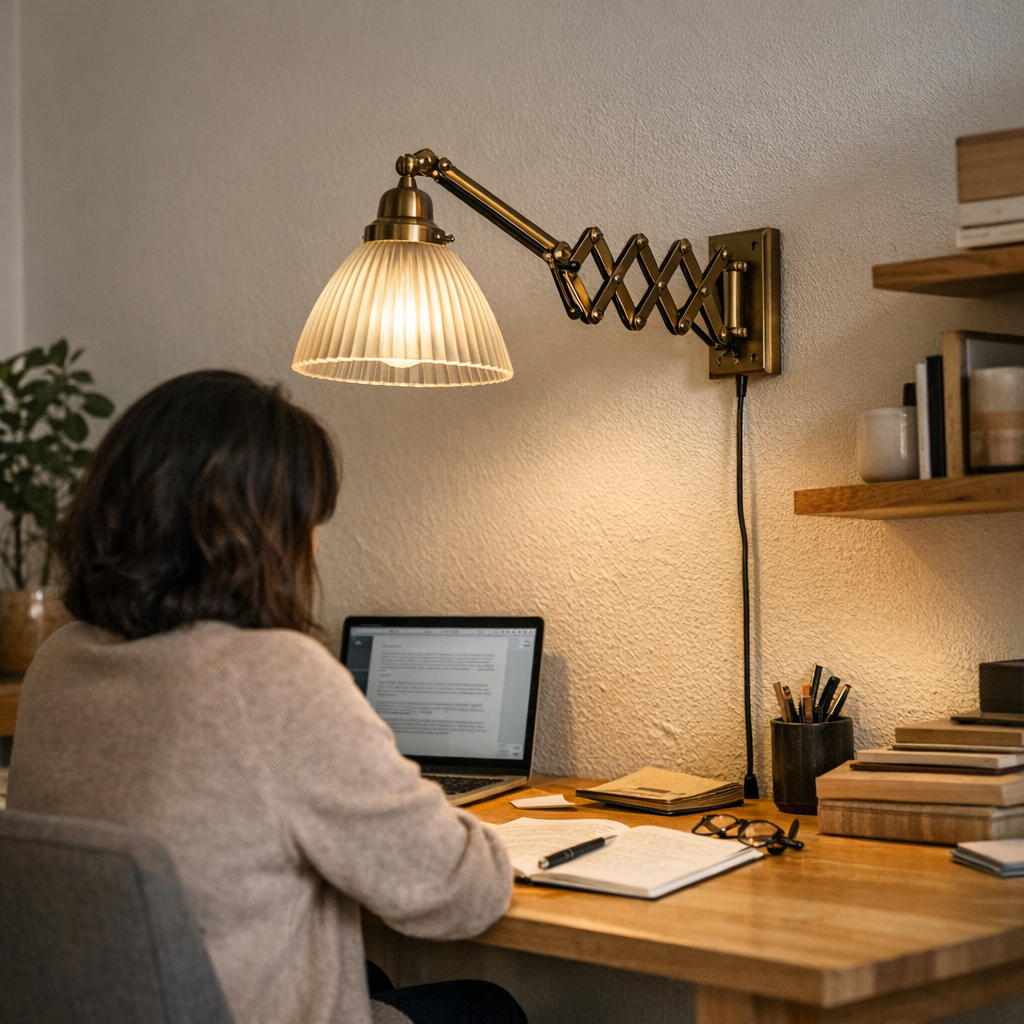
The right ceiling light can make a room look finished in a single flip of the switch—but after a few workdays, the cracks start to show. That new flush mount floods your space with light, but by day three, you catch yourself sliding your laptop an inch to the left, shifting paperwork back to center, or squinting to dodge a stripe of glare across your monitor. The room seems bright, but clarity disappears at the desk edge; shadows under shelves don’t budge; and the mirror still leaves half your face in the dark. This is the real gap between “illuminated” and actually “usable,” and it doesn’t reveal itself until you repeat the same routine—and run into the same friction—over and over. In the world of indoor lighting, an apparent fix often hides the stubborn limitations of the wrong fixture choice.
When Overhead Lighting Leaves You Guessing
Step into most workspaces and they look ready: ceiling fixtures spread brightness wall to wall. But within hours, you’re back in the loop of small annoyances. Flush-mount and basic ceiling lights promise coverage, but leave precision behind. Glare lines show up where you need screen focus. You reach for a pen at the desk edge and it’s faded into a patch of shadow. Even with all lights on, certain zones—corners, shelves, cabinet edges—resist clarity. Every minor annoyance adds up: pulling a receipt into the center just to read it, adjusting your chair to catch a stray angle, or twisting the monitor to escape a hot spot. It’s not darkness, just a slow, steady drip of inexact lighting that keeps routines off-balance.
This is the cost of lighting designed for brightness, not for real task behavior. As the workweek drags on, interruptions mount: squinting, shifting, pausing to get the setup “just right,” only to find the same weak spot tomorrow.
Ceiling Fixtures: Coverage Without Control
Flush mounts, semi-flush fixtures, and broad panels succeed at blanketing a room in ambient light. But they’re wide, not targeted. Shadow lines stubbornly track under cabinets and along shelves. Sinks, counters, and desk perimeters absorb just enough darkness to make you move items mid-task. In kitchen zones, you discover the counter never glows evenly—you chop vegetables under a broad central glare, but every edge is tinged with shadow. Home offices and utility rooms tell a similar story: each surface with a different height splits the light, leaving half-visible paperwork or dim tool drawers. The sense of “almost there” lighting never fully lands, and muscle memory starts compensating for poor visibility before you even notice you’re adjusting.
The Cost of Repetition: Routine Frustration
Poor lighting rarely sabotages a space all at once. It erodes comfort through repeated, avoidable distractions. You drag paperwork away from a murky desk edge for the tenth time. The washing machine controls are shadowed every evening, so you fumble with settings you knew by heart. In hallways, ceiling light pools above while your feet feel their way through a corridor that seems to darken just where you cross between rooms. Not one of these moments stops the day cold, but over a week, they stack up as constant, unnecessary friction. Maybe the room “looked” done after the last fixture went up, but by Friday, you’re leaning in closer just to finish ordinary tasks—proving the wrong fixture isn’t subtle; it’s quietly exhausting.
How Directional Lighting Changes the Routine
Aim a light the right way and the room’s habits change. Add a wall sconce, under-cabinet light, or an angled task fixture. Place it where hands cross paperwork, beneath a cabinet, or beside a bathroom mirror. Shadows disappear from working edges. Glare on screens fades out as light comes from the right direction, not just the ceiling. Clear visibility stretches to the corners, not just the desk middle. Instantly, you notice:
- No more losing pens, receipts, or tools to the gloom at the edge.
- Left and right sides of the surface match the middle in clarity.
- Mistakes caused by missed details or hidden objects drop off—routine actions run smoother because nothing is buried in shadow.
The routine shifts. You stop nudging items into a sweet spot. Corners hold up under close work. Bathroom grooming no longer means angling toward the window or leaning over the sink to avoid half-lit cheeks. It isn’t dramatic; it’s just one less thing breaking your flow, all because light finally matches the way you use the room.
Scene to Scene: Real-World Lighting Friction
Stair Turns That Keep You Pausing
Standard ceiling fixtures brighten the stairwell air, not the actual treads. Every turn, your foot hesitates. You half-step, scanning for that next tread because the edges are left in a dim valley. Install a wall sconce low enough to target the steps, and suddenly, every riser is outlined—safe, clear, no hesitation.
Mirrors and Shadow Faces
Overhead lights create a mirrored split: one cheek lit, one in dull half-shadow. Shaving, applying makeup, or checking a spot—all interrupted by the same shadow arc, day after day. Vertical wall lights flanking the mirror erase this imbalance, replacing harsh contrast with soft, even visibility where it actually matters.
Under-Cabinet Shadows: The Counter That Never Glows
Countertops disappear beneath upper cabinets, no matter what’s overhead. Chopping or scrubbing under that overhang means hands cast hard shadows. Loading laundry at night? You miss buttons. Snap in a slim under-cabinet fixture and the edge glows evenly—no more guessing, shifting, or chasing the light left to right.
Key Moves for Everyday Clarity
Add targeted lighting where repeated routines stall. Use ceiling fixtures for ambient coverage; support them with wall sconces, vanity lights, or under-cabinet LEDs to attack the trouble spots: glare, persistent shadows, and half-lit surfaces. Run a quick test: hold a paper flat across your main work area and watch for shadow lines. Wherever detail fades, reposition your task light until no corner is lost. This isn’t a quest for more brightness—it’s a push for usable clarity, achieved by fixing the frustrating zones ceiling light can’t touch. Adjust beams and directions to dodge screen reflection and mirror glare; shift the location early so you spend zero time reworking finished routines later.
Why Fixture Type Matters Over Time
As days and weeks stack up, the wrong fixture leaves a fingerprint: tense shoulders, more shifting, and a creeping sense that the space fights back. The difference between a “lit” room and a clear, task-ready one is visible and felt, day after day. Pair ambient with directional lighting and that friction falls away—you move without seeking light, and every corner operates at the same level as the obvious center. When you notice fewer interruptions and no longer work around your lighting, that’s when the room is finally working for you—not just lit, but ready for whatever comes next.
For clearer work areas, better hallway routes, and mirrors that show what you actually need to see, see more practical lighting options at LightHelper.