
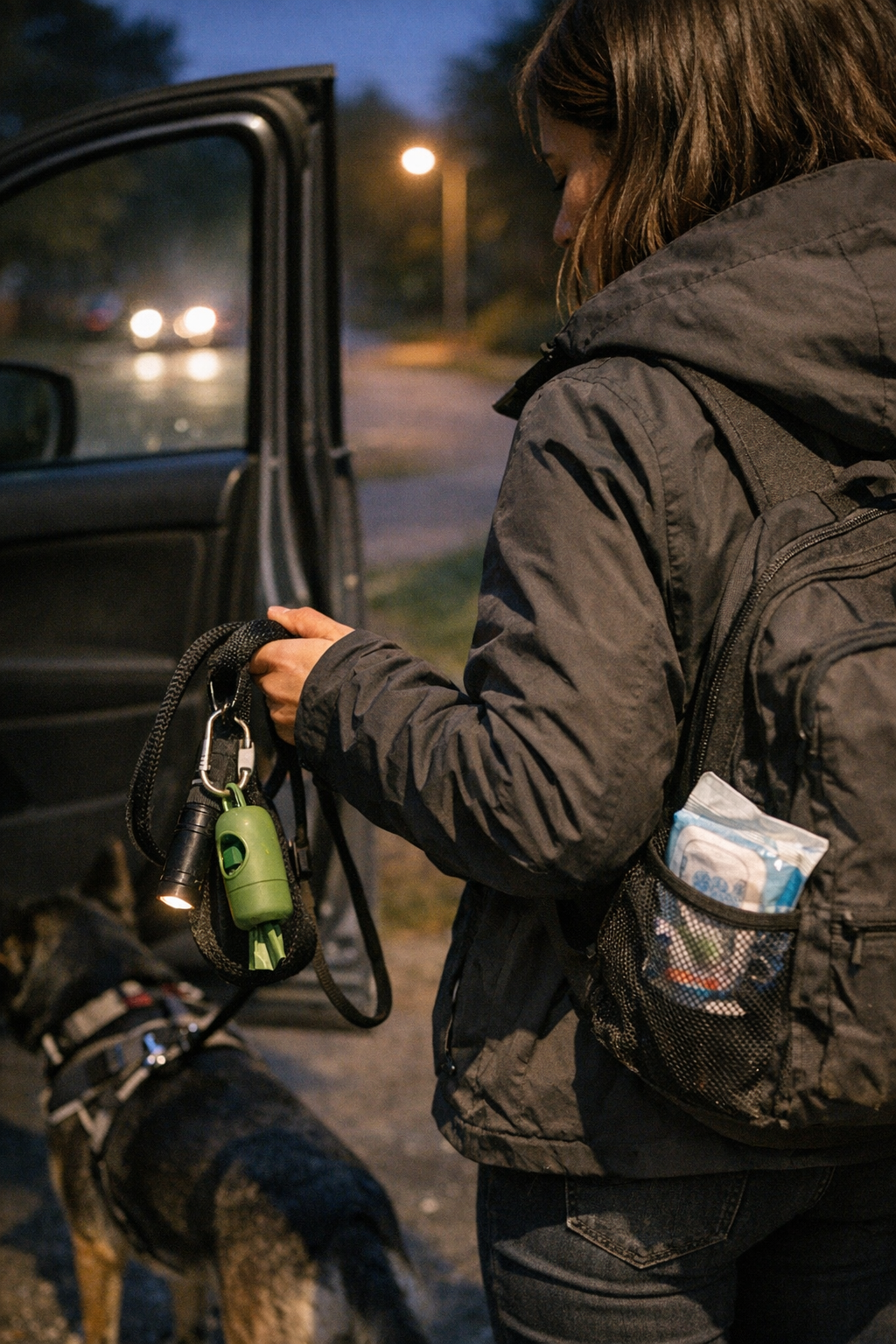
Getting your dog out for a night walk looks simple—until you need to pull a waste bag or flashlight in the dark, one-handed, while your pet strains against the leash. That’s when the line between “packed and prepared” and “actually equipped for real use” appears. A setup can look organized inside your car, but the first time you pop the door in a dim parking lot and fumble through zipped compartments as your dog impatiently pulls, you see where most pet night-walk routines break down. It isn’t what you have—it’s whether you can reach it, move smoothly, and handle your dog without stopping everything else.
When “Organized” Isn’t Enough: Night Walk Weak Points
After-dark routines push every weak spot to the surface. The layout that seemed neatly “ready” during the day—leash looped, waste bags tucked, light packed just in case—starts to unravel after a few real-world stops. You might find the flashlight trapped at the bottom of a side pocket, forcing you to dig just as a car rounds the corner. Waste bags slide to the wrong section, hidden under backup gear or mixed with your own essentials. It feels minor until the fifth time you pause, blocking the door with one knee, dog impatient, pulling at your wrist—each extra second risking a lost moment, a missed cue, or an interrupted schedule. The neat look in daylight doesn’t survive repeated seat-side handling after dark. Instead, it exposes every setup that can’t shift from parked to moving—fast.
Real Use, Real Pause: The Trip-Reset Trap
The failure point in most night walk setups isn’t missing gear; it’s blocked access. As you swing out of the car, you’re juggling leash, keys, cleanup, and traffic. Cleanup bags buried under a loose jacket or flashlight wedged behind your wallet slow every handoff. Seconds pile up each time you reshuffle, restart, and dig. The friction isn’t always obvious—until you catch yourself opening the wrong pouch for the third time, or drop a waste bag on the ground while your dog darts past. Easy in theory, clumsy every night. A problem you notice, quietly, only once it repeats one stop after another.
Why Access Timing Matters After Dark
At night, losing a few seconds searching for the right item is enough to miss the window where your pet is controllable and the street is clear. It’s not about having every tool displayed, but being able to snag the one thing you need—by feel, not luck, even when your coat’s zipped and one hand’s full. Every missed cue—whether you’re struggling for a flashlight or untangling a bunched-up waste bag—pulls your attention from your dog and the road. Tidy internal compartments or double pouches sound practical, but force slow, awkward pauses where quick, single-move access is what the routine demands.
How Setup Choices Play Out Under Pressure
What works on paper rarely lasts through a week of quick after-dark stops. Waste bags dropped in your jacket, wipes crammed with your own items, or a flashlight tucked out of reach make each trip slower. The “set it and forget it” approach turns into a shuffle-and-delay ritual. The adjustment is simple but makes a real difference: move waste bags to clip-ons, flashlight to your leash or belt, wipes to an outer pocket—so each one is ready, not buried, for each restart. Fewer stops. Less awkward re-packing. Less risk of dog and owner tripping over loose items. Perfection is rare, but a setup that keeps you in motion gives you a routine that doesn’t fall apart under pressure.
Practical Adjustments that Actually Work
Move Key Items to Fixed, External Points
The “organized bag” only works if you never need anything fast. In reality, waste bag canisters clipped to the leash handle become a one-motion routine: grab, tear, done, even if your other hand’s full or your dog is already pulling forward. Clip-on lights—never zipped—cut out the seconds spent fumbling at every car exit and stop.
Separate and Anchor Essentials
Assign a visible, unblockable spot to every item that matters mid-walk. Puncture-proof mesh for wipes and belt clips for lights cut down the overlap. Stop stacking cleanup, hydration, and pet toys in the same space. When only one move is needed for each essential, the routine flows instead of stalling. Each double-layered pocket or mixed compartment adds another chance for confusion or delay—especially when conditions aren’t forgiving.
Don’t Let “Backup Supplies” Crowd the Routine
Keep extra towels and spare waste rolls out of direct reach. They belong in the organizer bag, trunk, or a secondary pouch. For daily stops, only the essentials—those you always reach for first—get an exterior, always-grab spot. The less you shuffle, the more time you control.
What “Ready” Really Feels Like: Scenes from a Night Walk
Imagine squeezing into a narrow parking space, your dog primed to jump out. There’s no time to fumble—one hook, bag in hand, light already on. Wipes are at your fingertips in an external mesh or belt pouch. The whole movement is over before your dog’s tension turns into pulling. The difference is seconds, but they add up: calmer handling, fewer mistakes, less stress on both sides. Flip that scene: you dig through three pockets, drop a bag on the ground, twist the leash as your dog pulls—every small snag stretches out the stop, magnifying restless energy and human impatience. The friction isn’t obvious at first, but it stacks up until the walks blur into a rolling set of micro-delays and misplaced focus. The weakest point isn’t your gear; it’s the overlooked gap between what looks tidy and what lets you move on demand.
From Tidy to Usable: The Fix Is Focusing on Movement
Night walks turn from routine to hassle if you set up for looks instead of use. Reworking your setup to prioritize access—waste bag, flashlight, wipes each in their own quick-grab spot—translates into fewer stops, quicker recoveries, and a walk your dog doesn’t fill with stress. What matters most isn’t the perfect layout, but the sum of small upgrades: less digging after dark, smoother transitions, less spilled frustration for you and your pet. That’s the PawGoTravel difference: setups shaped by actual movement, not just checked boxes. The payoff isn’t a flawless walk, but a routine that finally matches how you—and your dog—move in real time.