
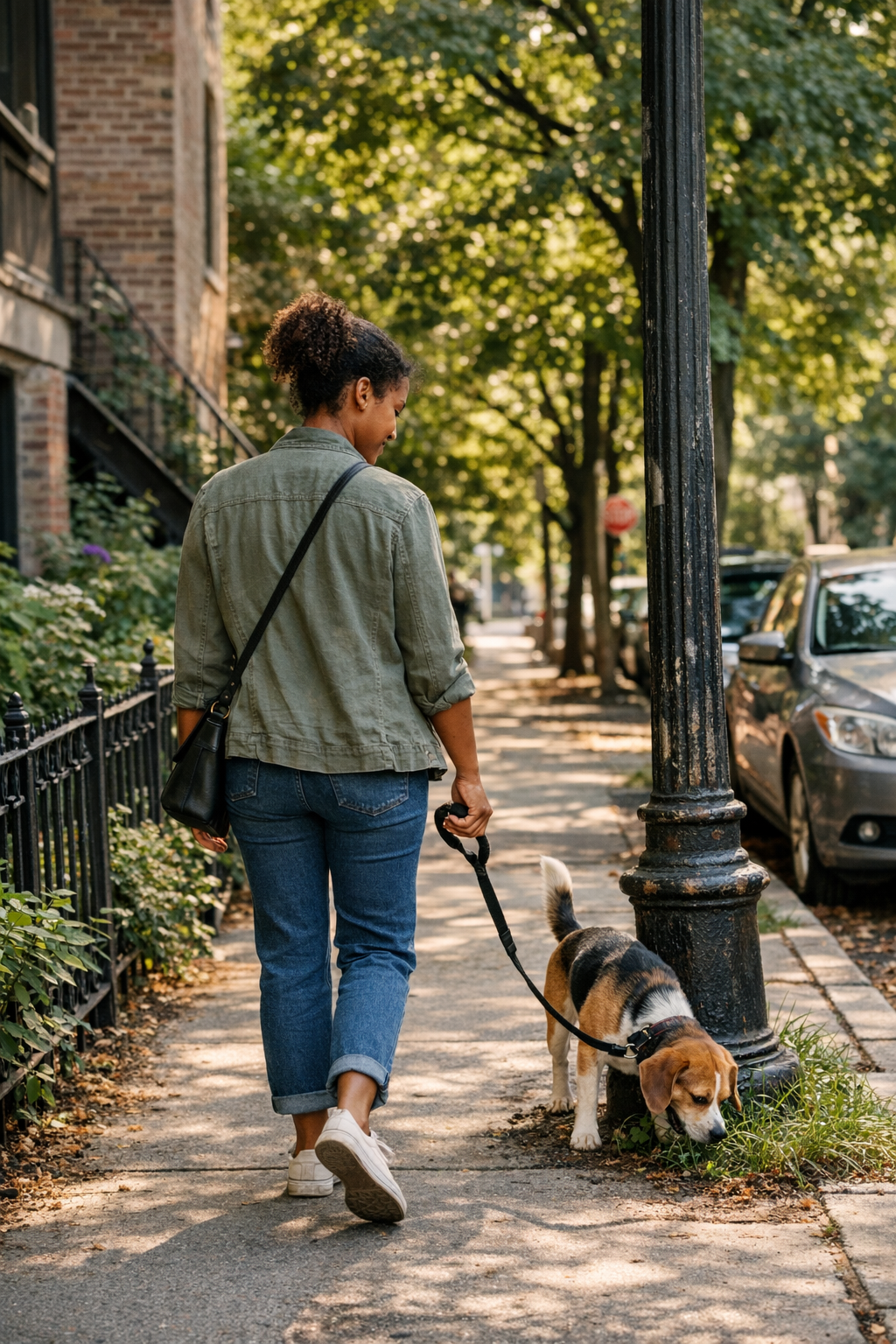
Everyday dog-walk routines stumble right at the front door. You reach for the leash—except it’s tucked beneath yesterday’s damp towel, or wedged behind an avalanche of scattered gear. Your dog bounces or circles, impatient, while you untangle leashes and dig for the right collar, the simplest outing already slowed. Before your hand even finds the doorknob, a minor bottleneck has started a chain reaction: routines turn messy, tempers shorten, and the urge to just “get outside” collides with gear that never seems ready when you need it.
The Quiet Trouble Spots Before You Even Leave
Those “two-minute leash-and-go” plans evaporate the moment your setup starts working against you. Even with neat hooks or labeled bins, daily pressure points keep returning: the towel never dries right, bags spill from their basket, and the dog keeps weaving underfoot while you reshuffle keys, wipes, or treats. The first five minutes become half scavenger hunt, half dodgeball. Small delays stack up, already stretching everyone thin before the walk begins—leaving you tense and your dog overexcited.
Each missed cue or scramble for the right gear doesn’t just cost seconds; it erodes that sense of calm you want the walk to create. Instead of leaving stress at the door, you drag it out with you, woven into the routine itself.
Why Longer Walks Don’t Always Bring Peace
The common fix—walking farther in hopes of wearing your dog out—often works against you if the setup back home keeps buckling. Rather than calm, a high-energy loop through unfamiliar blocks tends to spiral:
- Leashes knot in tight corners as you fumble mid-traffic or dodge new distractions.
- Dogs jolt at sudden bikes or barking from open windows, testing your grip and patience.
- Every hydrant or mailbox turns into a negotiation while the routine unravels.
- Back at home, your dog paces or stares by the door, unsettled instead of satisfied.
The friction isn’t just out on the sidewalk. Unpredictable routines build unpredictable energy. Instead of draining tension, a disorganized walk keeps adding micro-frustrations—reset after reset, both before and after the outing—leaving both of you more wound up than when you started.
The Surprising Value of a Short, Predictable Loop
Run the same short route a few days in a row and the effect is immediate: frayed interactions smooth out, and repeated locations start acting like signals instead of trouble zones. Leash hangs loose at the familiar curb, your dog waits by the same bush, and both of you move with less hesitation. Knowing what’s next drains away the drama.
By day three, the change is clear—even when walks stay short:
- Exiting becomes automatic instead of a tug-of-war at the threshold.
- Homecomings lose their chaos—your dog heads to the mat or towel spot, not into another lap around the entryway.
- The interruptions shrink—less scrambling for supplies, less leash fumble at corners.
Predictability—not distance—anchors calm. A fixed route maps out signals for both dog and human, shrinking the gap between intention and actual routine. Structure beats novelty when friction is high and time is short.
What a Repeated Route Looks Like in Daily Life
This isn’t about perfection. It’s about building visible anchors: pausing at the same tree, holding the leash loose for a breath, entering and exiting the house with a single reset action. Suddenly, you’re not improvising with one hand on your dog and the other rooting for wipes buried behind old mail. Instead:
- Your dog heads for the towel before mud hits the hallway rug, sometimes even waiting in the exact spot you expect.
- Cleanup supplies are in arm’s reach—because repetition taught you where to keep them, not just where they fit on a shelf.
- The walk ends with a direct move to calm—not another hop and spin at the door.
The dog picks up on these signals as quickly as you do. Routine curbs the leash snarl, the threshold dance, and the supply scavenger hunt because both of you anticipate what comes next—and friction has a harder time finding a foothold.
- Sticking spots clear up: leashes aren’t tangled, towels are where they need to be, and your movement in the entryway actually flows instead of colliding with yesterday’s mess.
- Cleanup is faster, less intrusive: you wipe paws as soon as you cross in, before your coat’s even off.
- Dog items stop spilling into your path: the walk’s end spot gathers what’s needed, not what was left from the last five outings.
Repeated Friction: Why Organization Isn’t the Only Answer
It’s the difference between a neat entryway that photographs well and one that works in motion. Labelled bins, matching hooks, and tidy towel racks are easy to assemble, but hard to live with if cleanup and prep always get jammed at the same step. If every “improved” setup still leaves you rerouting around scattered toys, blocked wipes, or leashes that never hang right, you’re just managing surface clutter, not cutting routine drag.
Functional routines show their worth only when tested: Not when everything’s in its place once, but when nothing interrupts your reach on day five.
- You grab the same leash without looking—because it hasn’t moved since the last walk.
- Your dog waits at the precise reset spot, not in the middle of your exit path.
- Wipes and bags sit at hand, not under a coat pile or behind the recycling bin.
When You Know the Routine Is Working—And When It Isn’t
Watch for proof in transitions—not in tidy spaces. Clear signals of a friction-free routine look like:
- Quick exits and entries—no clusters at the door, no gear reshuffle to get everyone outside.
- Dog flows ahead instead of freezing, darting, or hesitating at key points.
- Calm, predictable resets—not restless circling or new messes after you return.
- Supplies always right where routine needs them, not wherever they landed last.
When a routine falters—even after an “upgrade”—the warning signs return quickly: hesitation at the door, pacing after walks, a hunt for towels or a missing bag just as the mess starts. Longer or more exciting walks won’t solve it; sometimes, just keeping a familiar route and stubbornly simple gear order does more to cut chaos than any new product or corner rearrangement.
Route Boredom: When to Tweak the Pattern
Not every dog settles for strict sameness forever. If you see a dog digging in, stalling, or veering toward novelty, restore a touch of variety by swapping blocks or mixing the order of a familiar route. The test: does the tweak restore focus or break the flow? For most dogs and most days, a sturdy routine wins, but small pivots keep it from buckling under predictability’s weight.
Small Routine Anchors That Change the Whole Experience
Tiny pivots matter. One reliable anchor—a deliberate pre-door pause, a gear order that never changes, the same quick wipe at the same mat—dissolves days of scrambling. Over time, these routine points reshape:
- Pre-walk hassle turns into a rhythm—no more backward shuffling for the right leash or last-minute gear swaps.
- Walks flow smoother—navigating corners, crossing streets, or bypassing triggers with practiced confidence instead of jerking correction.
- Cleanup stops feeling like a setback—paws wiped and leashes dropped in one pass, not as a trailing chore.
Repeating these anchors doesn’t guarantee a mess-free routine, but it shrinks the gap between what you hope the walk will be and what happens most days.
Where the Routine Keeps Buckling—And Why That Matters
Identify the sticking point: a leash that always gets caught on the stair rail, a towel forever half-buried, a rest mat that drifts out of place, or supplies “almost” in reach but never truly accessible. Each small breakdown shapes how you feel about the dog routine as a whole—turning a single minor failure into a recurring frustration that crowds out any benefit the “organizer” look was supposed to provide.
The upgrade is never just new gear or prettier bins. Improvement lives in a repeated, pressure-tested routine: one that survives the Monday rush, the muddy-paw Wednesday, or the late