
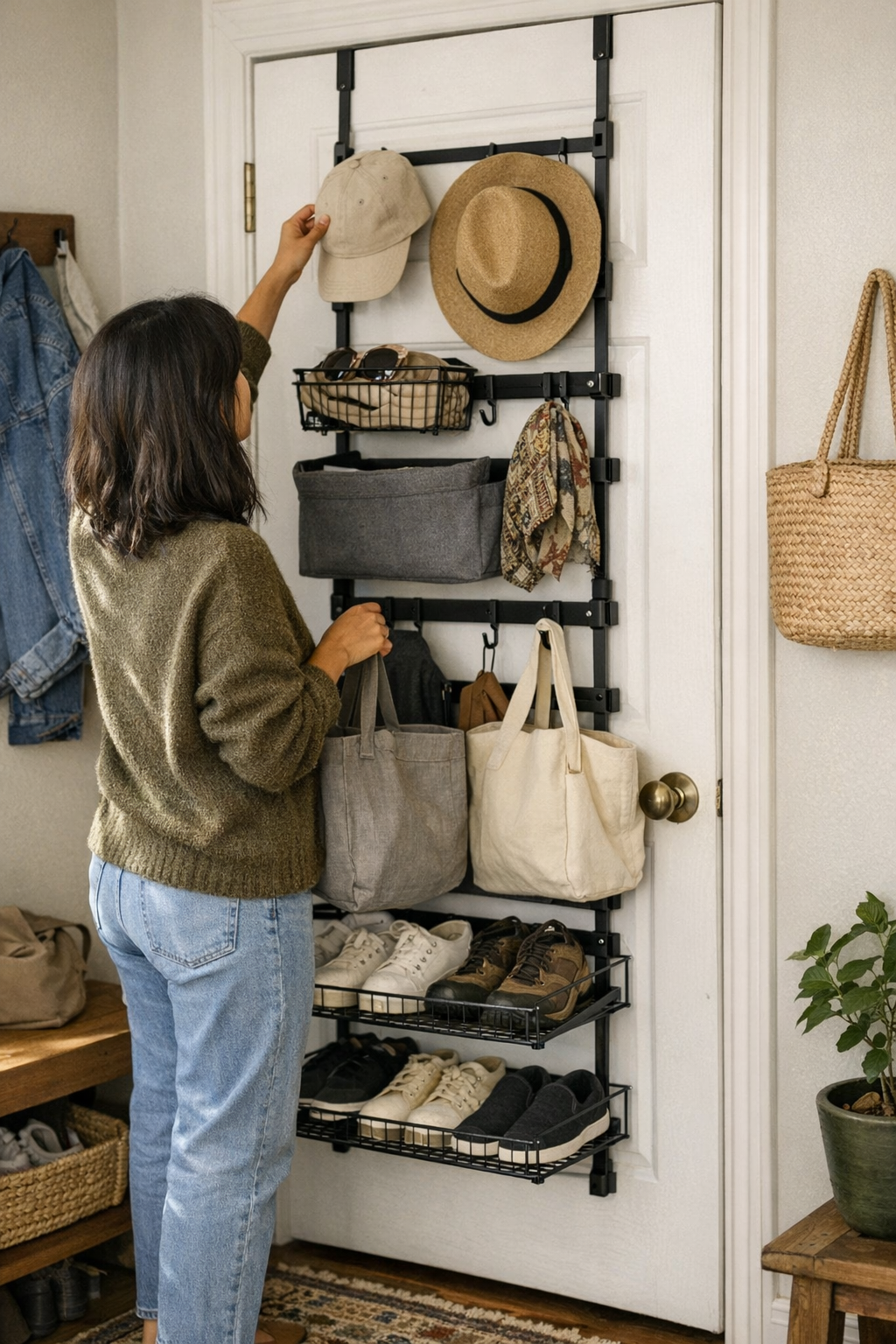
The entryway feels wide until the moment you need to get through. Step inside, and the space that seemed clear yesterday turns into a bottleneck: a half-unzipped backpack half-off the bench, yesterday’s shoes jutting across the mat, a grocery bag “parked for a moment” that’s still there tonight. The path from door to living space doesn’t just narrow—it contorts. Shoulders turn sideways to dodge a dropped jacket, and the bench that should anchor the threshold becomes another overflow landing. Every day, the clutter resets the entry—not with one big mess, but with a hundred small intrusions that slowly choke off the centerline.
Why Standard Storage Struggles Near the Threshold
If your door opens straight onto a tight zone—or if the “entry” is really a slice between kitchen, hallway, and garage, acting as gear stand, shoe pile, and pause point—the tension builds fast. Routine solutions unravel under real pressure:
- Shoe benches and floor racks create a fleeting sense of order. But as the week fills up, shoes edge past the bench, “emergency” bags stack on the seat, and you’re left navigating an obstacle course instead of sitting down.
- Wall shelves help visually, until they protrude just enough to force you sideways, or overflow piles beneath them because no one wants to reach that high for one glove.
- Catch-alls and extra baskets only shift the border—they don’t stop gear from leaking into the path.
The core problem isn’t storage capacity, but sideways spread—the constant slide of items off intended surfaces and into movement lanes. That’s when the “just set it down” pattern wins and the pathway clogs. It looks okay for a day, then builds up in patches that make even a quick trip in or out a source of friction.
Opening Up the Walkway: The Structural Advantage of Door-Mounted Racks
Most entry storage fights for floor or wall space, but a door-mounted rack uses the back of the threshold itself—a zone most setups ignore. Where benches and shelves compete for every inch, a door rack converts unused, vertical territory into active storage. That means:
- No second row of shoes tripping up the first step inside
- No sitting surface lost under handbags or random returns
- No need to shuffle piles before the door even closes
The effect isn’t empty minimalism—it’s functional clearance. Things used most often (light jackets, hats, small bags, gloves, daily shoes) move up and behind, leaving the core pathway open just enough to avoid the side-step shuffle, especially when everyone piles in at once. You notice it most during those high-pressure surges: wet school mornings, late returns, or that five-minute window before heading out again. When the path behind the door is open, movement stays fluid—even as routines get chaotic.
The Real Test: What Changes After Moving Overflow to the Door?
Door racks either hold up under pressure or quietly unravel. The difference shows in real use, after the novelty fades:
- The floor around the mat stays clear. Shoes go up or in, not sideways across the entry’s only flat space.
- Bench space returns. You can actually sit—no juggling mail or moving yesterday’s tote just to tie laces.
- Resets shrink. Instead of a 10-minute sort, it’s a quick rack-to-bag handoff after a long day. You spend less time reshuffling and more time just moving through.
Overflow doesn’t disappear—but it’s sent into one vertical zone instead of sprawling outward. That control is the difference between a habit you keep and one that keeps tripping you.
Scene Check: A Day in the Life of the Door Rack
Picture a crowded Friday: rain, mixed gear, kids and adults coming and going in shifts. Boots hit the mat, extra shoes slide into lower pouches, hats and gloves up top. Someone swings back through, grabs a backpack from behind the door—no pile teetering, nothing blocking the threshold. The main area doesn’t feel showroom-perfect, but the difference is immediate: you actually get through the door, drop-off barely slows the flow, and resets demand less negotiation.
Best Practices: What Works—and What Doesn’t—With Door-Mounted Racks
Door-mounted success depends on what you load—and what you don’t.
- Best for: Daily shoes (not every pair you own), light bags, compact jackets, hats, gloves—whatever cycles out and in most days and doesn’t weigh the door down.
- Keep off: Heavy toolboxes, winter coats, large sports gear, anything that strains hinges or feels risky to swing with the door. If you need two hands or a warning, it belongs elsewhere.
- Watch the limits: Overpacking turns racks into new clutter points and stresses door hardware. Lean categories last longer and reset faster.
- Stay disciplined: “Temporary” storage always tries to go permanent. Schedule resets—weekly, if not more—to keep buildup in check before small piles become permanent obstacles.
For high-traffic doors (quick opens, lots of hands, partial closes), check mounts regularly and use lightweight categories. Renters and thin-core doors should prioritize lighter, removable racks or alternative placements. The system works best when the load matches the threshold—useful, accessible, but never overloaded.
Making the Most of Tight Entryways Without Sacrificing Movement
The difference plays out in small, everyday moves:
- Groceries in one arm, you can still walk straight in—the drop zone isn’t a minefield.
- Kids reach hats without emptying baskets or sprawling across the mat for one sneaker.
- You pivot, turn, or wait near the threshold and still have space to breathe—even when it’s crowded or messy.
When floors and walls are packed, the back of the door becomes a pressure release. Not perfect—shoes still sneak under benches, bags still appear “just for a second”—but the pressure point softens. Cleanups shrink, reset effort drops, and the entry stops feeling like a penalty box after every busy day.
A Small Move With a Noticeable Difference
Adding a door-mounted rack doesn’t make the entry problem-free. It does shift the way entry routines work—less scatter, fewer trip hazards, and resets that finally stay manageable. The advantage isn’t just looking tidier, but functioning better where friction used to win. With the right category discipline, a door rack turns neglected space into a buffer that holds under real, repeat use—never just another surface to pile on, but a tool for breathing room.
Visit Betweenry for practical entryway storage that adapts to real routines.