
Desk organization rarely fails because of the first setup; it fails when the system can’t stand up to repeat use. By midweek, supplies meant to stay sorted—pens, chargers, stray envelopes—start bleeding across categories, choking up your work surface and slowing every grab-and-go moment. It isn’t about aesthetic order once: it’s about whether your storage actually lets you reset quickly, find what you need, and avoid the slow buildup of friction that leaves your desk unusable by Friday. The problem isn’t bad habits. It’s that most common desk storage—open bins, baskets, stacking trays—works against you after a few days. You move the same pile twice, hunt for a cord under a batch of mail, and realize “organized” only meant “temporarily forced into neatness.”
When Storage Methods Fight Your Routine
Open bins, baskets, and shelves promise easy access, but almost always create a new friction: it’s fast to toss things in, but it’s rarely fast to get them back out cleanly—let alone returned to the right category. The things you need most float to the top, blocks of unrelated stuff get nudged together, and suddenly the “stationary bin” is half cables and receipts. Retrieving one item means shifting several. Open shelves? Shift one folder, disrupt a whole row. With every cycle, your carefully sorted order slips further—until reaching for a specific pen is a mini excavation. What looked organized starts to feel more like a staging area for tomorrow’s mess.
Open systems offer visibility but deliver constant shuffling. You never get advance warning when categories merge or overflow crowds the edge—the only signal is wasted time, quick frustration, and surfaces that grow messier by the hour. You don’t so much “organize” as repeatedly delay chaos, grooming the same piles until there’s no clean return path at all. When the system asks for constant attention just to stay usable, you end up working around it, not with it.
What a Drawer Cabinet Changes in Daily Use
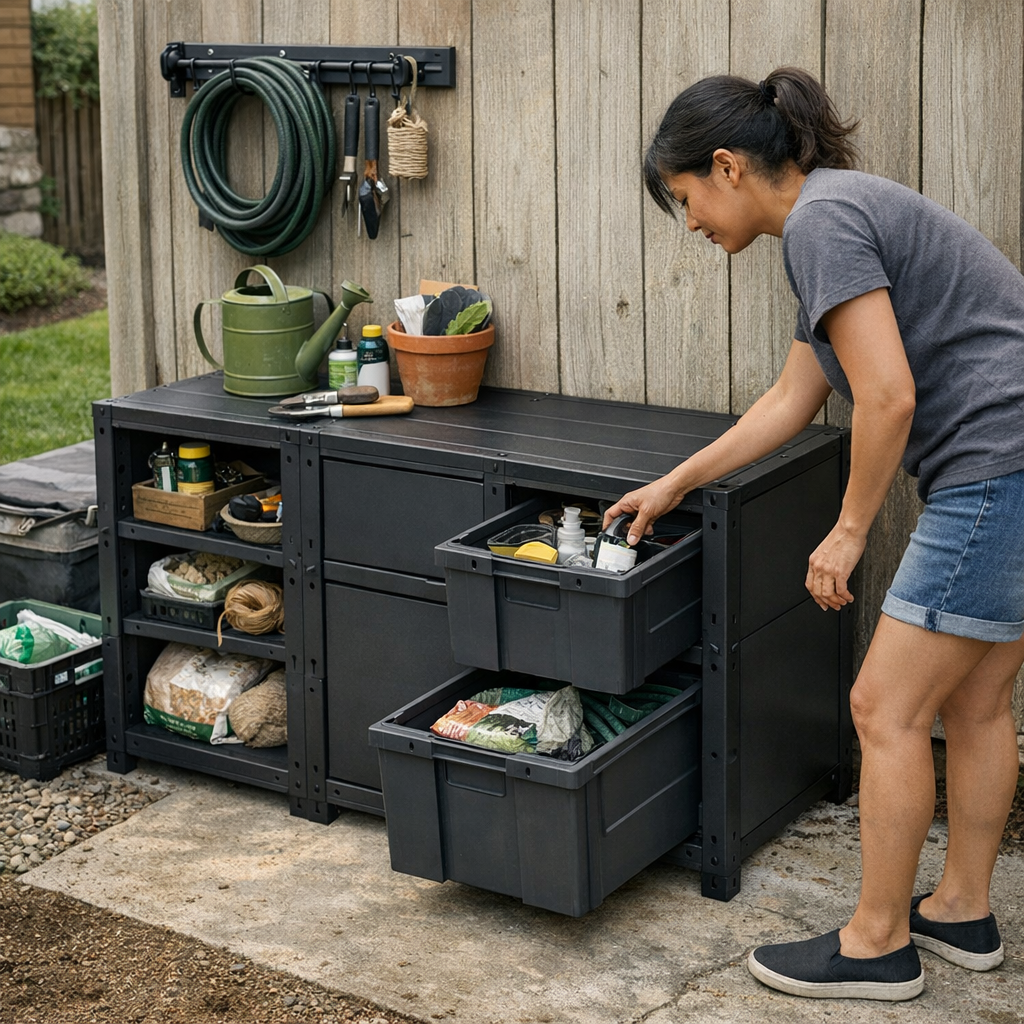
Switching from open storage to a drawer cabinet inside your desk zone shifts the pattern entirely. This isn’t just about hiding clutter; it’s about controlling categories, keeping supplies in predictable lanes, and letting the surface recover with almost no effort after every session. The biggest difference isn’t seen in a “before and after” photo—it’s in the dozens of micro-decisions you stop noticing. Pens and notes find their way back to the same drawer. Chargers don’t drift between baskets and counters. That weird receipt doesn’t swallow your to-do list. What’s gone isn’t just the mess, but the repeated double-handling that ate up your Monday mornings and Thursday afternoons.
Reducing Double-Handling and Decision Fatigue
Drawer cabinets force a structure on your routine that open storage simply can’t. Each drawer acts as a line against category bleed: paper goods stay confined, tech charges return to their slot, overflow finally remains contained. The reset at the end of a day? Not a 10-minute sweep-and-scramble, but a one-minute routine where everything lands home in three movements. No jamming piles so boxes close, no shuffling items to hunt for a buried USB drive. The unwelcome surprise is gone; the return loop shrinks. You spend less energy deciding “where does this go?” and more time actually working—or just stopping for the evening without a looming mess waiting for next time.
Stability Versus Sprawl
Baskets and open shelves almost invite sprawl—new stacks on top, sideways piles, useful tools drifting to the “neutral zone” by default. Drawer units resist this drift. Separation gets enforced every day: open a drawer for stationary, nothing else moves; close it, no new pile is born. Over time, this means missing items stop lingering on the desk edge or under a loose document. The work surface stays functionally open, not just cosmetically clear for a moment. That orphaned highlighter or lost cable is contained, not adrift and slowing you down.
Real Scenes from the Office Zone
End of the day: your tray is buried, cords snake across notepads, new receipts pool over half-completed lists. With only open bins or shelf lines, “putting away” is usually just starting a fresh heap—one you’ll sift through again tomorrow. But a drawer cabinet interrupts that spiral. Chargers drop into their compartment; notes and loose pens in theirs; receipts where they won’t interrupt the next task. This one-minute reset turns what would be a growing disaster into a stable, almost invisible routine. You spend less time “tidying” and avoid starting every morning with a shrug.
Need to grab a notebook or sticky notes before a call? In a mixed bin, you dig, disrupt, and maybe settle for what’s on top. In a drawer setup, each category remains isolated: open, take, close—nothing else slips out of place or crashes to the floor. The absence of inconvenience is what stands out: you stop noticing resets at all, because they barely register in your workflow.
The Footprint and Flow Dilemma
Even the best storage can work against you when it starts blocking movement or quietly growing into the room’s “prime real estate.” Floor baskets escape their corner, spreading as you reach for what’s wedged behind. Shelving units creep up the wall, but fill up with so many layers that the front row always blocks the back, slowing every search. Order might look intact, but the path through the space narrows, and you pay with time—not just in steps, but in micro-delays and awkward detours.
Positioning a drawer cabinet directly beneath the desk—especially a rolling option—keeps storage anchored and minimizes accidental spread. The footprint remains tight; you open only what you need without skirting piles or shifting furniture. In tight spaces, claiming one reliable zone for storage (instead of letting bins multiply) keeps the room usable. Movement isn’t blocked by your own organizing attempts, and the “reset cost” never grows beyond reach.
Making Resets Less Taxing
The real test of any storage setup is the reset: how hard is it to bring order back after a messy, real day? In practice, magazine-perfect setups collapse because they can’t absorb everyday use. Drawer cabinets with deliberate zoning keep categories stable, so the return flow is frictionless even when you’re in a hurry. There’s less chance of stashing items in the wrong places, less likelihood that overflow clogs a usable surface, and fewer excuses to let entropy win.
This isn’t about making the space perfect—it’s about building a setup that stays workable, even under pressure. Drawer units aren’t immune to overfill or lazy returns, but the system resists category slide and keeps daily slowdowns at bay. No more hunting for missing items or resigning yourself to an end-of-week “desk rescue.” The reset becomes so fast it barely interrupts your momentum, freeing up energy and time for actual work—rather than the never-ending drag of sorting through yesterday’s leftovers.
Small Shifts with Real Impact
“Organized” means little if it can’t survive daily churn. The value is in a system that matches real movement: things come in, things go out, but the categories and surfaces recover with minimal effort. A correctly placed drawer cabinet does more than contain clutter—it restores the work zone with almost no mental effort, session after session.
Test it: move one chronic overflow—chargers, pens, whatever piles up first—into its own drawer and see if retrieval and return change. Does the surface stay clear longer? Can you find what you need without shuffling a buried pile? The answer reveals whether your storage is helping your day or just marking time until the next frustrating reset.
Find storage solutions that work with your space and routine at Gridry.