
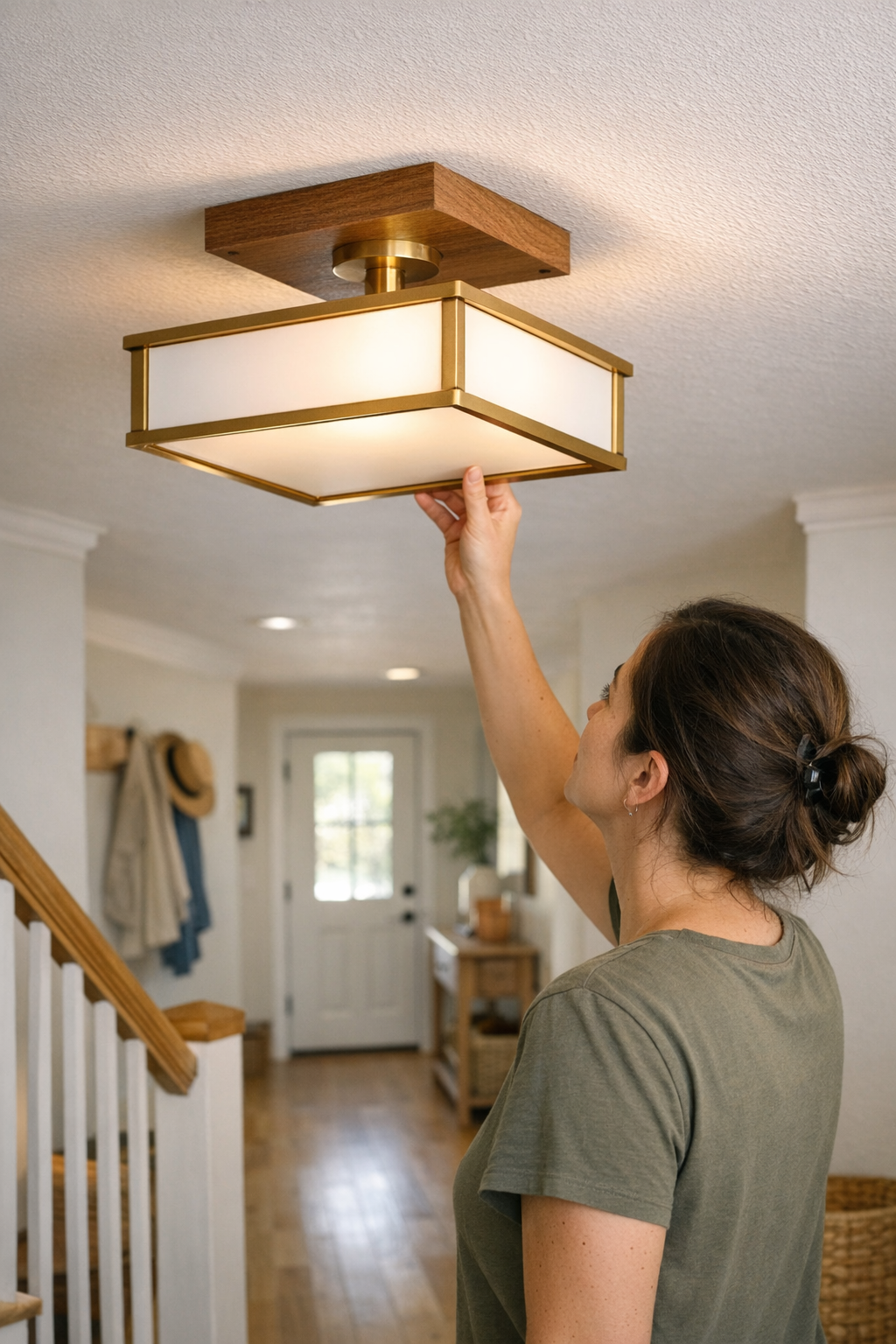
If your hallway or stair light wobbles or shifts even slightly, that’s more than a minor annoyance—it’s the first sign your lighting setup might be quietly failing where it matters most: everyday movement and safety. Most people trust a flush-mount ceiling light or wall sconce just because it hugs tight and looks right on day one. Glance up after installation and you see clean lines, no visible flaws. But fast-forward a week: after dozens of door slams, late-night steps, and regular dusting, that “perfect” fixture begins to betray you. Edges tilt. A shadow stretches unevenly down the stairs. What once looked correct now interferes with each routine—reminding you that in high-traffic areas, a loose or overtightened box screw is more than a cosmetic detail. It’s the weak link behind every sudden flicker, shadow imbalance, or extra moment of caution at the landing.
A Fixture Can Look Secure—and Still Cause Trouble
Initial appearances don’t withstand repeated use. A flush-mount ceiling light installed in a busy entryway might seem solid. The lines align with the ceiling, the light feels bright—but only for the first quiet morning. Give it a week of real living, and small failures show through. Hallway and stairwell lights, in particular, absorb every bit of building vibration, every hurried footstep, every small collision on a narrow pass. It’s then that the screw tightness at the junction box—hidden, often ignored—starts to matter more than the bulb’s wattage or the fixture’s style.
Imagine leaving for work: you shut the door behind you, sending a faint tremor down the hallway wall. The once-straight sconce now leans ever so slightly, adding a skewed shadow to your path. If you rely on steady illumination to spot a stair edge or keep a corridor clear, small mounting flaws escalate instantly from invisible to distracting to potentially dangerous.
Small Mounting Errors Become Big, Repeated Problems
The difference between rooms that look bright and those that truly feel safe or comfortable comes down to shadow control and mounting grip—not just brightness specs. In places like laundry nooks, mirror zones, and high-traffic corridors, every routine—turning the light on and off, brushing past, wiping dust—gives loose hardware the push it needs to go from subtle problem to full distraction.
- You hit the stairs, arms full. Where you once saw each tread sharply lit, there’s now a dark band right where your foot lands—forcing you to slow down and hold the railing tighter.
- Getting ready at the mirror, you lean in for a close shave. A subtle fixture tilt splits your face with uneven light, making you squint and second-guess the result.
- Crossing a narrow hall, your sleeve nudges the sconce. It wobbles a fraction, just enough to raise the question: will it flicker, or even drop, the next time someone hurries by?
In all these small moments, what seemed secure and seamless when new has drifted out of alignment with everyday needs—turning lighting from an invisible helper into a nagging overhead flaw.
Why Screw Tightness Dictates Fixture Longevity
Lighting that guides your steps—especially in corridors, stairs, bathrooms, and work zones—relies on hardware that handles repetition. If junction box screws are left loose, the fixture shifts with every small vibration or bump. Over-tightening has its own risks: stripped threads or cracked boxes that may look fine at first but set up future problems beneath the surface. The optimal grip isn’t just “tight”—it’s secure, without stressing the mount or risking silent breaks inside the wall or ceiling.
The symptoms unfold bit by bit: a ceiling light that sags, a sconce whose shadow creeps off-center, a sudden new flicker near the entryway. Each change signals that structure is failing in step with your day-to-day routines, not just your design preferences.
Building Routine Lighting Checks into Real Life
Thirty seconds once a month—confirming both mounting screws are firmly but not forcefully set—prevents the shadow lines, flickers, and mounting drift that turn reliable fixtures into recurring frustrations. In the practical world of lived-in spaces, this habit is what keeps stair landings evenly lit, mirrors shadow-free, and busy corridors clear of distracting tilt or glare.
Try this: after a month of consistent screw checks in a main hallway, shadow bands on the third stair disappeared. The landing stayed visible, no matter how much the door slammed or kids went running. You stop noticing the light because it simply works—bright enough, steady enough, no longer a cause for slowing down, squinting, or navigating around weird shadows.
What to Watch For
- Flickering or dimming lights—especially if they appear days after installation or regular use has begun.
- Visible tilt or sag after minor cleaning, door vibration, or being brushed in a tight hallway.
- Noticeable movement, noise, or shifting when the fixture or nearby structure is disturbed.
Addressing screw tension before these symptoms grow means protecting both your nerves and your wiring. Most mounting flaws are still fixable if caught early—long before they become safety or repair projects.
Small Fix, Big Impact: Staying Ahead of Hidden Lighting Stress
Lighting isn’t just about looks—usability lives or dies by how well the fixture holds up under real use. A loose mount means shadows where you want clarity, distraction where you expect safety, and mounting headaches you can’t always see until a flaw interrupts your routine. These aren’t just annoyances—they shape how you move, work, and relax inside your home.
Flush mounts and hardwired wall lights in stairways, corridor bottlenecks, or busy bathroom zones require a level of maintenance that matches their exposure. A simple monthly check delivers far more than just tidy lines: it preserves clear footing, balanced visibility, and the everyday ease you expect in well-lit indoor spaces. Don’t let mounting problems blend into the background—catch and fix them while your lighting still works for you, not against you.