
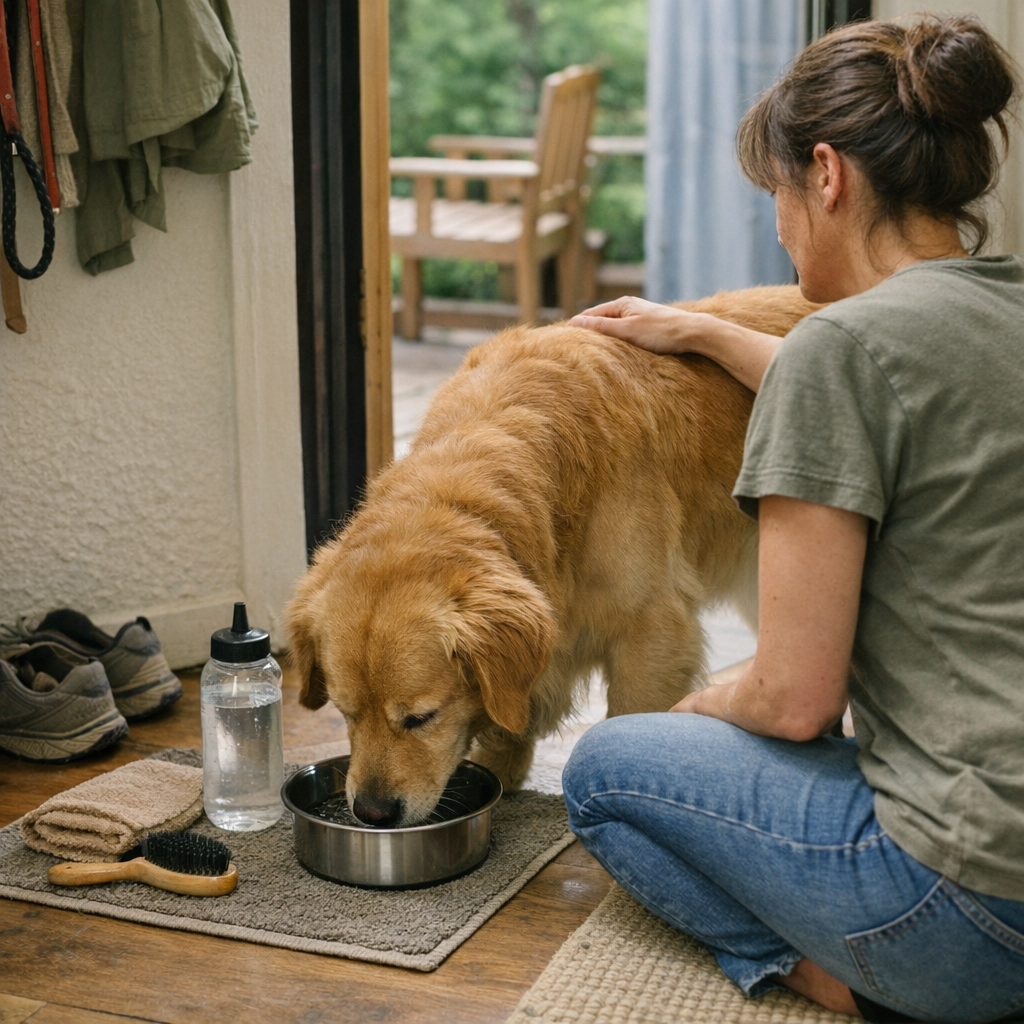
Daily pet care rarely collapses from one major mistake—it wears you down with dozens of routine chokepoints that pile up in plain sight. A setup that seems fine in the morning turns clumsy by lunch: reaching for a water bowl wedged behind a bag, doubling back to fetch a refill bottle left in another room, hunting down the missing towel you meant to keep near the feeding spot. Every step looks simple on its own, but each small disruption adds more friction until the entire day feels scrambled by repeat detours. Left unchecked, these everyday interruptions turn the supposed basics—feed, water, quick clean—into recurring stutters that pull attention from everything else.
When Small Steps Keep Interrupting the Day
Picture a typical friction point: your dog’s water bowl sits by the kitchen entrance, but the top-up jug waits across the hall in the laundry. The urgency is low, so the extra movement becomes background noise. But each time you pause your work, walk the length of the house, and dodge yesterday’s laundry or your cat sprawled in the path, a ten-second refill becomes a mini obstacle course. The true cost isn’t the chore itself but the repeated micro-delays: lost momentum, tasks left half-done, the sense of the routine dragging at your afternoon.
Then comes the quick sweep-up after feeding, only to discover the hand broom isn’t where you left it—it migrated to the entry during last night’s muddy-paw scramble. With the tool out of reach, stray hair drifts under cabinets or scatters from rushed “next time” promises, forcing extra cleanup passes just to get back to baseline.
Basic Supplies: There, but Never Right When Needed
Having the right tools but never at hand is a hidden drag on daily care. Cabinets and bins look organized for guests, but when cleanup means unstacking a food bag to grab a towel or squeezing your hand past other supplies just to get a wipe, fast resets stall. Instead of a quick towel for a water ring, you’re kneeling on a damp floor fishing through secondary storage—meanwhile, the spill seeps under the cabinets or into walkways.
Even well-placed items can undermine themselves: a feeding mat that keeps splashes in check is less helpful if the bowl slides under a lip or drifts behind a table. Now, the contained mess hides inconveniently, meaning you’ll miss a spill or have to reach further later, turning a supposed fix into just another item to manage.
How Placement Shapes Pet Care—Function Over Appearance
Clean setups aren’t always functional. Hooks for leashes by the door mean after-walk gear is accessible, but if the wipes for muddy paws sit in the bathroom, you’re tracking grime farther inside for cleanup. Half the care flow is simplified, but the other half adds extra steps, undercutting the intent of the system.
“Temporary” placements—grooming brushes on a window ledge, food scoops lost on a counter, wipes abandoned by the stairs—become repeat barriers. Every return to these items requires a fresh reset, and background clutter quietly spreads while you juggle other tasks. Resetting once never means reset for the day.
Patterns That Quietly Slow Down Your Flow
Over days, one pattern emerges: certain items always missing at the wrong time, or the same spot requiring double work. The water bowl runs empty before noon—again—because the refill bottle lives a room away. The brush for a quick fur sweep spends more time in the hallway than near feeding. You find yourself stepping over the same towel or detouring around a tangle of toys, all because there’s no stable, in-place “home” for resets.
These friction points stay invisible in an area that looks tidy—or freshly “organized” for visitors—but a single recurring weak spot (bottle too far, towel never close, brush missing yet again) keeps the whole care process off-balance. Cleanup gets delayed; wipe-downs happen late or not at all; the space never quite stays as clear as it should.
Simple Placement Changes, Real-Life Results
Changing the location of a single supply—parking the water refill bottle next to the bowl or mounting a cleaning towel on a hook by the feeding mat—breaks the repeat-delay loop. Now a refill is a three-second detour, not a housewide shuffle. Water gets wiped before it spreads, not when it’s already soaked the path. Cleanup tools stored exactly where the mess appears turn resets into a single-step habit, instead of another pileup of extra movement and half-done fixes.
After feeding, you sweep up crumbs because the broom lives within reach—not in another room, not under something else. When supplies match the real flow of care, you don’t leave routines “almost finished.” Instead, the area is actually in reset condition, genuinely ready for the next round rather than stuck in endless catch-up.
Care That Feels Finished, Not On-Repeat
The underlying gain isn’t the time “saved” on a chore—it’s freeing the entire daily flow from repetitive drag. When care steps are handled once, not revisited due to missing or misplaced basics, those routines stop interrupting your day. You’re no longer derailed by hunting for a brush or reacting late to a hidden spill. Pets get what they need, you keep your momentum, and the background effort required to maintain order finally drops.
The line between surfaces that look managed and routines that actually run smooth? It starts with setups that keep every basic in true reach—not just “nearby,” but unmistakably ready mid-flow. Shifting placements to fit real-world usage—not just storage for show—cuts down the hidden friction that accumulates when ordinary pet care drags on repeat. Small changes matter most before the routine grinds, not after. Care stays on schedule, and every part of the job gets done—without the day’s pace being held hostage by misplaced gear or half-finished resets.
For practical ways to simplify your setup, visit calmpetsupply.myshopify.com.