
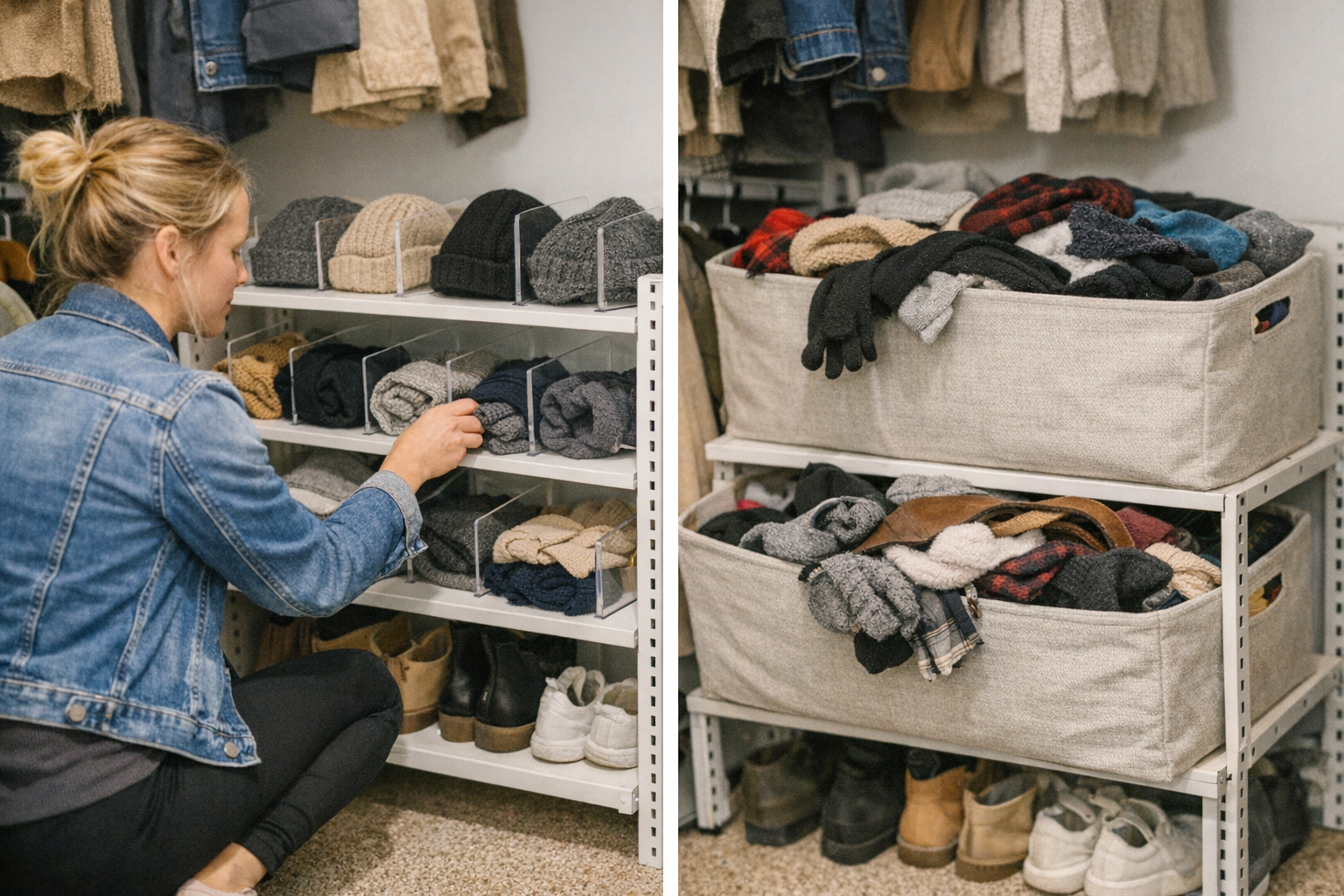
Walk into a freshly organized closet and everything looks dialed: shelves in rows, socks paired and sorted, jackets hung just so. Give it seven days. After real life rolls through—quick mornings, muddy shoes, rushed laundry—what felt like lasting order starts quietly crumbling. Socks creep into the t-shirt zone. Scarves are swallowed by bins. The space is “organized,” but suddenly everyday access is slow, messy, and frustrating again. This is the real measuring stick for any storage setup: not how perfect it looks at the start, but how it survives daily pressure. Because real storage friction isn’t for show—it’s hunting for matching gloves in the dark, untangling gym shorts from a stack right before work, or hunting through the same bin again and again, each time finding less and less order left.
The Relentless Slide: Why Surface Order Fades Fast
It’s easy to think: add bins, use baskets, and clutter disappears. But most home storage fails in the details. Deep bins and open baskets swallow small items and let clutter multiply undetected. Reach for one shirt, two others slip; grab a hat, and half the pile shifts. Categories melt. That clear section for scarves now hides socks, sunglasses, receipts—a slow-motion disaster under a tidy surface.
And when the system bogs down, so do your routines. Getting ready turns into an obstacle course. Instead of a ten-second grab, you spend a minute playing clothing Jenga. Quickly putting things away means tossing—not sorting—because the effort has outgrown the payoff.
Hidden Breakdowns: When “Looks Organized” Stops Working
The trouble usually isn’t obvious until you’re living in it. You glance at your closet, see neatly stacked shirts and labeled bins, and think it’s under control. Then you face reality:
- Your most-used items slide behind stacks or vanish at the bottom of bins.
- Piles on open shelves slump and sprawl after a single hurried morning.
- Random extras—yesterday’s hat, today’s incoming mail—creep into any available space until sections blur together and roles are lost.
Here’s what most systems miss: deep bins are an open invitation to the “toss and forget” habit. You never see the boundaries, and small category leaks are invisible until it’s a mess. Left unchecked, Monday’s tidy shoe bin quietly transforms into Friday’s collapsing pile.
Why Visibility—and Containment—Change Everything
The real shift? Shallow shelves and sturdy dividers create physical, visible boundaries for your stuff. Every scarf, t-shirt, or shoe has a home that can’t quietly overflow. You see when a category is maxed out. You feel when a section gets tight—well before it devolves into chaos. Instead of piles collapsing, you get crisp lines. Instead of mystery spaces, everything is in plain sight.
This isn’t about getting every label perfect—it’s about making it impossible for piles to silently mushroom. Think about opening that hallway closet and seeing gloves upright in their own slotted space, not trapped under a random heap. When every division is visible, clutter doesn’t stand a chance to sneak up on you.
Living With—And Without—Boundaries: Three Scenes
Scene one: Hallway chaos remake. Two oversized bins for hats and scarves work for a week, then new stuff just piles on top. By Wednesday, you’re shivering in your coat, yanking out half the bin to get to winter gloves you know are in there—somewhere. Boundaries have vanished, and so has your patience.
Scene two: Closet collapse in motion. Shirts were color stacked, but after late-night laundry, the lowest pile leans and sags. Accessories spill, socks wander into shirt territory, and grabbing one thing means disrupting everything else. Now “put away” just means “hide the mess and hope for the best.”
Scene three: The entryway invasion. Shoes, mail, grocery bags—all competing for a few open cubes by the door. Lacking dividers, the pile quietly creeps outward. Midweek, tidy lines are gone; just finding one sneaker requires sifting, and the next reset is a full do-over.
What Changes When You Get Sectioning and Depth Right
Swap out those deep bins and sagging shelves for shallow, well-divided shelving and you’ll feel the difference in a day. In the hallway closet, each item stands visible and upright—nothing slipping down or getting lost. Everyday use no longer means undoing your whole system. The “grab and go” is finally just that.
The practical move: Match shelf depth to what you actually store. Most accessible: shelves around 10 to 12 inches deep—enough for a single file of folded shirts, shoes, or gear. With fixed dividers, you keep each category tight and upright. No more disappearing gloves or T-shirts buried behind last week’s laundry.
Spotting the Signs: Is Your Storage Failing in Practice?
You don’t need an expert to tell you when a system’s failing—your routines will let you know. Watch for these tells:
- Grabbing one item forces you to move, shift, or rebalance the rest.
- Sections slowly morph: the mail shelf becomes a dumping ground for keys, chargers, and mystery objects.
- Edge stacks slouch and never stay in line.
- Each reset takes longer, and clutter always rebounds by midweek.
These are daily reminders that visible limits and better design aren’t just extras—they’re necessary if you want storage that actually supports your routines.
The Payoff: Smoother Days, Faster Resets, Fewer Storage Regrets
Once you replace deep, shapeless containers with clear sections—just deep enough for daily essentials—everything changes. Most-used items stay findable. Categories don’t bleed. Resetting takes minutes, not afternoons. And you don’t have to “fix” things every night for the closet to work the next morning.
It goes beyond surface-level tidy. Your storage actually fits into your day—so you spend less time digging, reshuffling, or resetting, and more living in a space that finally stays as usable as it looks.
Shop ClosetWorks for practical storage that makes daily routines easier