
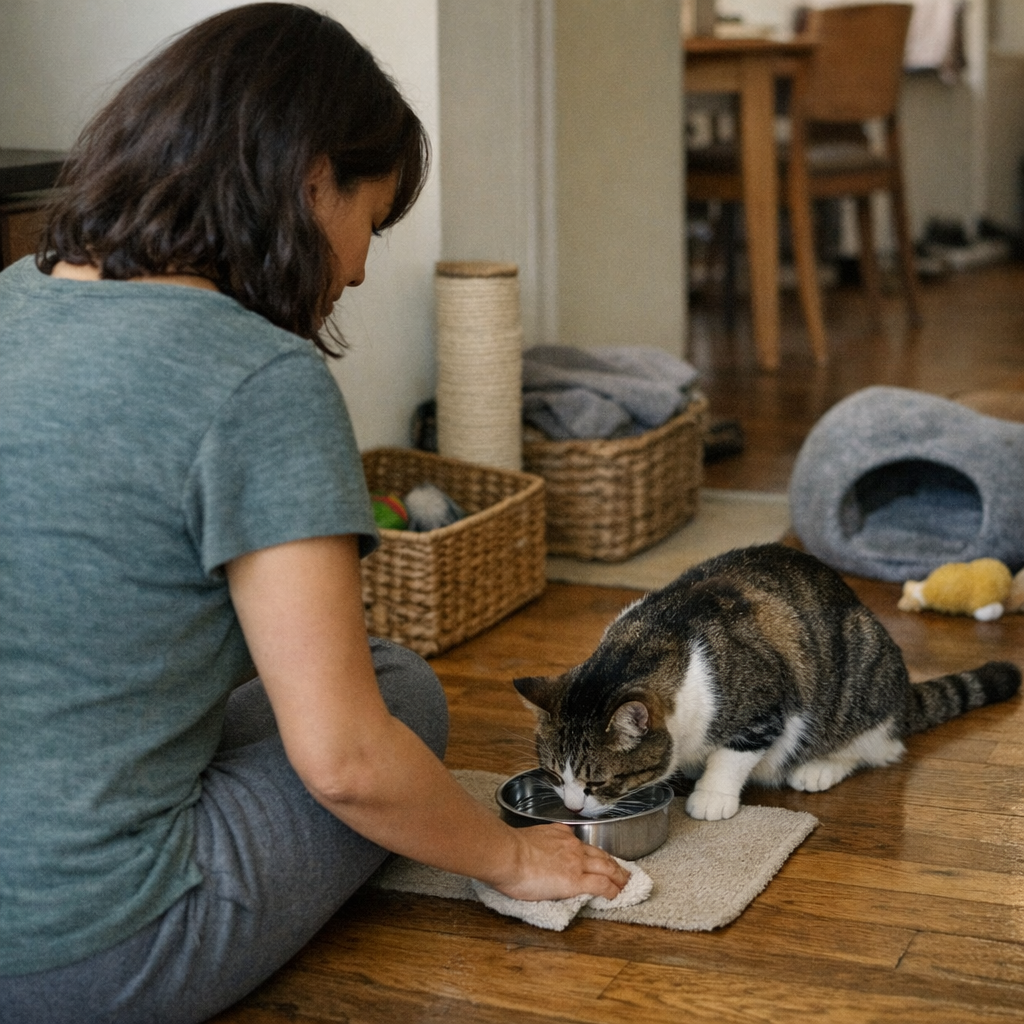
Stockpiling extra bowls, mats, or scratchers for your indoor cat rarely makes daily life easier. Instead, every added “just-in-case” item builds invisible friction: an unexpected shuffle when you reach for the bowl, a mat edge under your heel, or another rinse before coffee because puddles appear in more than one spot. The problem isn’t surface mess—it’s how every extra, overlapping supply turns a quick routine into a clumsy, multipart reset. When each refill or wipe means moving more than one thing, your setup isn’t protecting you; it’s slowing everything down.
When More Isn’t Better: The Hidden Costs of Extra Bowls and Mats
Piling on extra mats, doubling up on water bowls, or adding that “backup” scratcher after one bad spill seems practical. But these surplus essentials refuse to fade into the background—they anchor new chores straight into your routine. You’re not prepared; you’re multiplying upkeep.
Consider the water station: two or more bowls placed for “coverage” now demand double the daily cleaning. When your cat drinks messily, damp zones don’t concentrate—they spread. You find yourself down on the floor, wiping puddles at each bowl, negotiating where mats overlap, and discovering trapped fur and grit in seams that weren’t there before. Each extra mat, even if meant to “help,” collects its own layer of tracked litter and crumbs, hiding small messes until the next shift or slide exposes what’s gathered underneath.
The Overpacked Setup: Organization That Slows You Down
You line up bowls, stack grooming brushes, and sort toys into baskets, expecting order to translate to easier maintenance. But with each so-called improvement, the flow breaks up:
- A feeding mat that extends too far becomes a constant obstacle, nudging you sideways during a refill or snagging your sock as you cross the room.
- Extra toys drift outside their bin, lingering under couches and shelves, forcing you to crawl or reach before you can sweep or vacuum.
- Multiple litter trays create a network of blockades—each one a separate checkpoint needing scooping, disposal, and the occasional rescue of stuck paws or spilled granules. Instead of providing “coverage,” they add steps and slowdowns at the points where you should move freely.
The result: even if your home looks orderly, every routine—feeding, cleaning, resetting—requires more shuffling, more bends and checks, and more decisions. Skip one step and you’ll notice how crumbs, fur, or stray litter migrate beyond their zones. The labor is divided, but the effort is anything but light.
Scenes From the Overpacked Home: How Cluttered Setups Interrupt Daily Flow
Reaching for Water, Stopping for the Mat
Morning routines should flow, not stagger. Instead, as you reach for your cat’s bowl, you step on a curled mat corner, crouch to fix it, then pivot around a second water bowl wedged into your walkway. Each time, what should have been a single smooth action is split by tiny course corrections and another spot to wipe. The tradeoff becomes immediate: every extra fixture claims time and space you never meant to spare.
The Wandering Toy Parade
Rotate in new toys and you’ll soon find old ones trailing just out of sight—wedged under furniture, hidden by mats, abandoned halfway to the door. You plan to reset after playtime, but it’s never a clean sweep: two toys back in the bin, one trapped again, and another delaying your walk to the kitchen. Instead of enrichment, the overflow shapes a daily scavenger hunt, and there’s never quite enough clear floor for human or feline to wander without a pause.
Litter Zone Mission Creep
Overlapping mats and doubled trays look like protection until cleaning day arrives. Each mat needs to be lifted then replaced in just the right spot to avoid overlap—otherwise, seams open up, catching stray litter and dust. It’s never just a sweep: it’s a lift, a nudge, a check for what’s slipped between corners, then another reset. Delay once and the next cleanup is that much worse: granules travel, dust escapes, and soon the “protected” area leaks mess two rooms away.
Blocked Access in Small Spaces
When living space is tight, every extra cat supply claims territory. Storage meant to help becomes blockade: a mat asks to be moved before you can reach the cupboard, a bowl blocks the quick path to retrieve groceries, and a scratcher wedged beside the bench is one more thing to step around with arms full. The room photographs tidy, yet you feel always one item away from a clear task.
The Subtle Difference: Looking Organized vs. Feeling Effortless
Perfect rows of bowls and mats corner-to-corner feel satisfying—until reality sets in. The eye likes symmetry, but your hands and feet care about reach and reset rhythm. If a feeding area takes extra steps or a litter zone becomes harder to sweep, the point of order is lost. The practical test isn’t how straight the lines are, but whether you hesitate before resetting because it’s one step too many. If you start leaving cleanups for “later” or dreading refills, your structure isn’t serving you—it’s winning on looks and losing on use.
Scaling Down: Trimming to Essentials for Repeatable Upkeep
Streamlining isn’t purge-for-purge’s sake. It’s about stripping out the pieces that interrupt flow so daily recovery stays genuinely easy. What shifts?
- One bowl, not several: Unless you need two for medical or multi-floor reasons, one bowl is faster to clean and keeps spills contained. Cleanup shrinks without the double reach or double risk of sour water.
- Mats sized to fit, not layer: A mat that lands cleanly just seven inches beyond the bowl stops splash spread without overlapping trouble zones. The right fit leaves less seam for crumbs, less edge to trip on, and fewer hidden patches for fur and dust.
- Five to six toys, not a rolling surplus: With just a handful rotated in, each reset is a real reset. No endless hunt beneath couches, no pile-ups delaying your evening walk-through.
- Tools stored for grab, not display: Hide grooming supplies within arm’s reach, not stacked out for show. You halve surface cleanup, cut visual clutter, and lose the temptation to skip resets when everything feels manageable.
Real-World Reset: How Simplifying Makes Every Routine Smoother
The difference shows up fast: the feeding zone is clear, the bowl lifts in a second, and wipe-downs become instant, not tasks you debate putting off. The water refill doesn’t trigger a chain reaction of shoves and resets. You find yourself keeping up with maintenance almost by accident—because nothing stands in the way. A comfort zone that’s easy to tidy survives real use. Attempts at “full coverage” at best add surface order but at worst stack up chores that slow you down every single day.
Spotting Setup Trouble Before It Sticks
Small friction points rarely announce themselves. Instead, hesitation builds: the extra moment before you tidy, or your hand pausing when a tool is buried under an unnecessary pile of others. Red flags for a setup that’s undermining itself:
- Having to move a bowl or mat to get to cleaning wipes or brooms
- Finding grooming tools tangled or buried instead of ready to grab
- Walking an indirect route around spaces claimed for feeding, litter, or scratching
- Noticing toys, blankets, or comfort items drifting from their base more than they stay put
Whatever adds one more shuffle, step, or search isn’t bringing you control; it’s assigning you repeat work.
From Appearance to Ease: Creating a Setup That Lasts
The right StillWhisker setup isn’t measured by completeness, but by how little it interrupts day-to-day living. The right lineup is easy to reach, fast to reset, and doesn’t cramp the rest of the room. Organization should make recovers effortless, not artful. The win is quiet time saved, not another supply waiting “just in case.”
Find practical setups, resets, and structures for real indoor cat life at StillWhisker.