
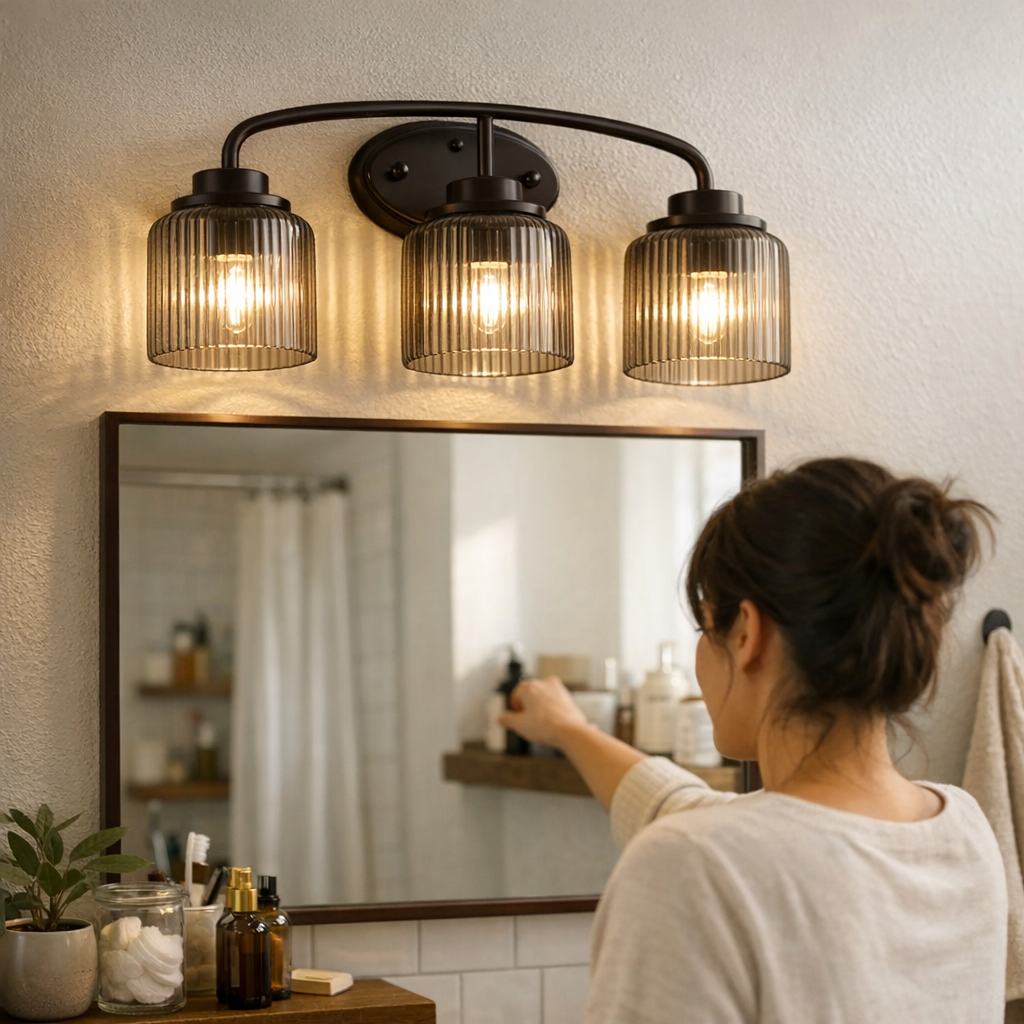
The weakest link in your lighting isn’t the bulb—it’s the screws and anchors you barely look at. Fast-forward two weeks after installing that flush mount, semi-flush, or wall sconce with whatever hardware was lying around. You flip the light on as you cut through a narrow hallway. The base wobbles every time you brush past with laundry. The fixture, which looked level on day one, now sags just enough to throw an odd shadow onto the stair tread—right where you expect clear footing. This isn’t just a crooked look: weak, mismatched hardware quietly unbalances the whole room’s lighting flow, turning safe movement into a second-guess and adding friction to basic routines like cleaning or grooming.
Where the issue shows up first: the spaces we actually use
Problem lighting rarely fails in a calmly lit, empty room—it surfaces in hallways at rush hour, bathrooms mid-routine, or stairwells during dusk. The strain isn’t theoretical: one wrong screw and every hallway crossing, quick hand wipe near a sconce, or laundry pass jars the mounting, shifting shadows onto mirror edges or blurring the outline of each stair. The passage looks fine on paper, but your routine tells the real story. Shadows pool at the landing, a sconce tilts a few degrees, and what should be a quick walk turns into an exercise in sidestepping dim spots or readjusting a spinning plate.
Carrying a full basket down the hall? The brush of your elbow and suddenly the ceiling light, once central, pushes a slant of light across your feet. Or, pause halfway down the stairs—one darkened tread appears as a screw slips; now, the boundary between safe step and shadow is a guessing game. These aren’t rare mishaps. In any space where light serves as your pathfinder, poor hardware multiplies minor annoyances into daily hazards.
The subtle warning signs: “bright enough” but never settled
Failure starts small. A vanity bar wobbles as you clean near the mirror. The fixture at the end sags just enough to put half your reflection in a dim strip while the other side glows. Corner-mounted lights flicker at the slightest movement, glare spikes along a hallway wall, and faded shadow lines creep over the bathroom counter no matter how many times you adjust your routine. The room isn’t dark—but the lighting is always off-balance, forcing you to lean for better coverage or avoid glare that shouldn’t be there in the first place.
The story behind the fixture: why “random screws” come up short
Not every screw anchors like a factory-matched set. “Fits the hole” doesn’t guarantee it stays flush in drywall or grips through tile. Too-short screws mean the fixture plate never sits tight; thick, coarse threads split old plaster, and the anchorless install pulls free with each routine nudge. Every flip of the switch or quick swerve with a mop moves the fixture off-axis. Soon, lighting that started square throws uneven beams, loses cross-room reach, and fails at the one job hardware is supposed to solve—quiet, lasting stability.
The damage compounds in places that see action: bathrooms with constant dampness work screws loose faster; entryways absorb bumps and pushes from bags or coats; under-cabinet strips get wiped and tapped daily. Ignore the right hardware and install turns into maintenance: retighten this week, realign the next, and invent ways to conceal the persistent lean or wobble that never totally vanishes.
Recognizing the consequences: what uneven installation actually changes
- Mirror zones where half your face is in shadow and the rest overexposed
- Stair treads that look uneven because the light leaks sideways, leaving bare spots on steps
- Fixtures that rotate or droop after a quick clean, turning glare into a moving target
- Mounting plates that separate from drywall, leaving gaps that draw dust and complicate touch-ups
- A fixture inches from coming loose in the hallway right where traffic is highest
The “almost right” install doesn’t just look crooked—it changes the way you move and see. Instead of flowing through the room, you dodge gaps in light, squint at odd patches, or avoid brushing against that misaligned wall light because you know it’ll spin loose. The rhythm of your routine gets bent around bad mounting.
What works: matching fixture hardware to real-world routines
You spot the difference on day 20—not day 1. Lighting that holds steady week after week always roots back to hardware picked for surface, fixture, and repeated movement. A flush mount anchored to drywall with the right-length plate screws doesn’t budge from ceiling sweepers or hallway bumps. Vanity bars fixed with moisture-rated anchors stay level even when the mirror is wiped down and the counter is splashed. When hardware matches real use, light flows cleanly—no more shadow-banding across the face, no drifting glare, no patchy coverage at the most-used paths or corners. The best proof you did it right: you forget about the install entirely because nothing shifts or unbalances when life speeds up.
Bathroom example: Updating to proper anchors and matching hardware stopped the vanity light from drifting, ended the need for constant realignment, and kept mirror lighting balanced for back-to-back mornings—no more split shadows or tilted reflections after a week’s worth of cleaning and steam.
Hallway example: Swapping out catchall screws for surface-matched anchors left ceiling sconces straightforward—staying centered and upright after hundreds of passes, even as cleaning and daily traffic put them to the test. The corridor finally gets covered top to bottom instead of shading out at one edge or drooping over time.
Finding the right hardware: small habits, major simplicity
The shortcut is always the long way. Scan the fixture’s instructions. Check for required screw type, length, and whether anchors are needed for your surface—wood, drywall, tile, or plaster. If faces aren’t solid, anchors aren’t optional. Even two extra minutes matching thread type or test-fitting on a spare scrap saves hours of fixing and hiding flaws later. Use what fits best, not just what’s handy—because the next brush or jostle will reveal any mismatch, but rarely on your schedule.
Tip: Don’t settle for “almost there.” Try the selected hardware on practice material, confirm grip and alignment, and only commit when the connection holds under actual wiggling—just like it will in real daily use. The payoff: light you don’t have to babysit.
Why consistent lighting hardware matters for daily clarity
The right hardware isn’t about what looks perfect during the install—it’s what you never have to adjust again. When you don’t pause to readjust a drooped sconce, fight glare at the stair, or cushion your motion to avoid spinning a loose plate, the lighting finally serves the routine, not the other way around. No new shadows creep over the counter with every cleaning. No stair edge vanishes before your foot lands. Less thinking, less fixing, less dodging. You’re not just avoiding hassle; you’re restoring the quiet expectation that light works every time, in every routine, all through the week.
Explore reliable lighting solutions and hardware at LightHelper.