
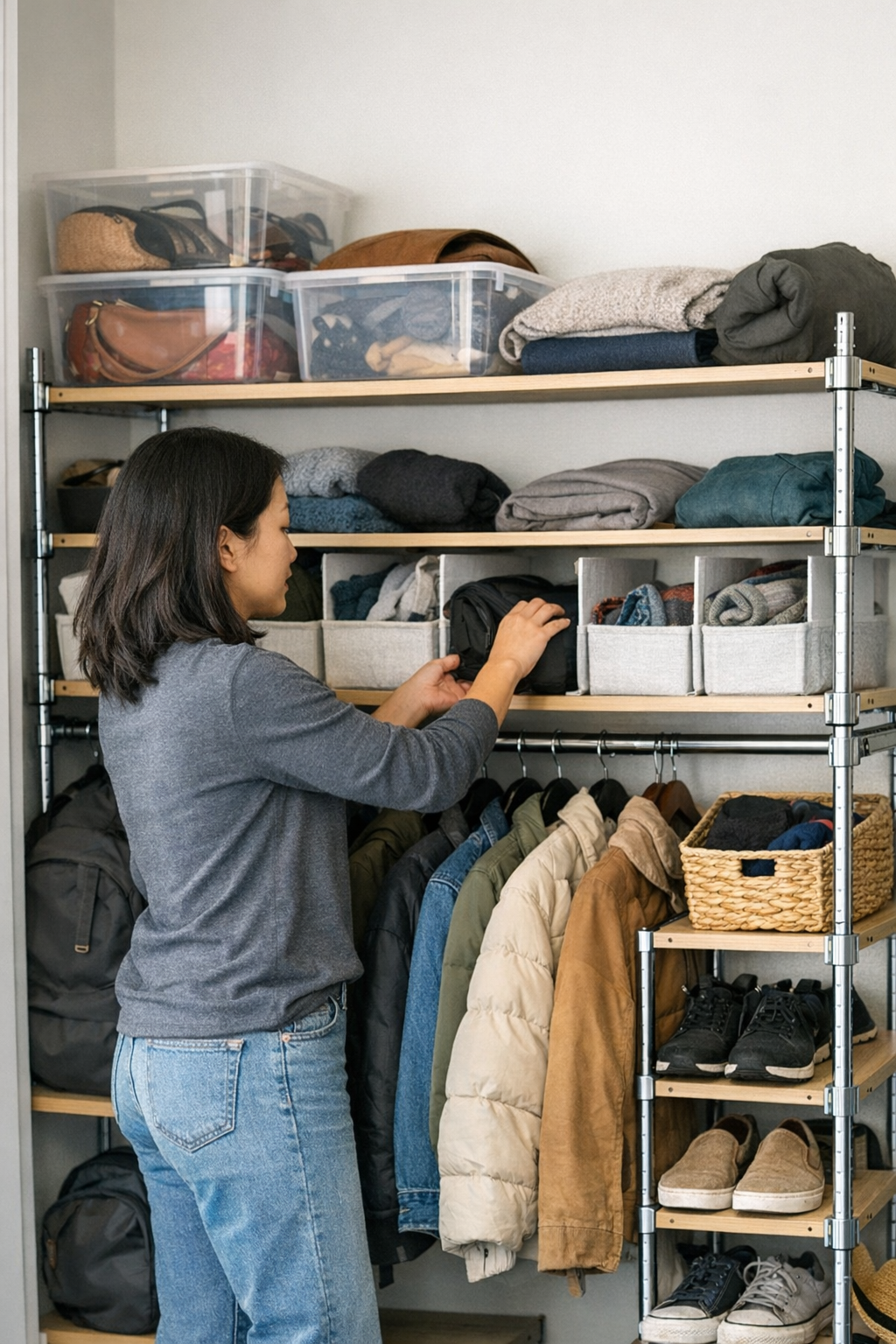
Everyone recognizes the moment: after hours of sorting, your closet looks crisp and orderly—rows of matching bins, folded stacks, everything in its “place.” By midweek, reality intervenes. Categories bleed together. Shoes creep into scarf bins. Gloves hide beneath bags. What started as logical now demands extra time and double-handling just to keep pace with daily shifts. And if your closet only looks organized—without reflecting your real habits—the signs pile up fast: the lost glove, the slow hunt for keys, crowded stacks, and the steady creep of new clutter, even in a space you thought was finally under control.
When Closet Systems Fall Apart—Midweek, Every Week
The first few days after a reorg always feel like victory. Labels face forward, bins slide perfectly into cubbies, and there’s space—briefly—between each category. By Wednesday, stress leaks in. Folded shirts collapse as people rummage underneath. That bin for winter hats has swallowed everything from spare bags to rogue socks. Instead of quick access, you’re cautiously extracting items so nothing spills—undoing order with every rushed morning.
Beneath the Surface: Hidden Friction of “Order”
High-shelf bins and opaque baskets look efficient, but real life exposes the mismatch. Try snatching a scarf during the morning scramble: suddenly, you’re pulling down an entire bin, shifting half its tangled contents just to find the one thing you need. Each minor pause adds up—moving stacks that won’t stay up, searching behind baskets, rebalancing piles that keep slipping. By Friday, detritus spreads across the floor because the system’s logic can’t withstand real routines.
Category Drift: When Lines Blur and Clutter Returns
Most clutter sneaks back in quietly. One shelf meant for linen supplies ends up harboring stray shopping bags and forgotten socks. Entryway baskets absorb hats one day and dog leashes the next. The result? A single misplaced item snowballs into confusion: one deep bin holds five unrelated things, and getting to any of them means disturbing the stack. It’s not failure—it’s proof that the setup doesn’t fit the actual flow of your days.
The Trap of Hidden Storage
Deep bins and solid baskets promise a quick fix—stash everything out of sight. But the minute categories aren’t clearly divided, the system unravels. Busy mornings force you into rapid-fire searches: rummaging for keys, upending one container after another, resigning yourself to “junk bins.” The organization isn’t broken—just camouflaged until the next avalanche of clutter.
Reality Check: Is Your Storage Helping or Hindering?
Everyday friction reveals the real effectiveness of your storage. Think about your last week—have you:
- Had to move two or three things just to grab something small in the back?
- Watched a folded stack topple after plucking one shirt?
- Fished through a chaotic basket near the door for keys or wool hats?
- Watched one supposed “overflow” shelf quietly swallow items from other sections?
- Spent time re-tidying because yesterday’s “system” broke down after a normal day’s use?
If so, it’s a sign your storage is working against—rather than with—the true flow of your family or your routines. Outward order is only part of the story; reliable access and easy resets matter just as much.
Storage That “Tells the Truth” About Your Household
Effective organization isn’t measured by how your closet looks on day one, but by how quickly you can find what you need in the middle of a hectic Tuesday. Closets and shelves that surface every item, keep like with like, and clearly separate categories make resets faster and mornings less frantic. For example:
When we swapped deep bins for open, divided trays, morning routines changed instantly. Instead of hunting through piles, every set of gloves and each hat was visible and easy to grab. No more upending stacks or creeping overflow. Instead of collapsing under the weight of hidden clutter, shelves kept their purpose: gloves in one divider, hats in another. It wasn’t extra space—it was smarter, more honest separation and visibility. Suddenly, a midweek reset took two minutes, not twenty.
Small Adjustments, Real Results
You don’t have to gut your storage to get clarity. Little shifts go a long way. Replace one deep hallway bin with a shallow, sectioned tray, and gloves stop knotting with scarves. Sub in clear bins, and even hurried hands can see what’s missing. Try an inexpensive drawer insert or divider—now socks stop wandering and categories stay distinct. Everyday friction fades: no more double-handling, no more mystery piles, less stalling out mid-tidy.
Five Tweaks That Make Categories Stick
- Break up the big bins: Insert smaller dividers for things that scatter—accessories, socks, kids’ mittens—so nothing drowns or merges.
- Label with backup: Don’t just trust a tag—give sections physical dividers or trays, so the system holds up to real reach-ins.
- Lift what you need: Reserve eye-level space for daily-grab items; keep lesser-used stuff below or above, where it disrupts less.
- Show what you store: Opaque bins fuel out-of-sight, out-of-mind problems. Opt for clear, open, or mesh where practical.
- Flatten the stacks: If piles topple, downsize—use shallow bins or single-depth shelves that force order and cut collapse.
These aren’t massive investments—most are swaps or adds you can try today. The result: each category stays visible, separated, and ready to handle a real week’s wear and tear.
More Storage Space Isn’t Always the Answer
It’s easy to believe the problem is “not enough storage.” But anyone who’s tried adding just one more bin knows: more containers can mean more hiding spots—more mingling, more searching. What actually matters is whether your setup stands up to everyday mess, not just the afterglow of a Sunday sort. A closet that holds its shape through changing seasons, busy mornings, and everyday reshuffling doesn’t come from adding bins. It comes from systems that keep things sorted and visible—no matter how hectic the day gets. When storage tells the truth, even a small closet can feel easy to use. And clutter stops sneaking back in.
See practical storage options at ClosetWorks.