
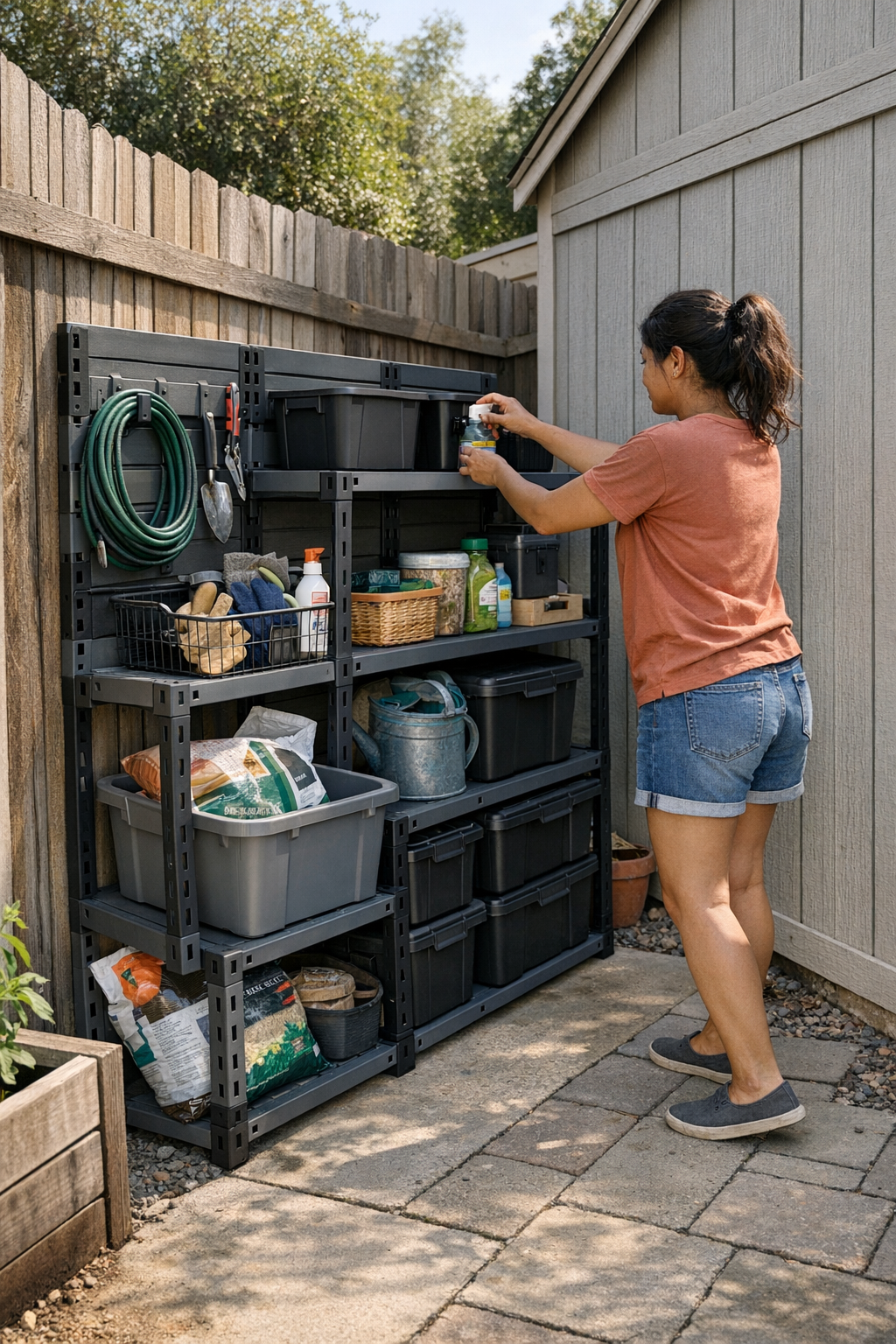
If every step outside means skimming past a rake or dodging dropped bags, the issue isn’t your gear—it’s a storage setup built for looks, not for the chaos of real outdoor routines. The narrow run beside your house or that side-yard squeeze might look organized after a weekend reset, but it takes just two days of actual use for things to pile up. A kid’s stray soccer ball, a still-damp garden glove, a bucket meant to be put back “later”—one by one, escapees crowd in. Suddenly, your only throughway demands a shuffle, a sidestep, or a flat-out obstacle course sprint just to reach the gate.
When Your Route Turns Against You
The gap between what looks organized and what stays usable under pressure becomes obvious fast. Sliding bins and racks up to the very edge of the walkway feels efficient—until you’re forced to tiptoe past a shovel jutting out or squeeze around a “temporarily” parked bag of mulch. Every off-schedule return chips away at that neatness, and before you know it, the main passage is always one dropped item away from blocked. Storage you can’t truly access, and pathways you can’t truly use, add up to one thing: you’re running a reset loop every time you need to get by.
The Real Toll of Tight Quarters
After a rainy weekend, what started as a clean walk zone has shrunk to a shoulder-width slot. Even simple tasks grow complicated. Carrying out the recycling means shifting a bin with your knee, bumping into a crooked rake handle, picking up gloves that have fallen (again) onto the path. Side-yards and fence-line trails morphed into holding pens slow down everyone—suddenly, what used to be five seconds out the back is a whole mini reorganizing session just to keep moving forward.
Overflow Doesn’t Ask Permission
What breaks most outdoor setups isn’t mess, but overflow— the sneaky, accumulating stuff that arrives with good intentions and never leaves. That one-time hedge trim? It launches a string of gloves, clippers, and twine abandoned at the path’s edge. The weekend project with extra bags? Now there’s a half-filled planter and a stack of pots edging their way onto valuable floor space. Very little of this comes from “too much stuff”—it’s the slow strangling effect when there’s no margin or buffer for returns out of sync with your tidy-up rhythm.
It shows up with bins too close to the route, wall racks stretching into walking space, or corners that seem designed to attract overflow. The first item sits. Then another gets balanced on top. By next week, dead space is back, and the “organized” plan didn’t hold up to even basic weekend use.
How Normal Routines Break Things Down
Picture real Saturday-to-Monday life: you finish gardening, and the tools land by the gate “just for now.” The main storage box is stuffed, so a bag of mulch gets wedged against the fence. Two days later, the whole row’s a lineup of late returns that nobody wants to tackle. Morning routines now mean steering around clusters, moving something just to get the trash bin through—or worse, leaving the clutter because running late trumps tidiness.
Organize So You Can Keep Moving
The setups that actually work are shaped for movement, not just for stacking stuff. That means resisting the urge to fill every inch. Leaving a passage—even just a few extra inches—does more for daily life than adding another bin up against the edge. One real-world fix: pushing a storage crate flat to the far fence instead of half-blocking the walkway opened enough space to roll a wheelbarrow and haul yard waste without scraping knuckles or rerouting around stray returns. You barely notice—until a chaotic week goes by and the main path is still a path, not a barricade.
Real-World Rule: Guard 20–24 Inches of Open Route
In side-yards, patio edges, and narrow backyard passes, protecting a genuine 20–24-inch-wide stretch, start to finish, is the difference between flow and friction. Squeeze it tighter and backup is guaranteed—return anything off-schedule, and old piles reappear. A functional open space cushions you from the burst of gear, extra garden scraps, or post-party clutter. Give the route enough breathing room, and the reset job shrinks instead of snowballing.
Too Much Visibility, Too Little Access
Wall storage seems clever, until the wall hooks fill up and the overflow creeps back onto your main route. The handy rack for tools? It invites more last-minute returns, then another bag, then a stack of buckets, all bleeding into your walking lane. Out-of-sight storage has its own problems: if it’s tucked too far away, nobody actually uses it for fast drop-offs—new piles simply form in the spot that’s easiest to reach. The real friction isn’t just mess, it’s a mismatch between where things actually land and where the setup expects them to go.
The zone that sits ready for resets is never the one that collects clutter. Storage has to match the busy, lived-in version of your space, not the one right after cleaning. Pathways need to stay routes, not overflow landing pads.
Testing If Your Setup Holds Up
Here’s where you know: does your main route stay passable at the end of a real week, or does it need a rescue every time? A use-proof arrangement lets you fetch the shovel, grab a ball, or haul out bulky bags without first shifting piles or clearing a gauntlet. When your walking route holds open through rushes, lazy days, and busy stretches, you’ve made the difference between organized-for-appearances and organized-for-use.
Set up for movement first. Leave space for the routine to get messy without breaking down. When next week’s returns hit, you’ll nudge something once—not reset everything—because the real path still works. That’s the difference between storing outside and actually living with outdoor storage.